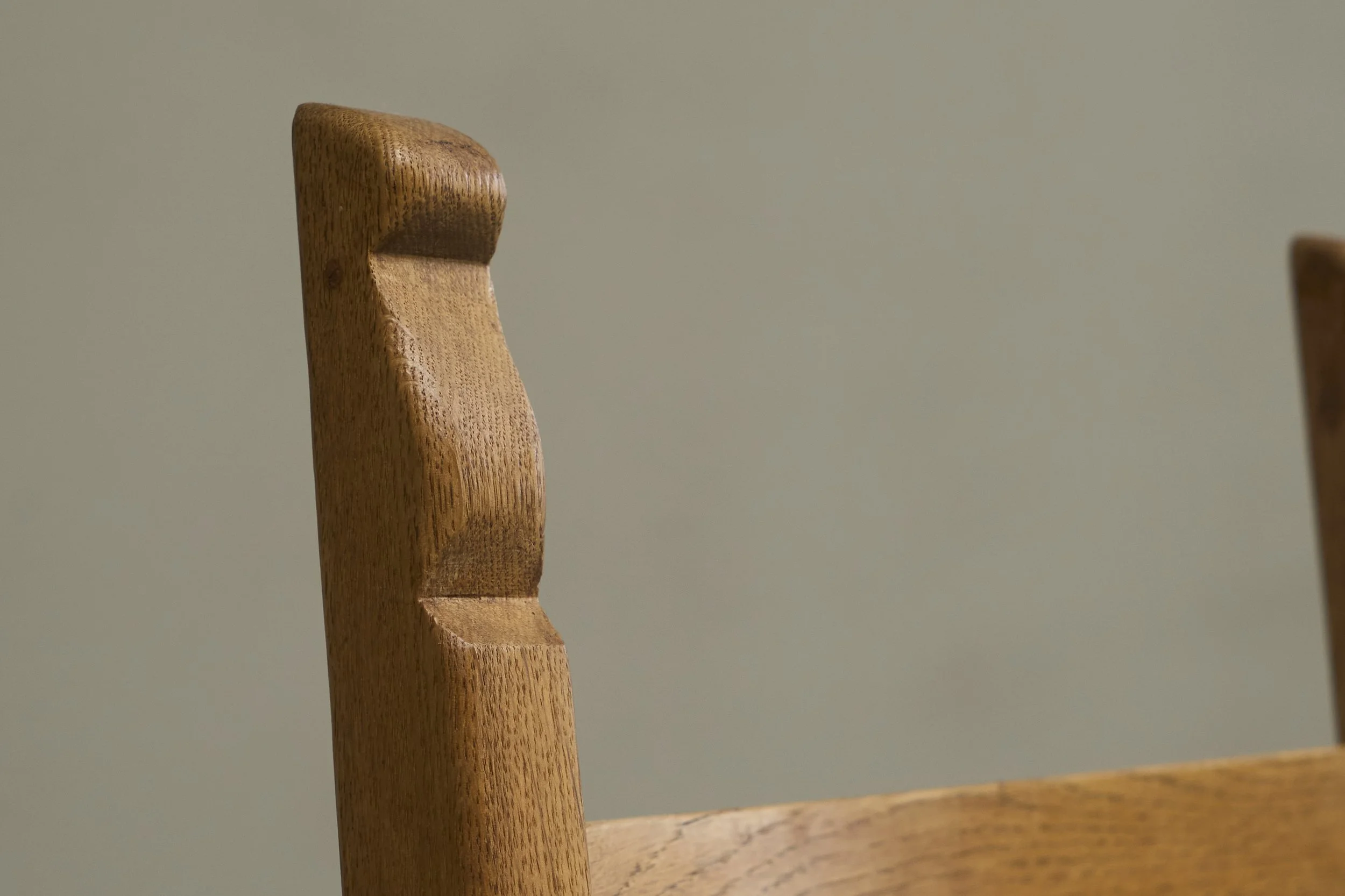
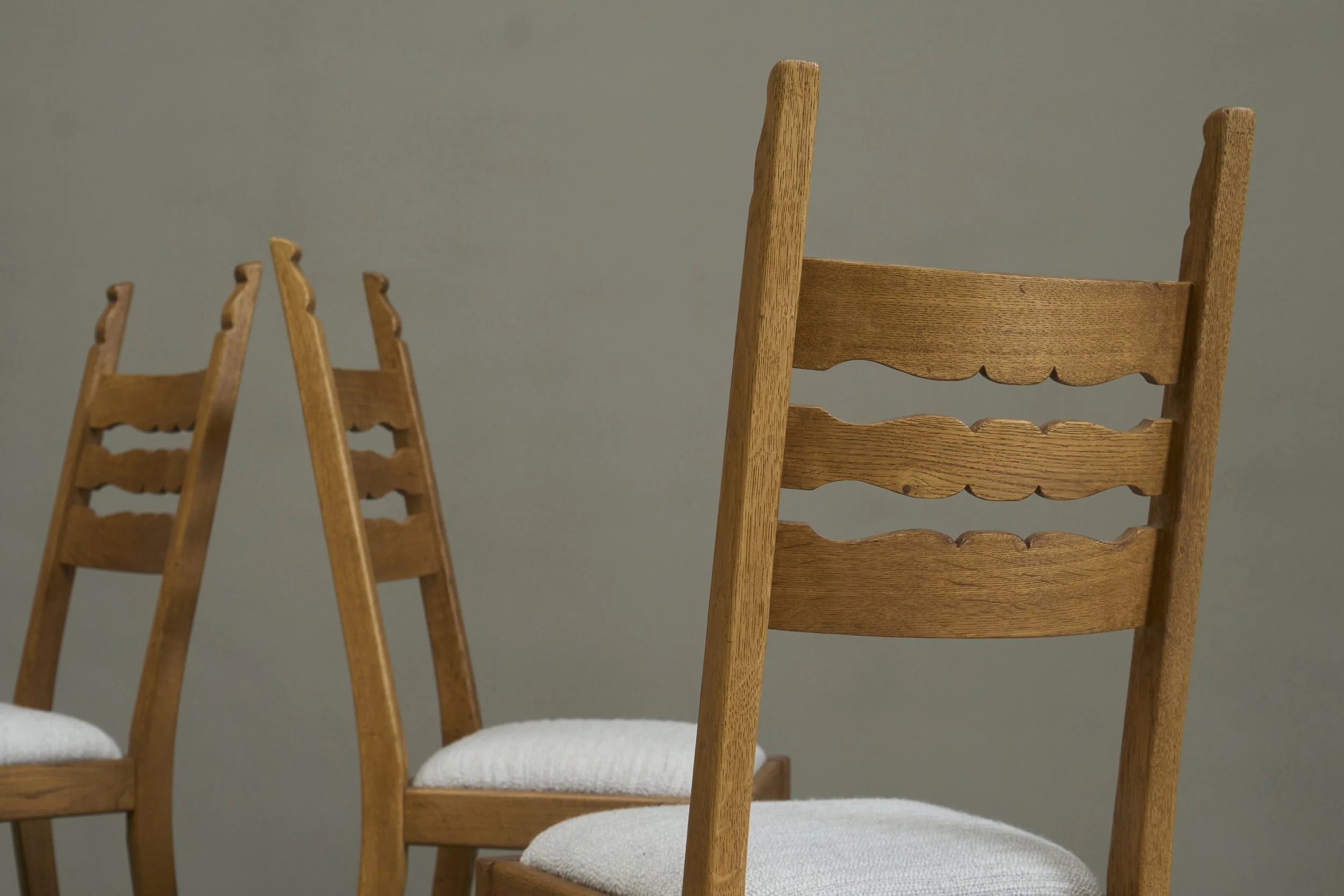
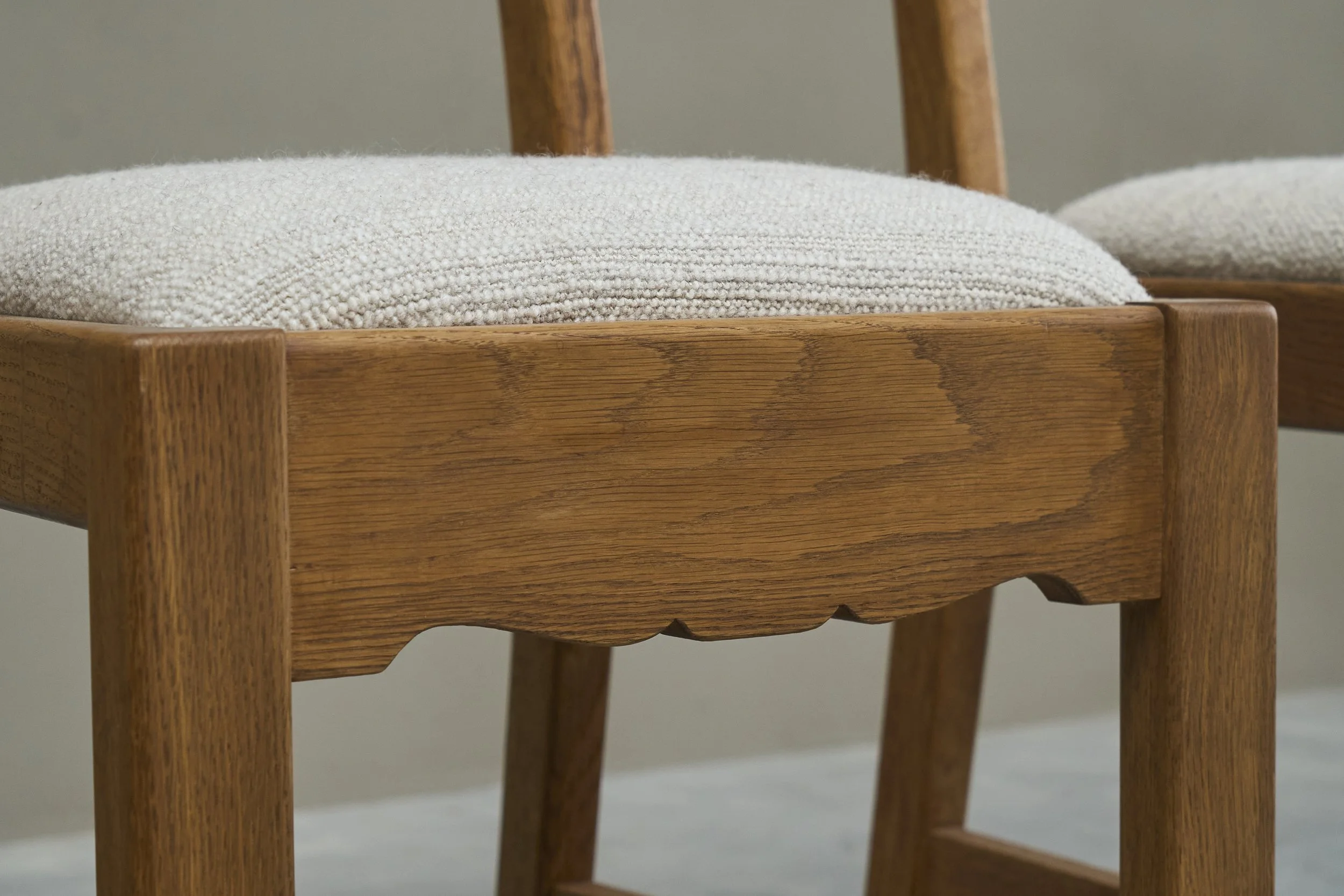
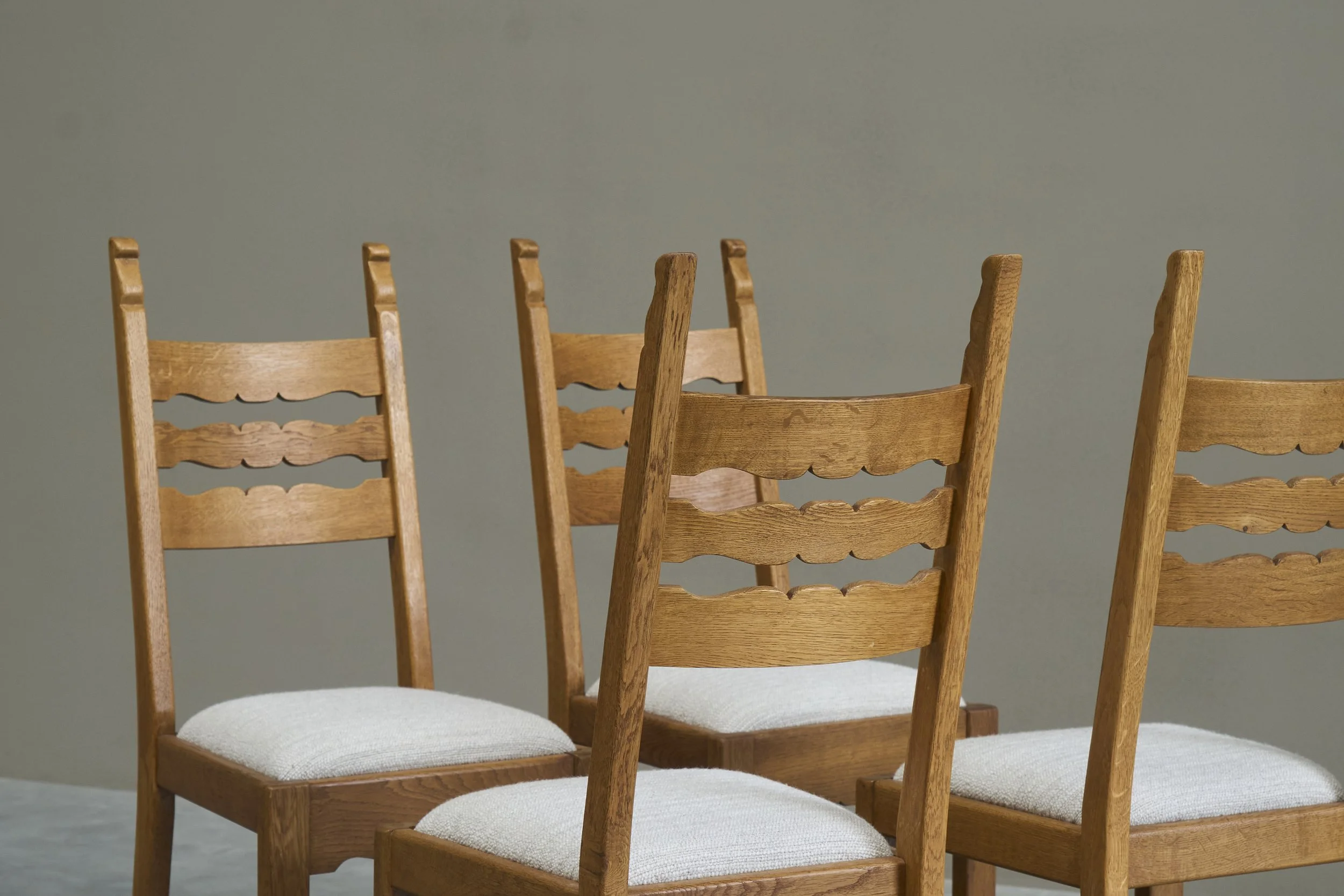
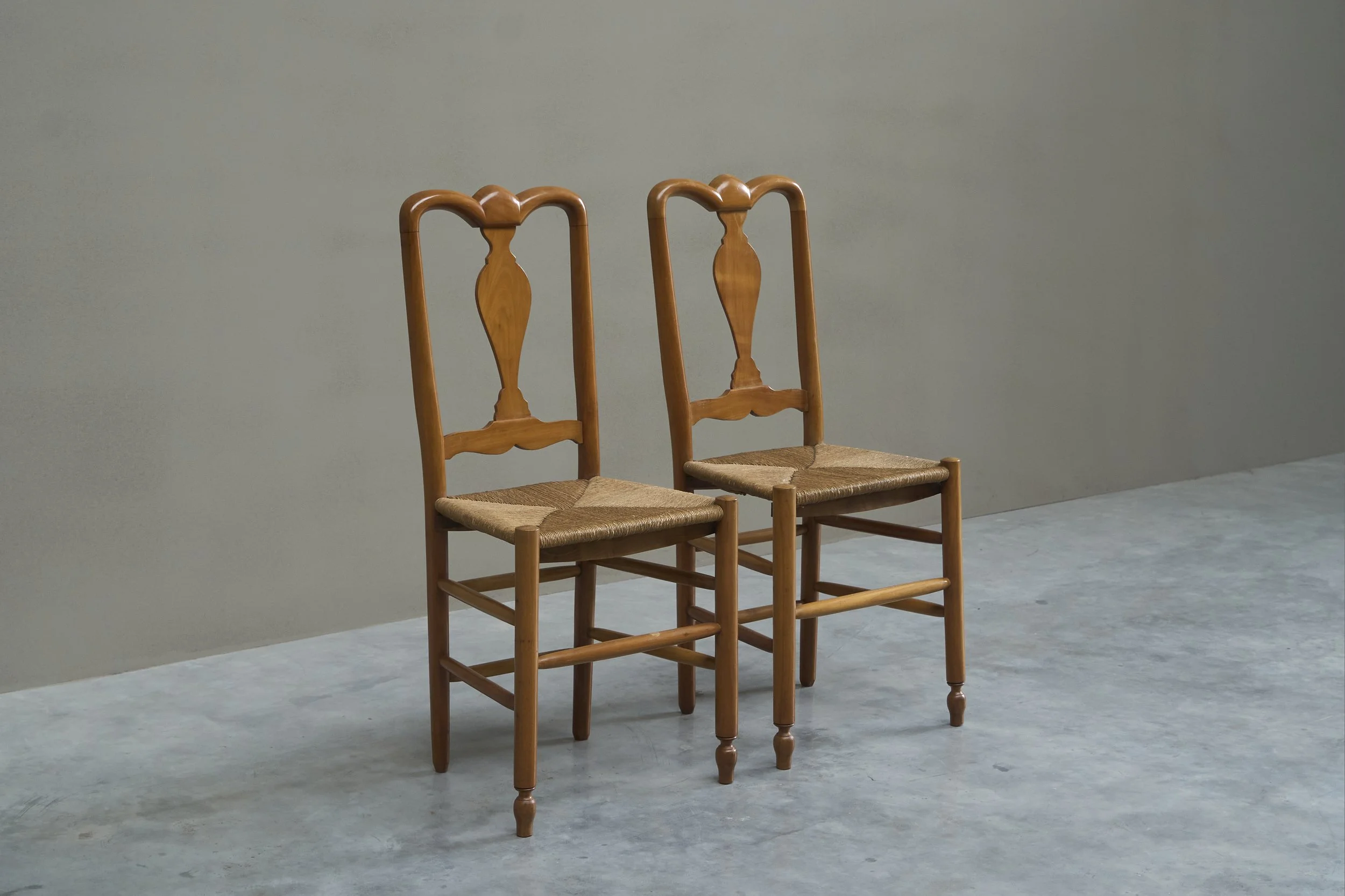
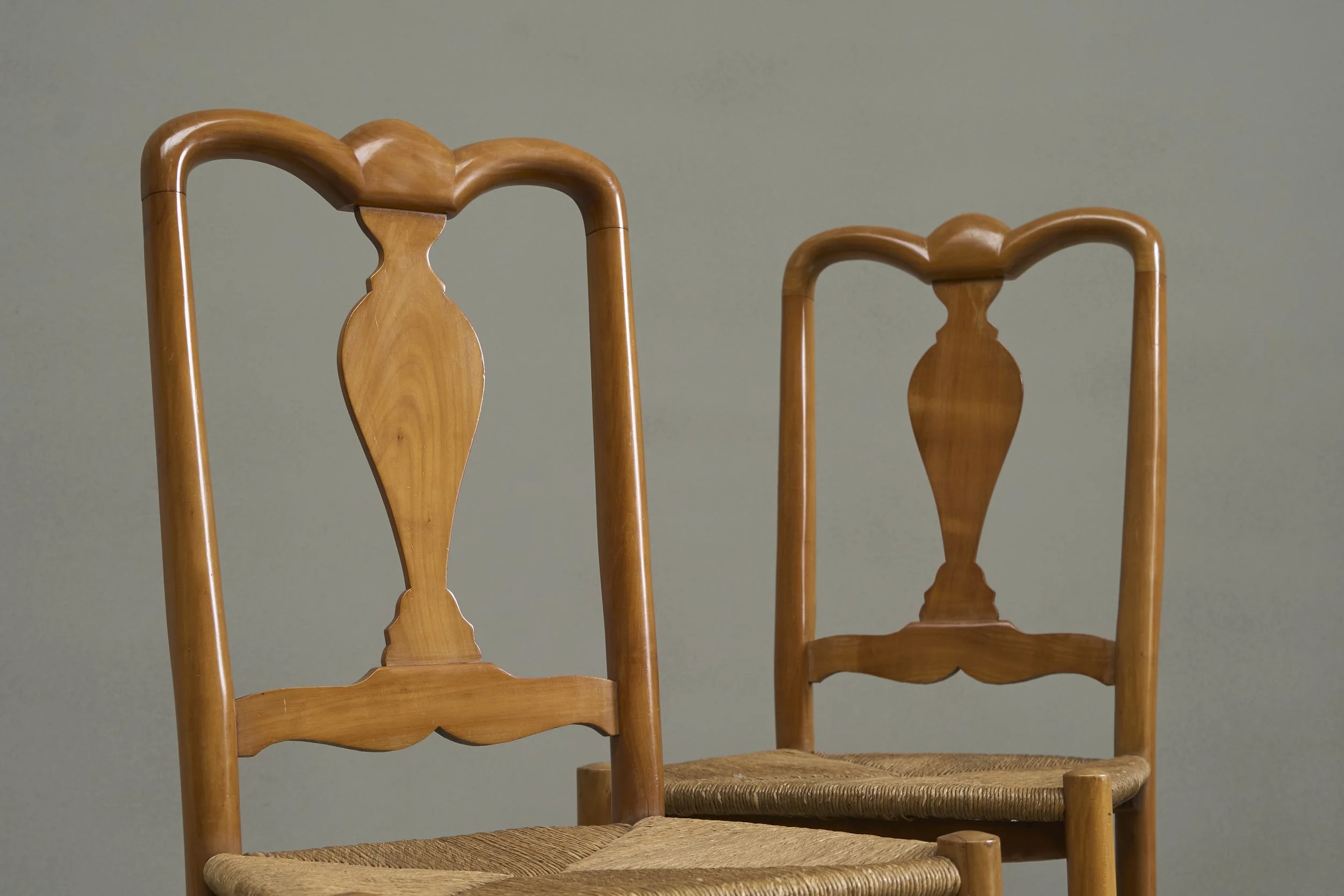
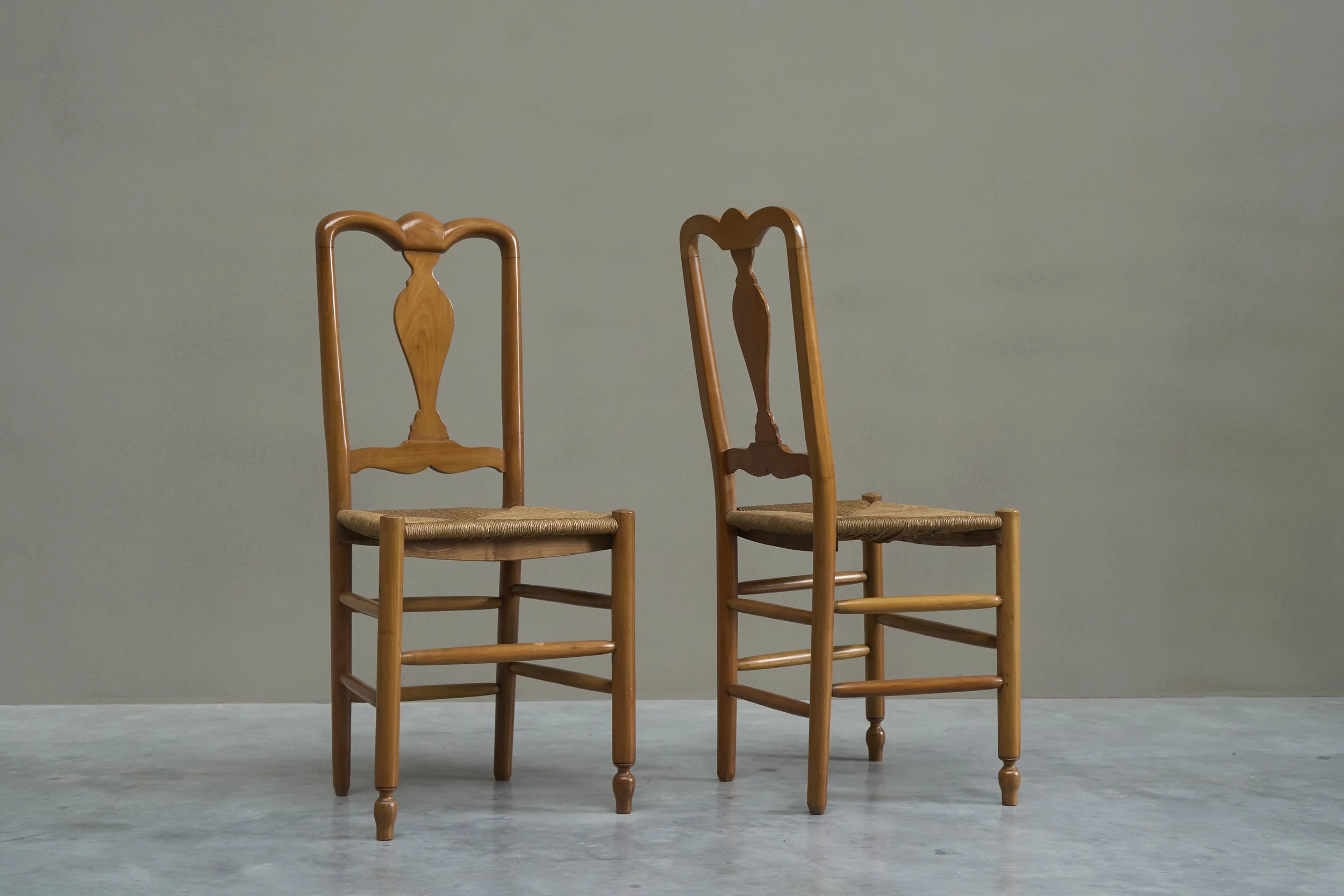
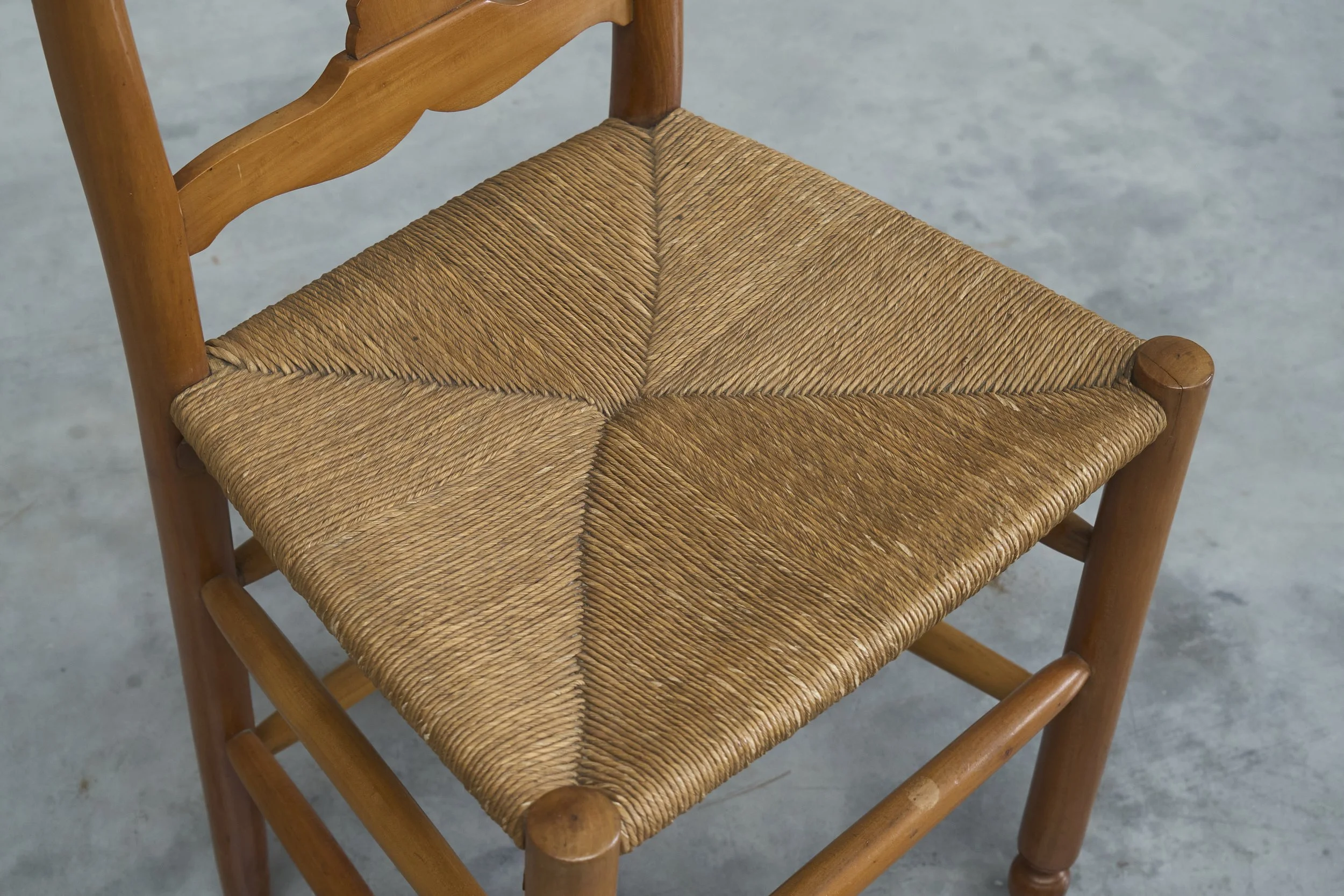
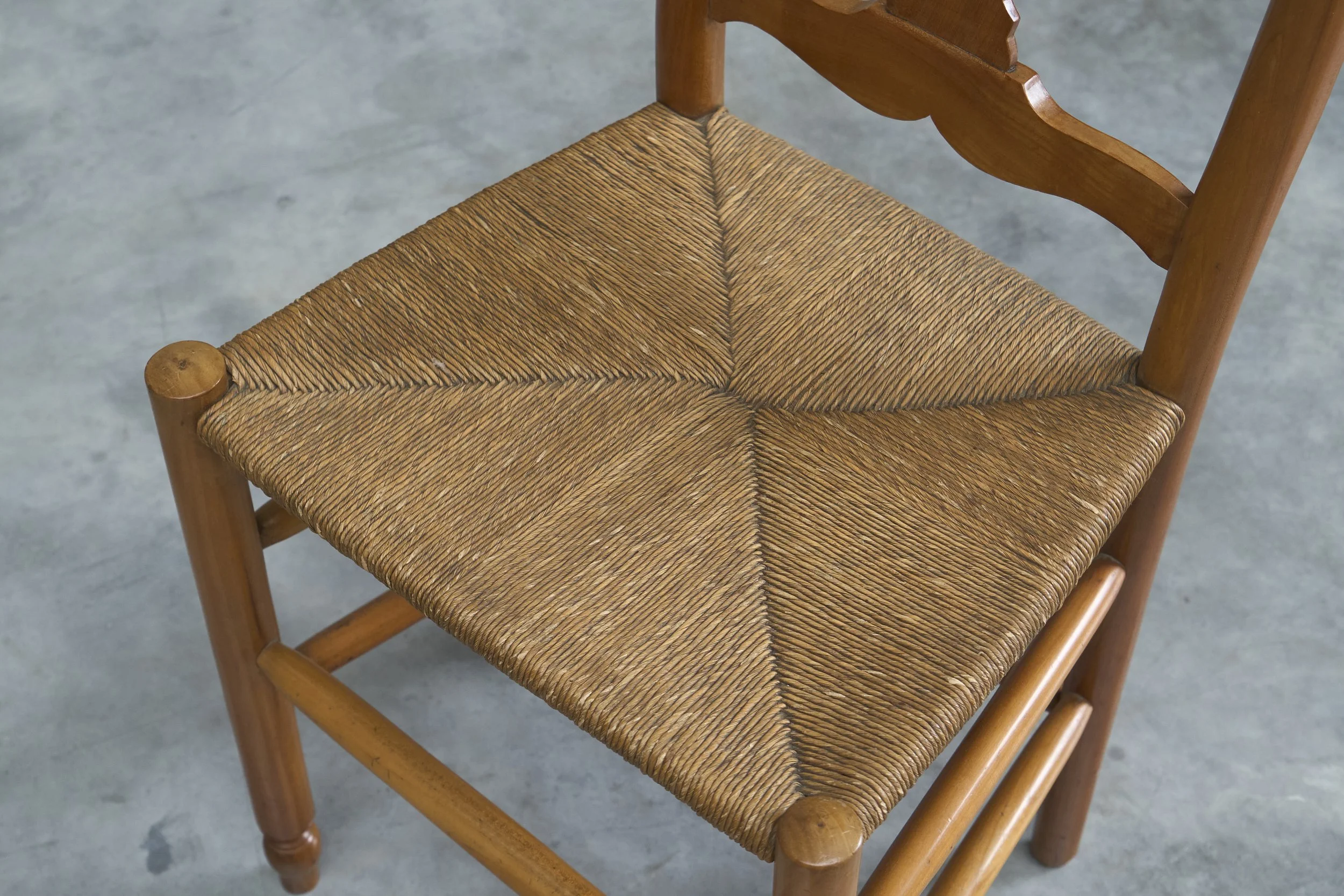
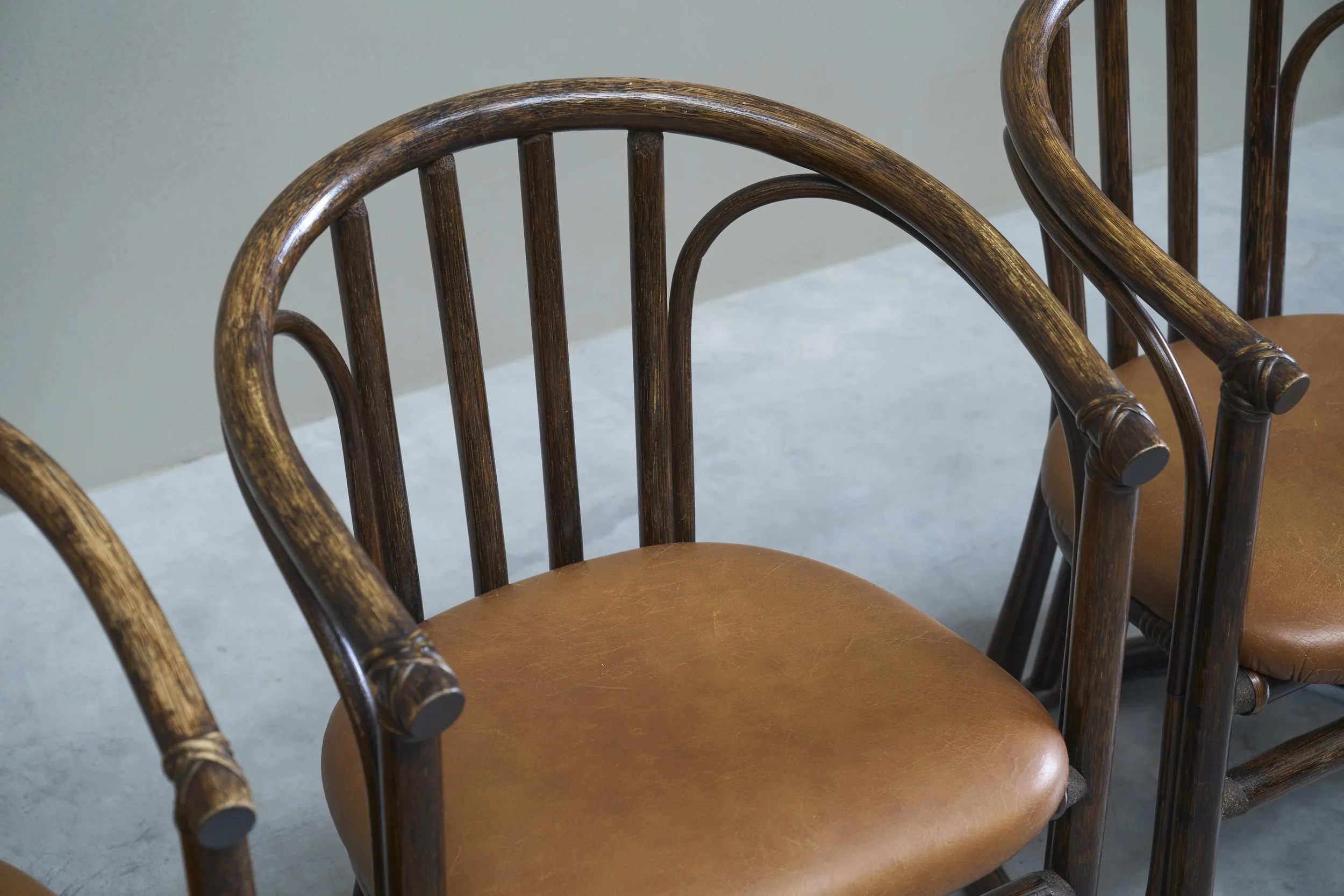
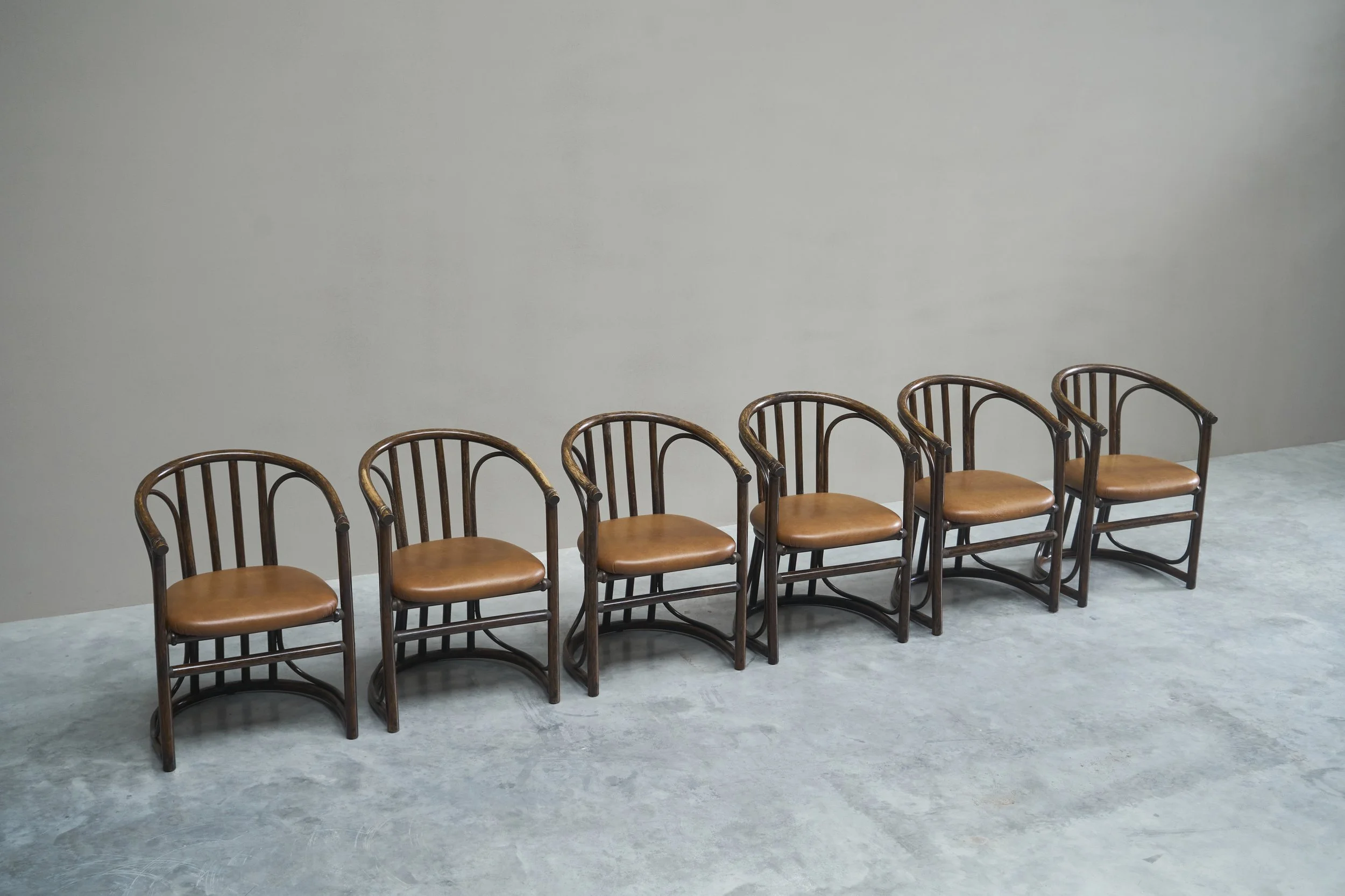
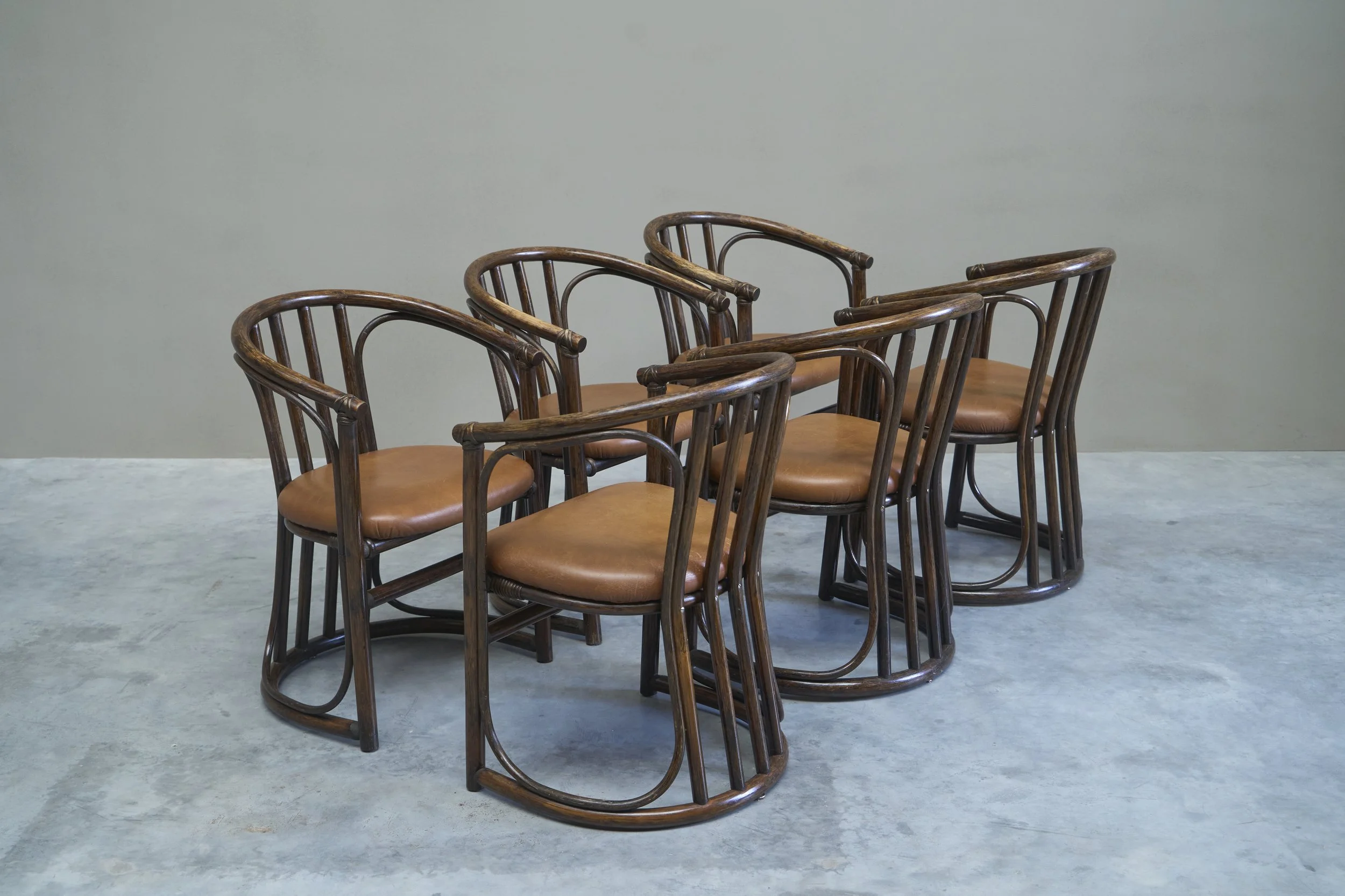
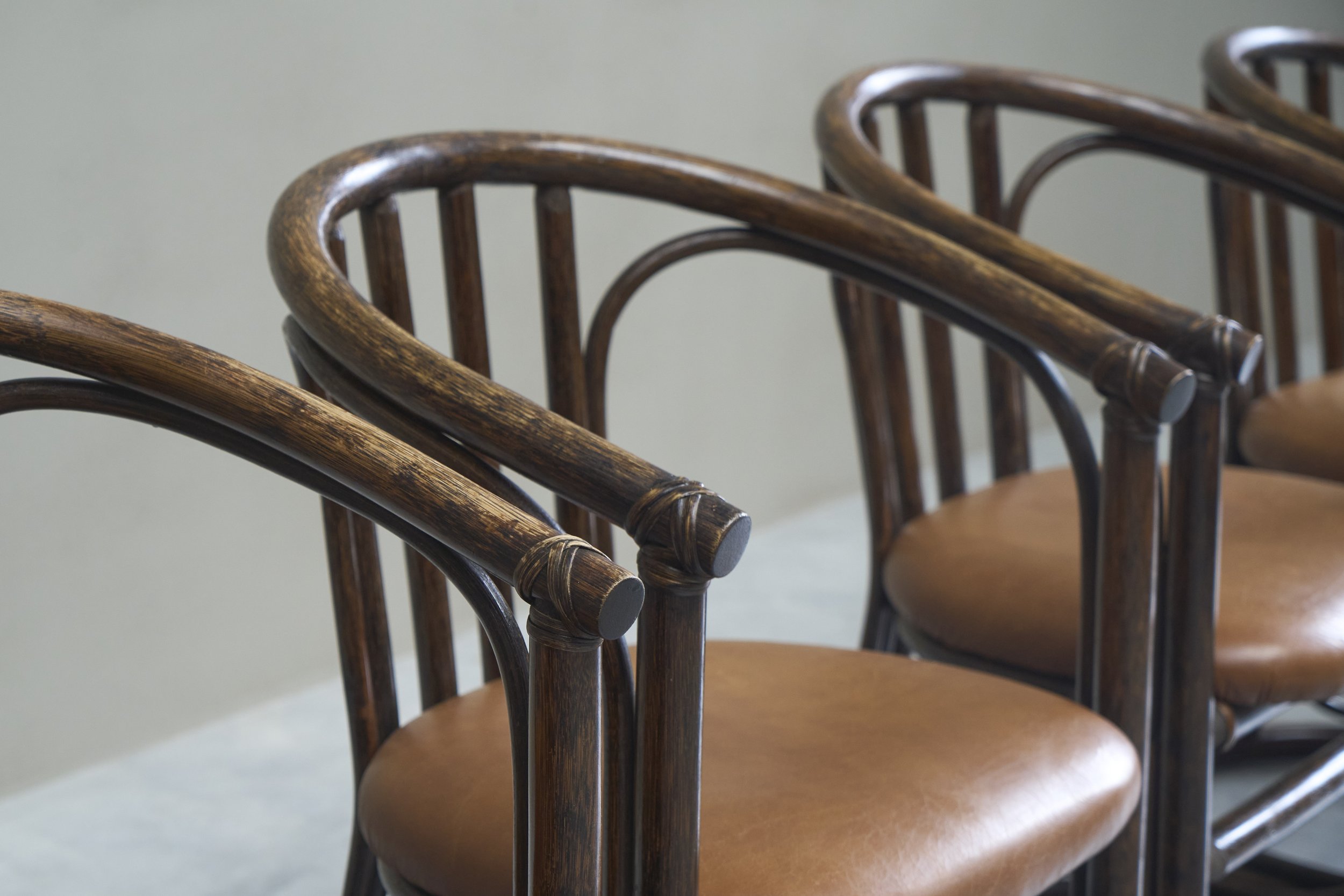
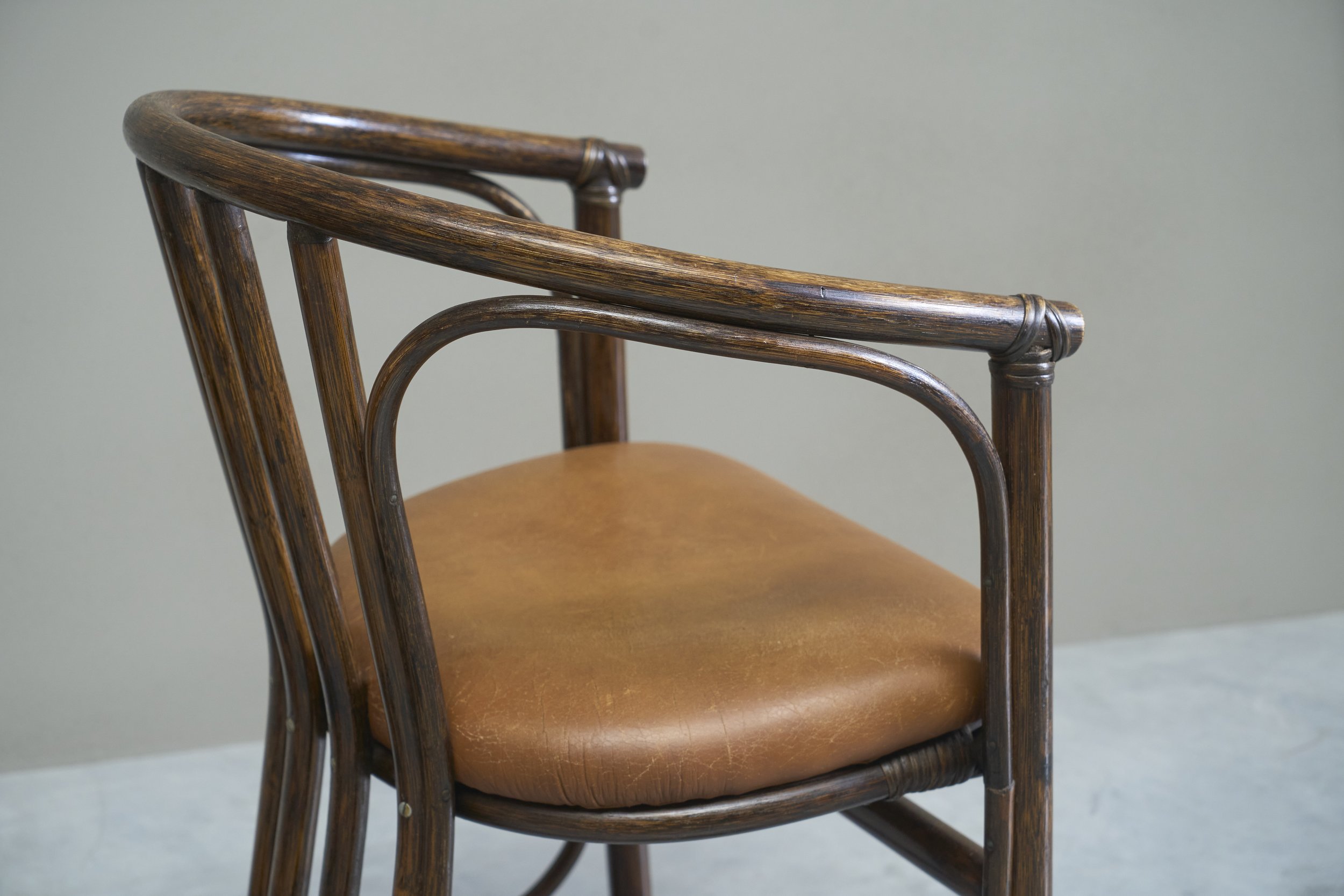
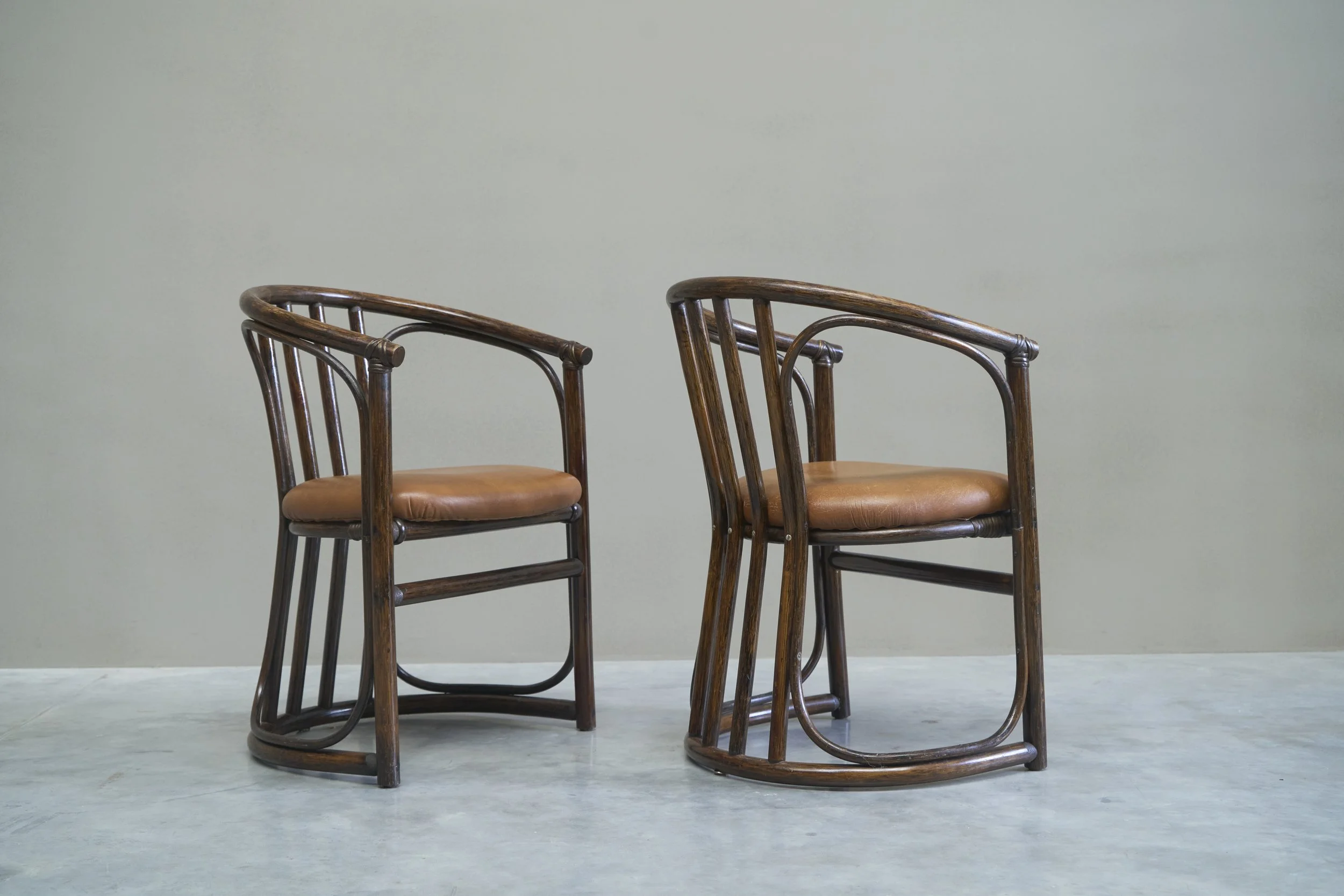
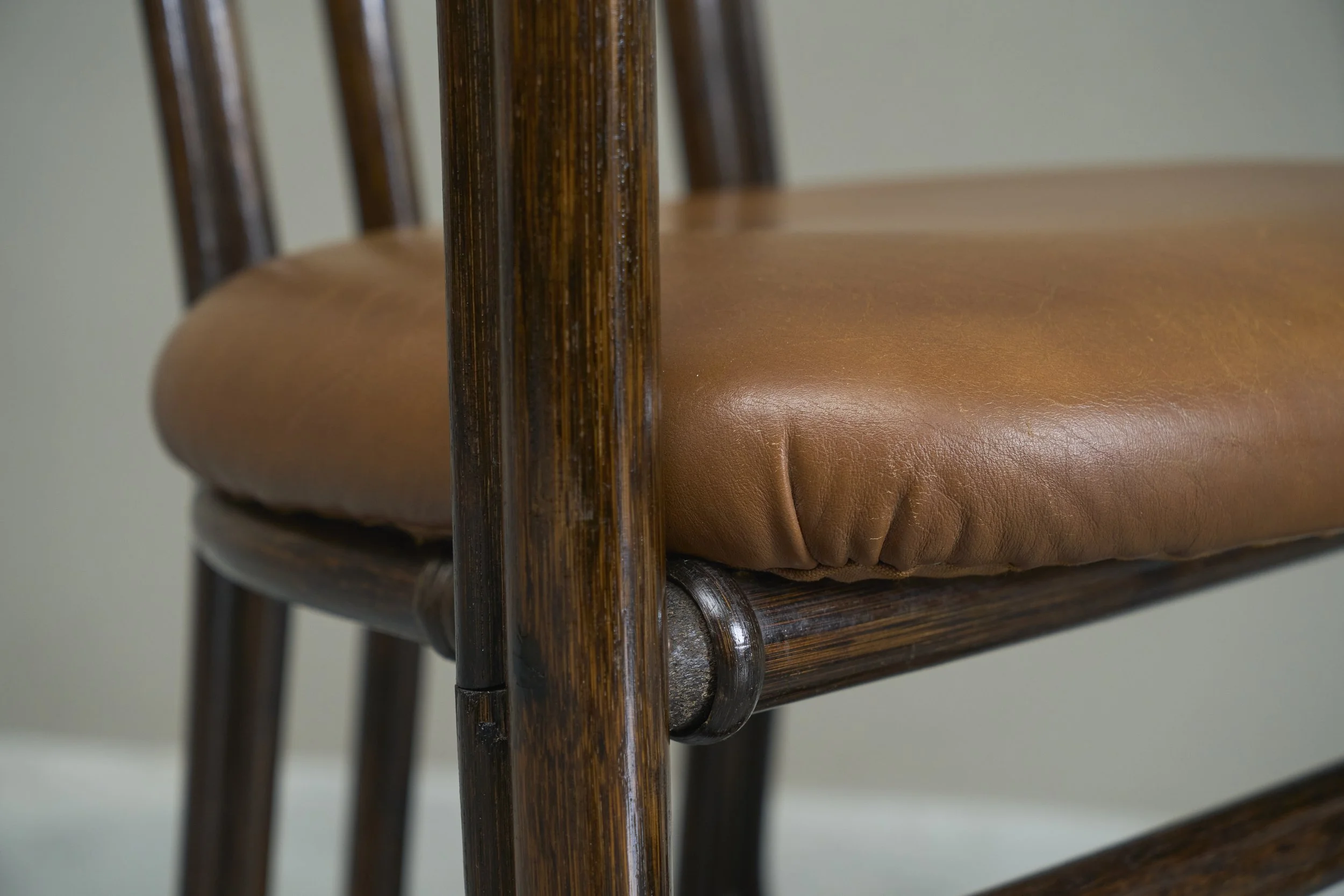
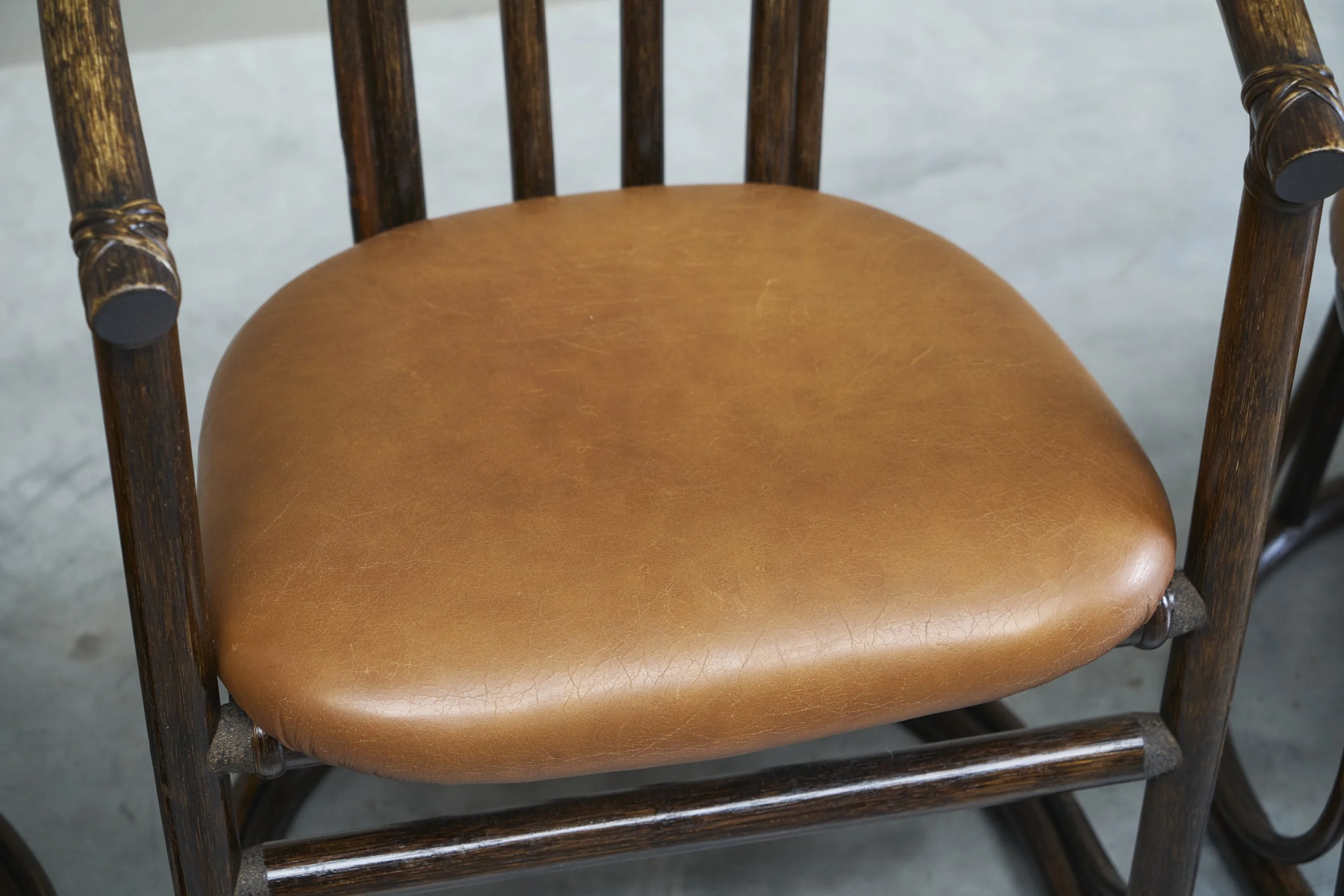
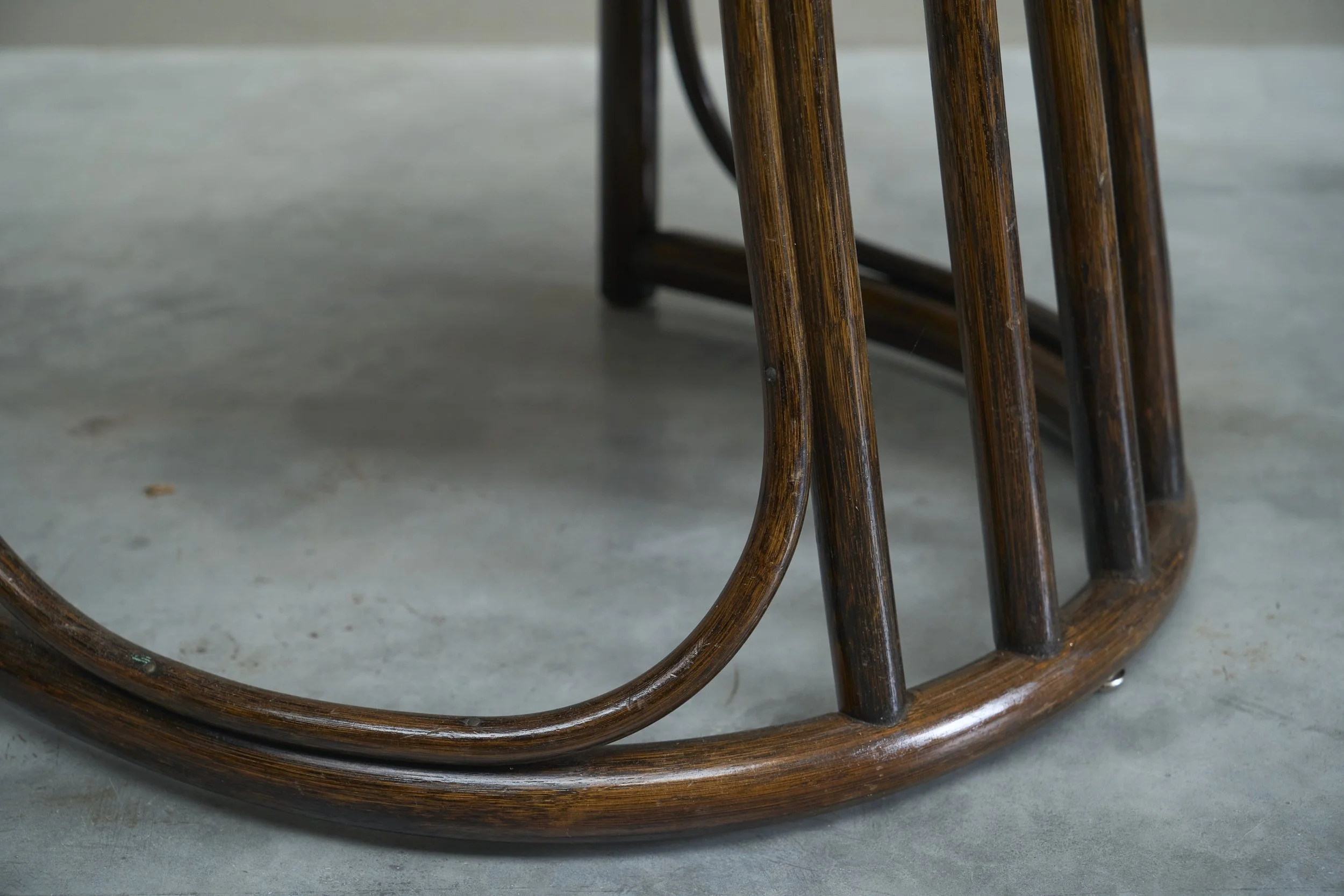
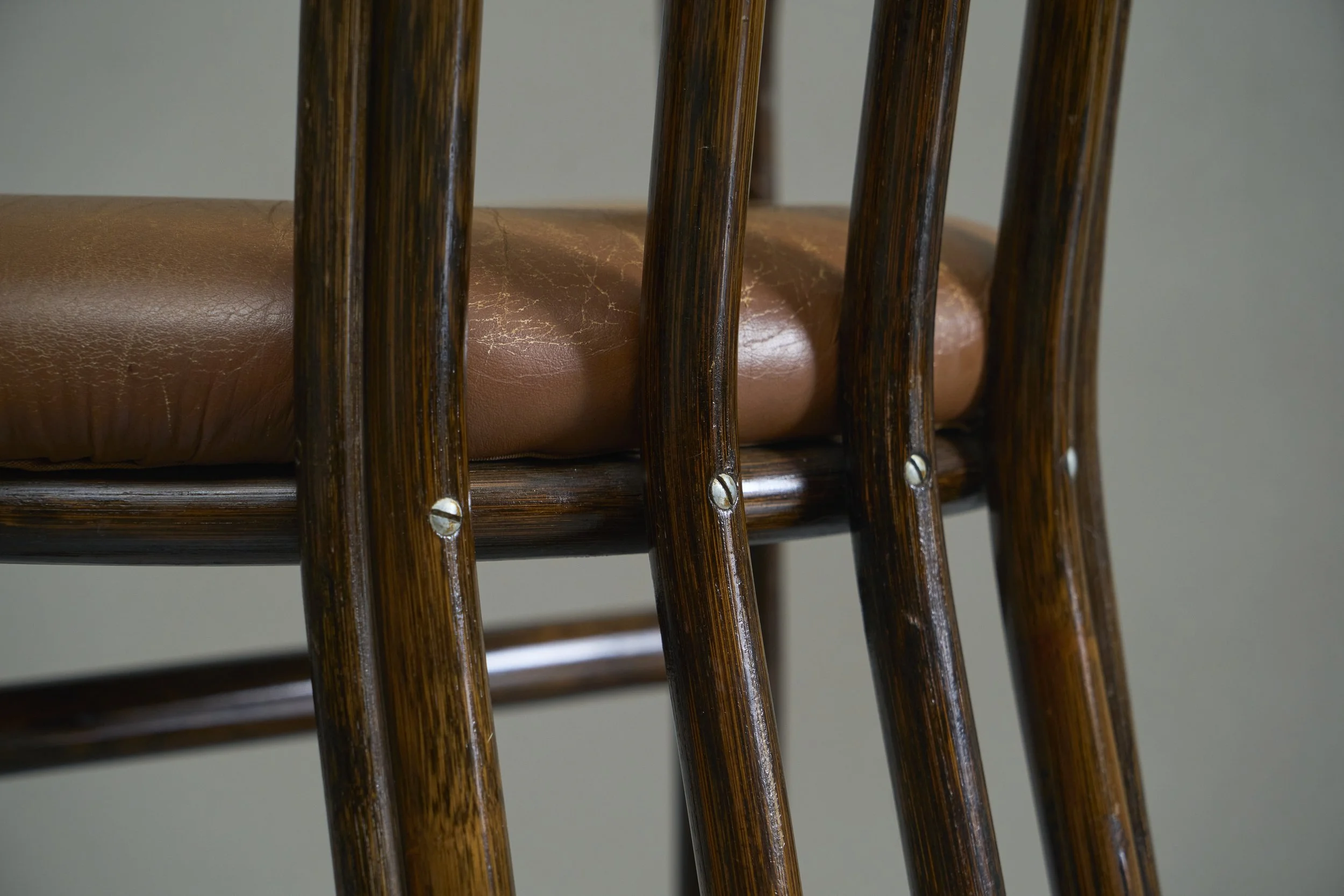
A sculptural three-legged provincial vernacular chair. France, late 19th to early 20th century.
A rare and characterful example of French vernacular craftsmanship, this three-legged chair shows a remarkable patina and a distinctive sculptural presence.
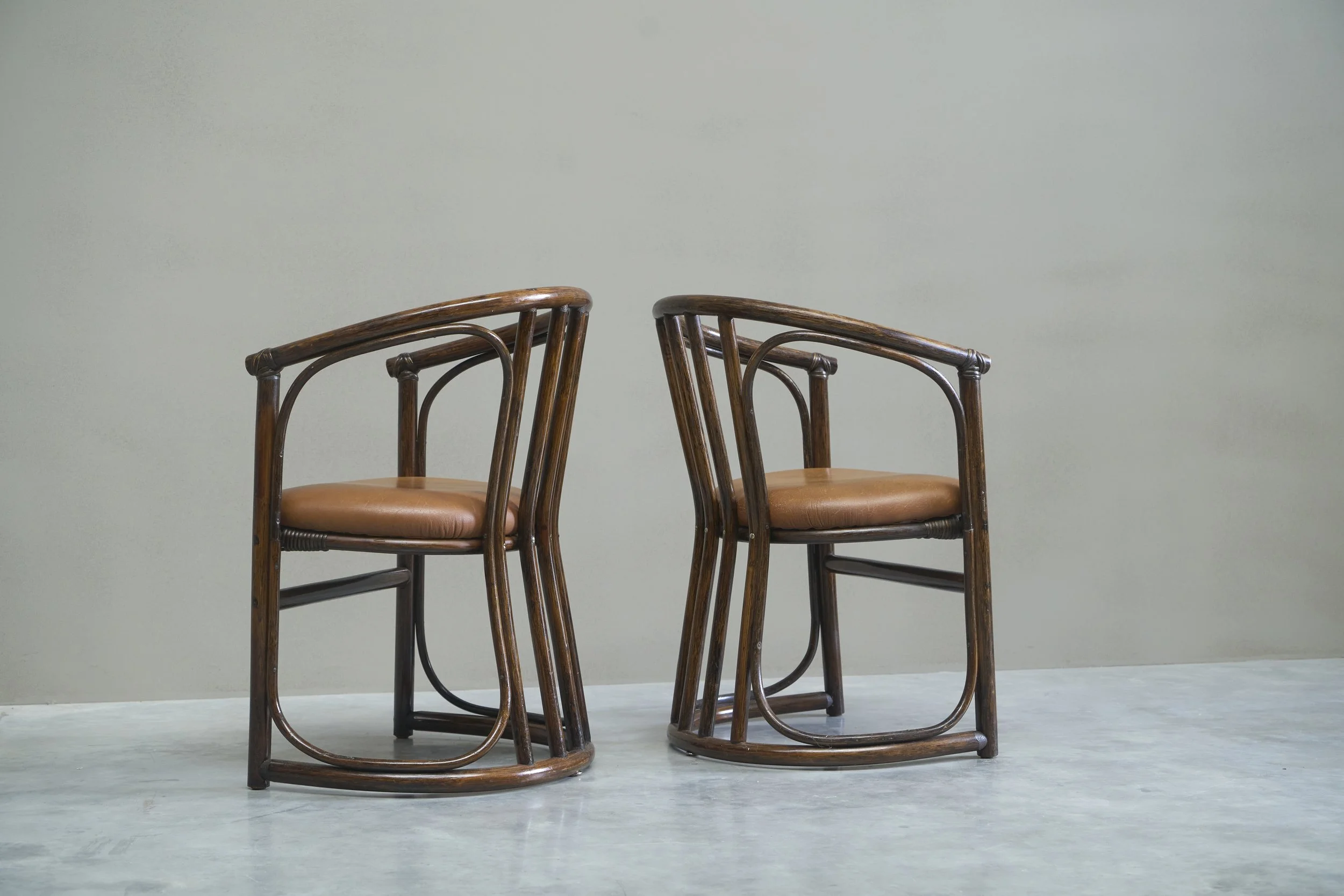
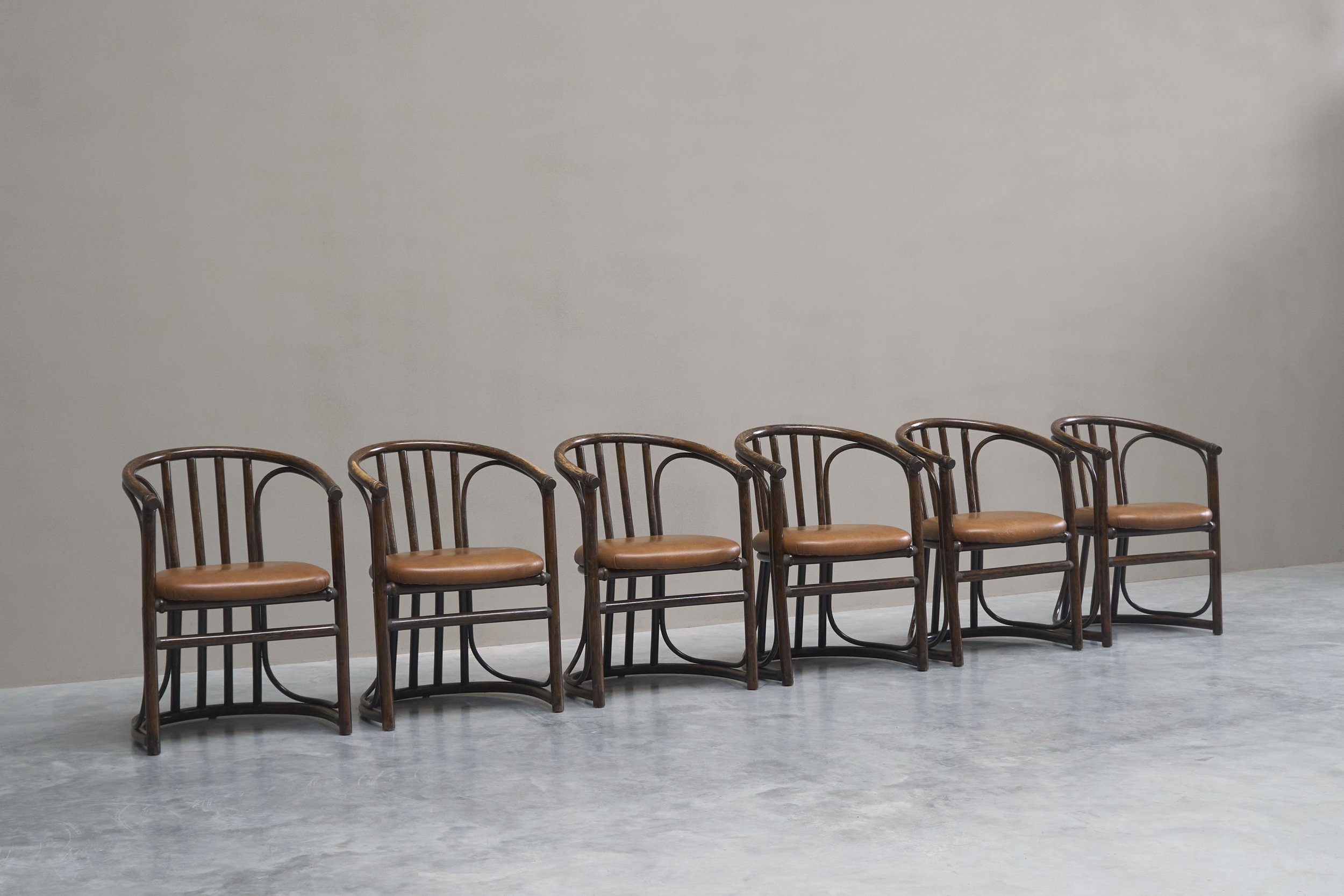
Crafted from thick solid wood, its construction is direct and uncompromising: a circular seat raised on three carved legs joined to a beautiful backrest with simple carved spindles. Every element serves a purpose, yet together they create a form of remarkable sculptural presence.
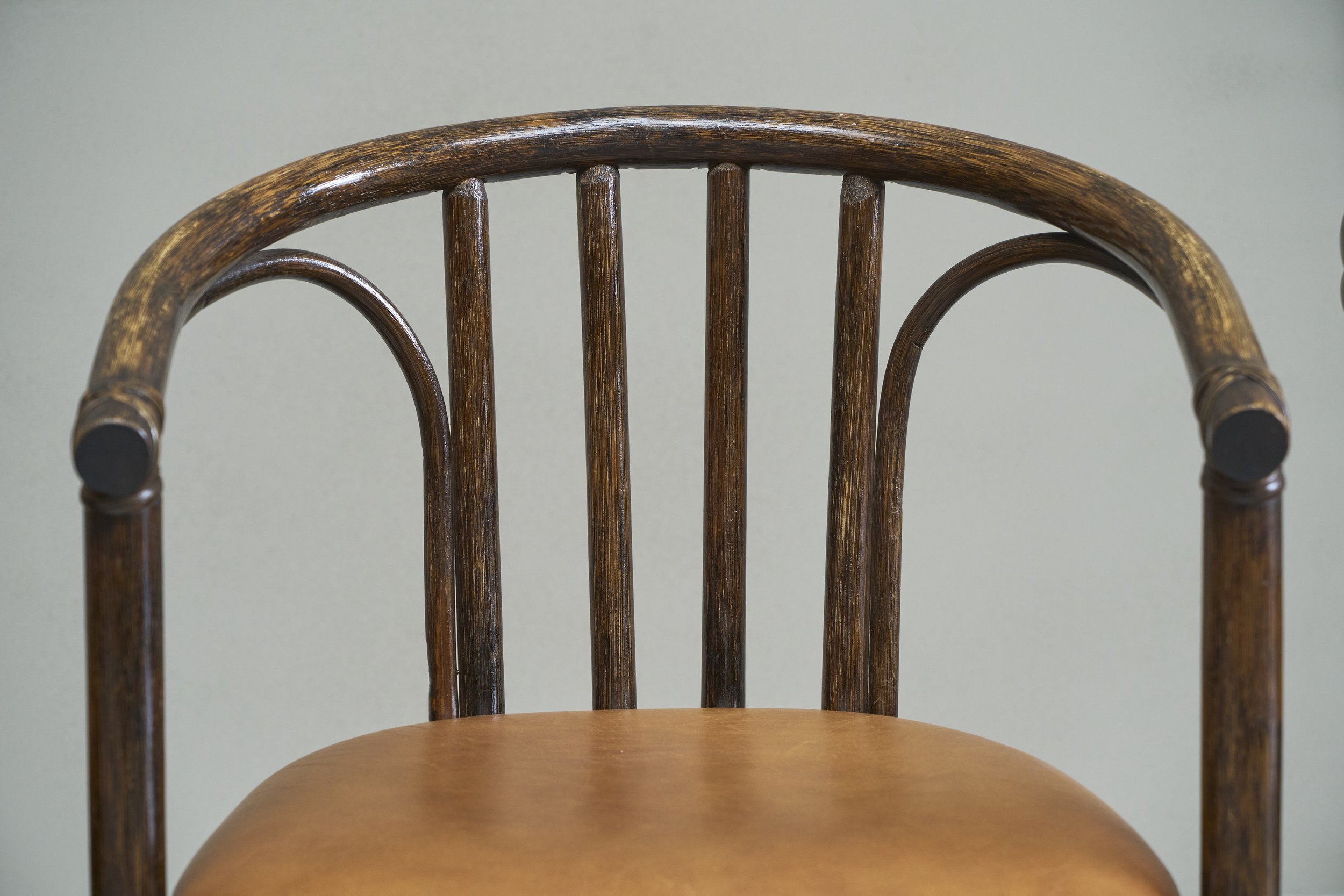
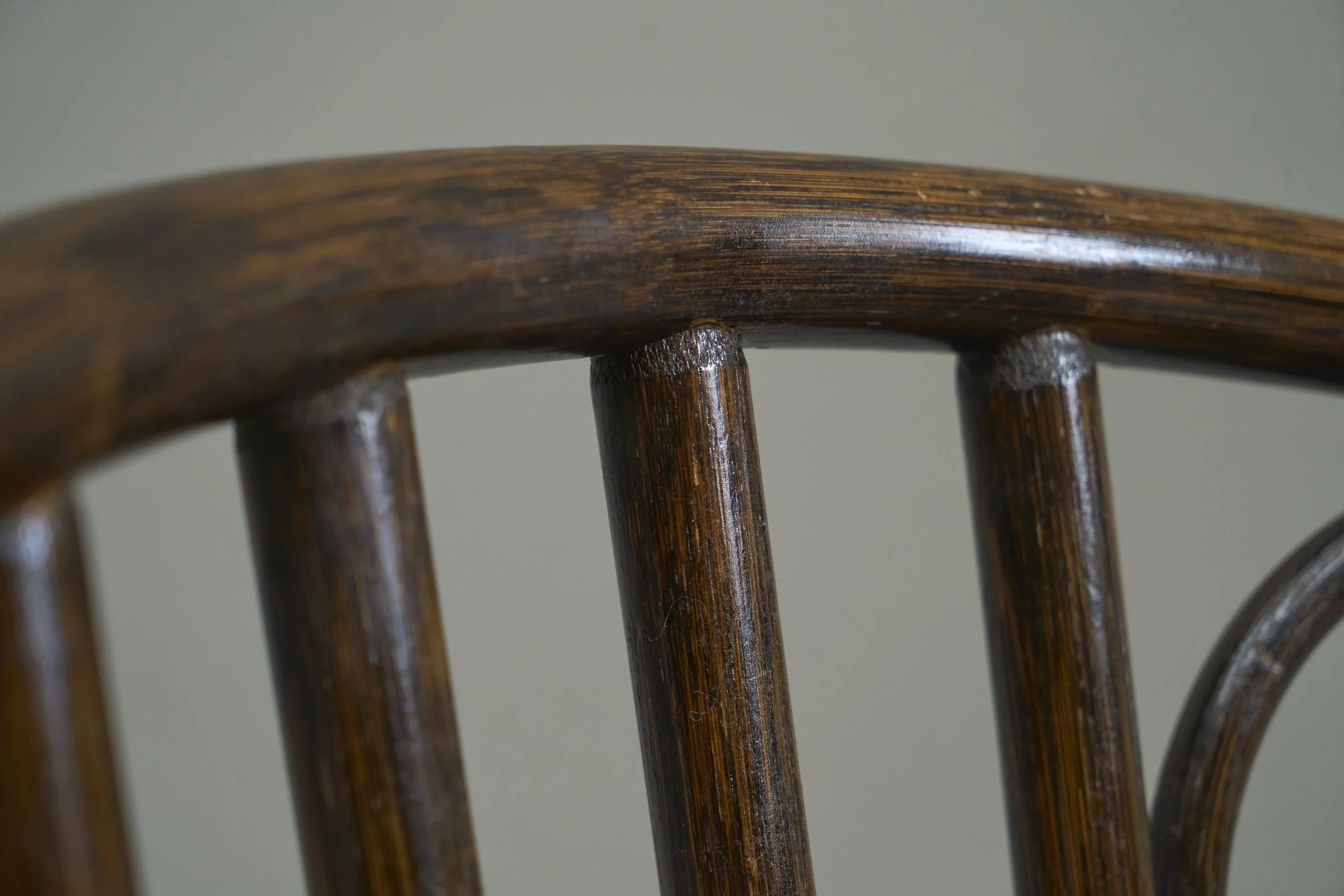
The surface bears the record of a long working life. Layers of wear, old repairs, knots, and softened edges have developed into a rich patina that only decades of handling can produce. The pierced seat, a feature occasionally encountered in rural furniture, hints at its vernacular origins.
Though conceived long before the term entered the design vocabulary, the chair possesses many of the qualities now associated with (French) brutalism: substantial timber, visible construction, and an instinctive understanding of form. Its appeal lies in this balance between function and sculpture, where generations of use have transformed a humble rural object into something unexpectedly expressive. A gem.
Dimensions: W. 64 x D. 54 x H. 80 cm (SH. 51 cm)
INQUIRE ABOUT THIS PIECE
MAKE AN OFFER
A sculptural three-legged provincial vernacular chair. France, late 19th to early 20th century.
A rare and characterful example of French vernacular craftsmanship, this three-legged chair shows a remarkable patina and a distinctive sculptural presence.
Crafted from thick solid wood, its construction is direct and uncompromising: a circular seat raised on three carved legs joined to a beautiful backrest with simple carved spindles. Every element serves a purpose, yet together they create a form of remarkable sculptural presence.
The surface bears the record of a long working life. Layers of wear, old repairs, knots, and softened edges have developed into a rich patina that only decades of handling can produce. The pierced seat, a feature occasionally encountered in rural furniture, hints at its vernacular origins.
Though conceived long before the term entered the design vocabulary, the chair possesses many of the qualities now associated with (French) brutalism: substantial timber, visible construction, and an instinctive understanding of form. Its appeal lies in this balance between function and sculpture, where generations of use have transformed a humble rural object into something unexpectedly expressive. A gem.
Dimensions: W. 64 x D. 54 x H. 80 cm (SH. 51 cm)
INQUIRE ABOUT THIS PIECE
MAKE AN OFFER

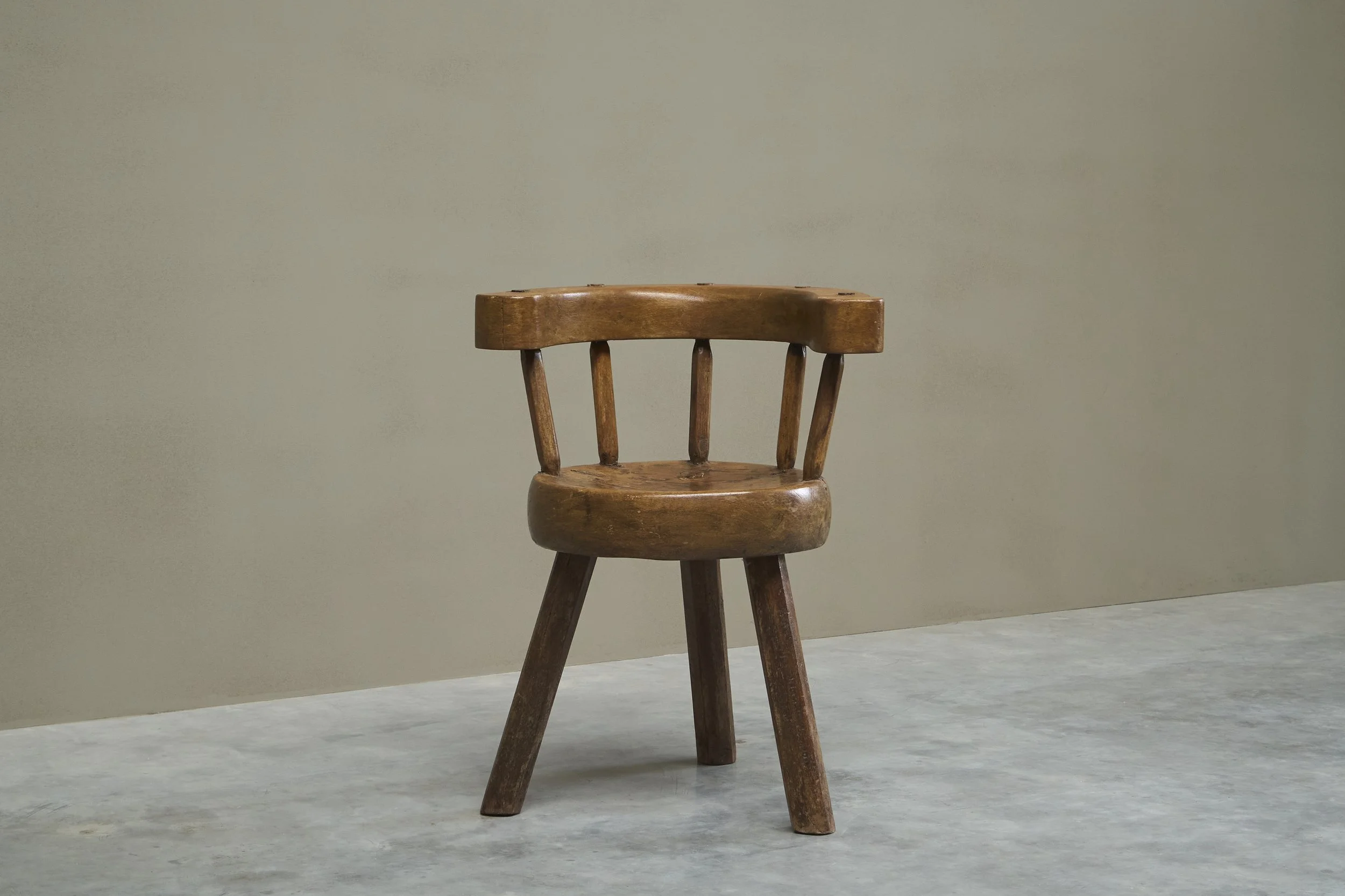 Image 1 of 14
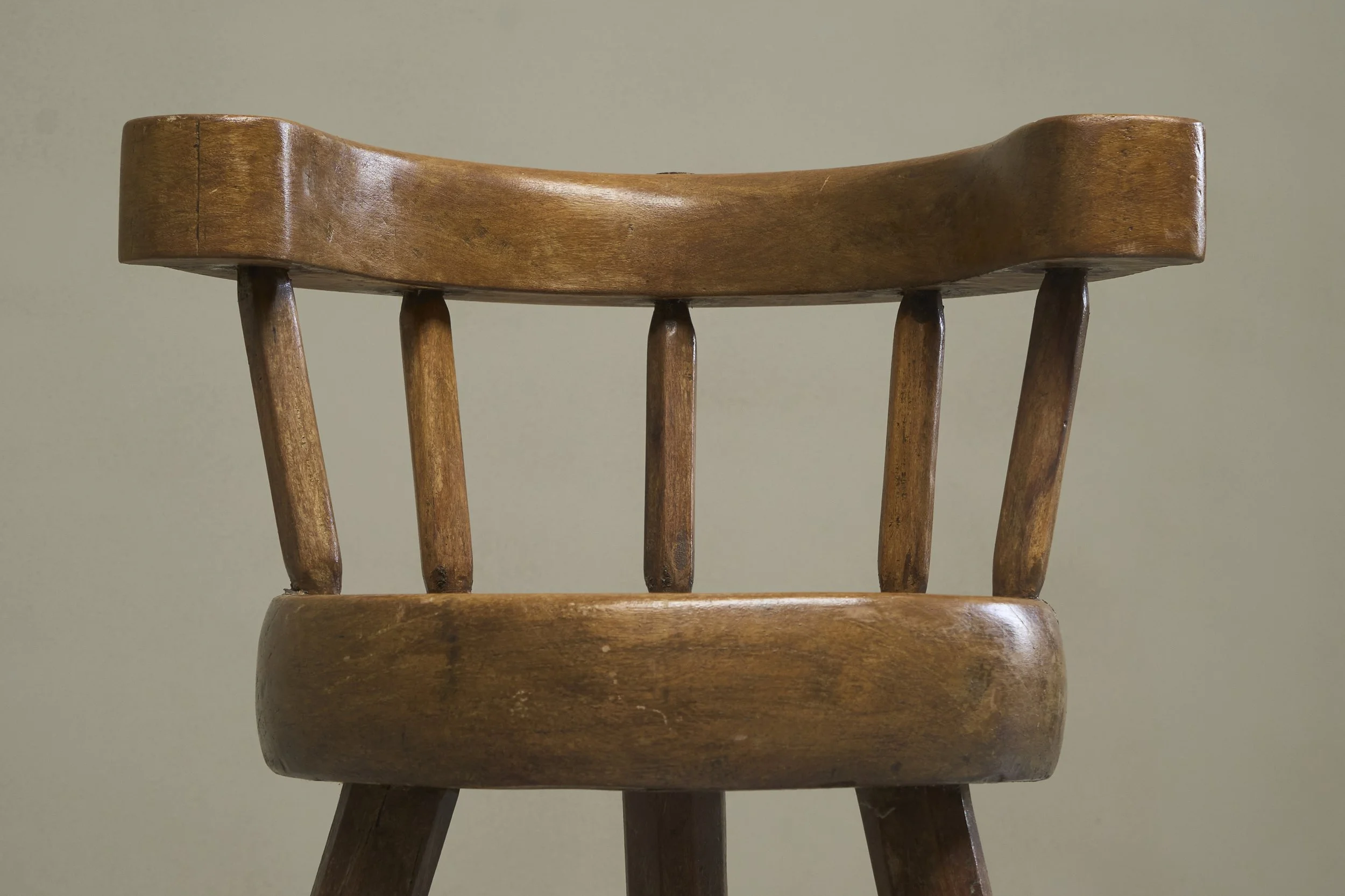 Image 2 of 14
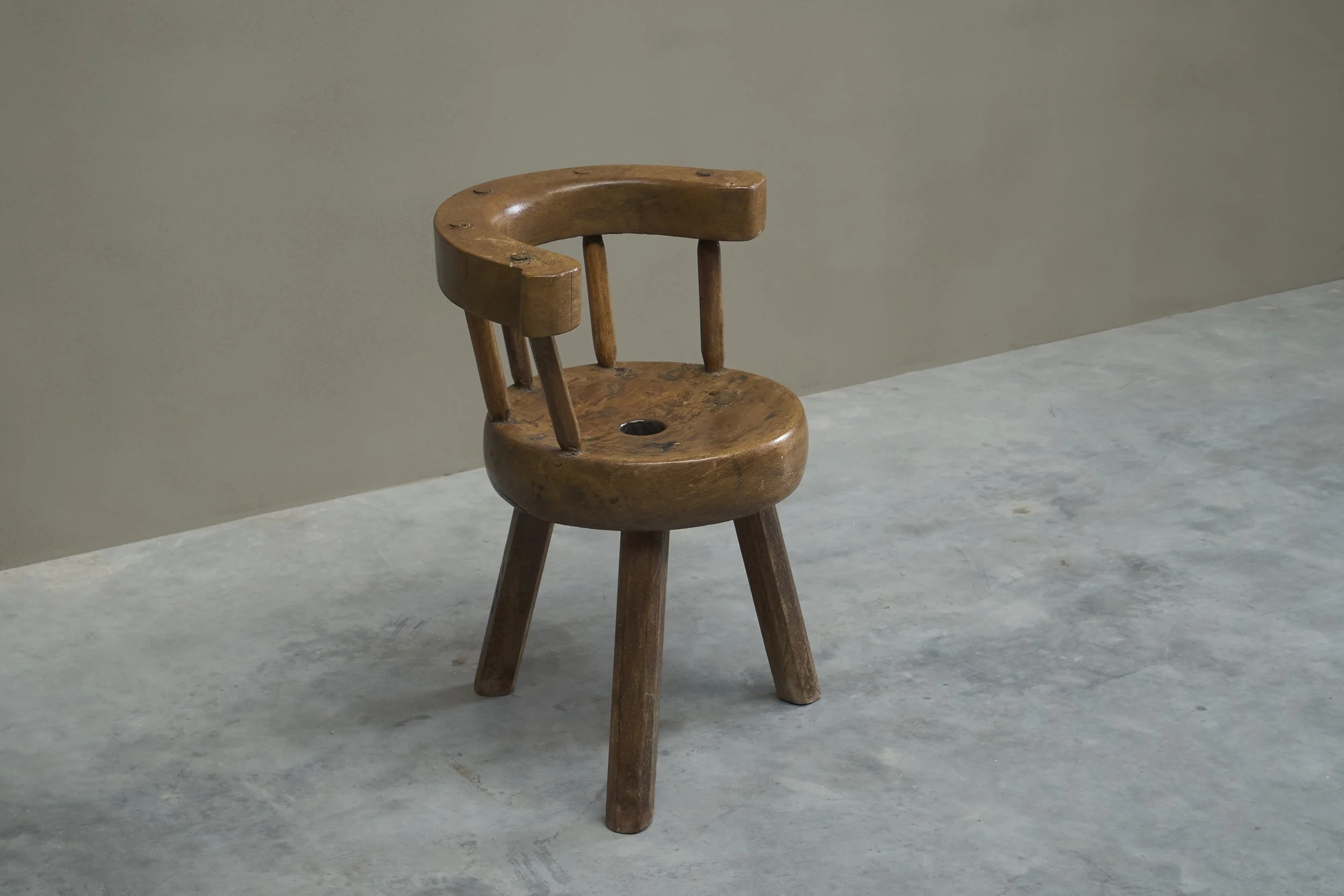 Image 3 of 14
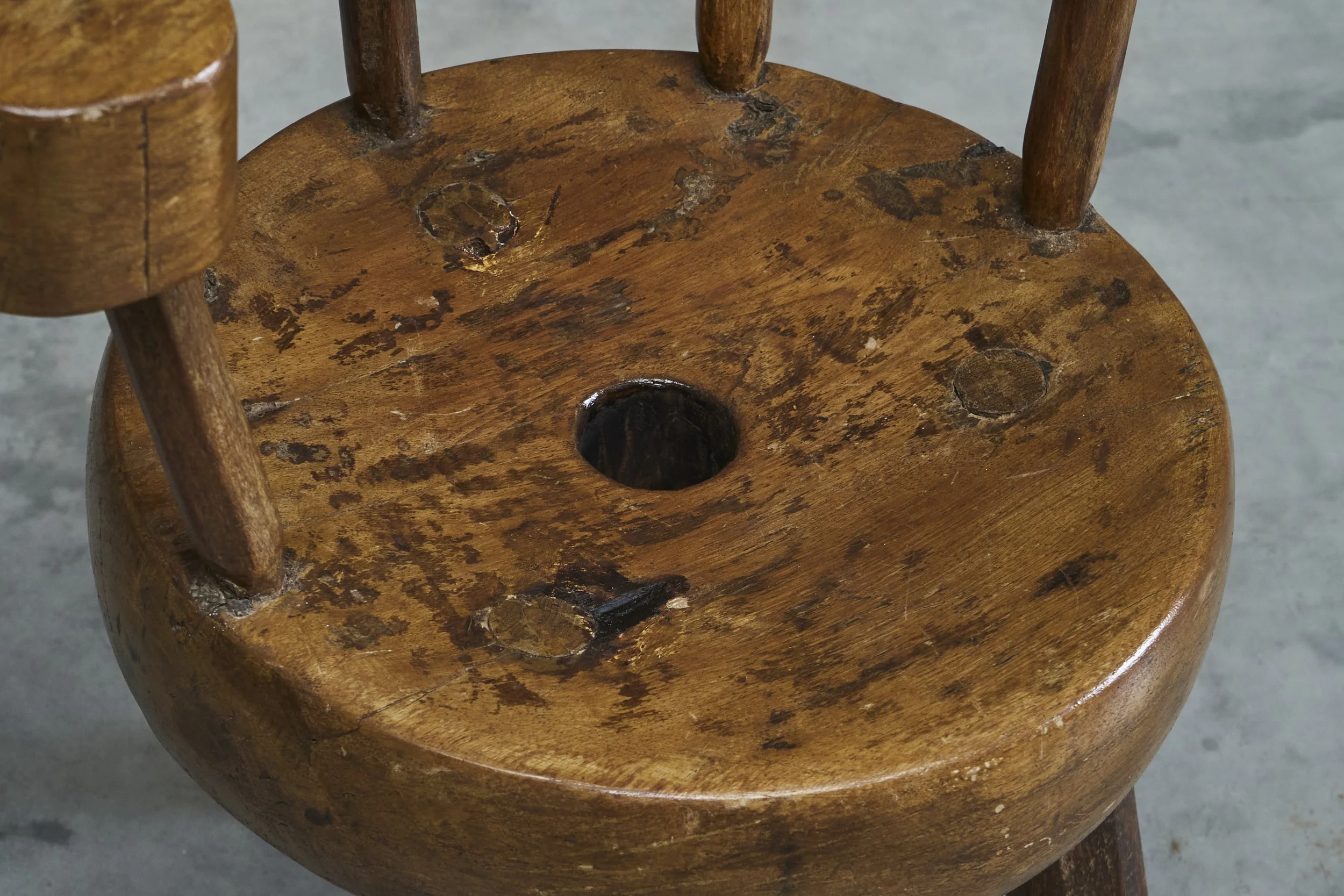 Image 4 of 14
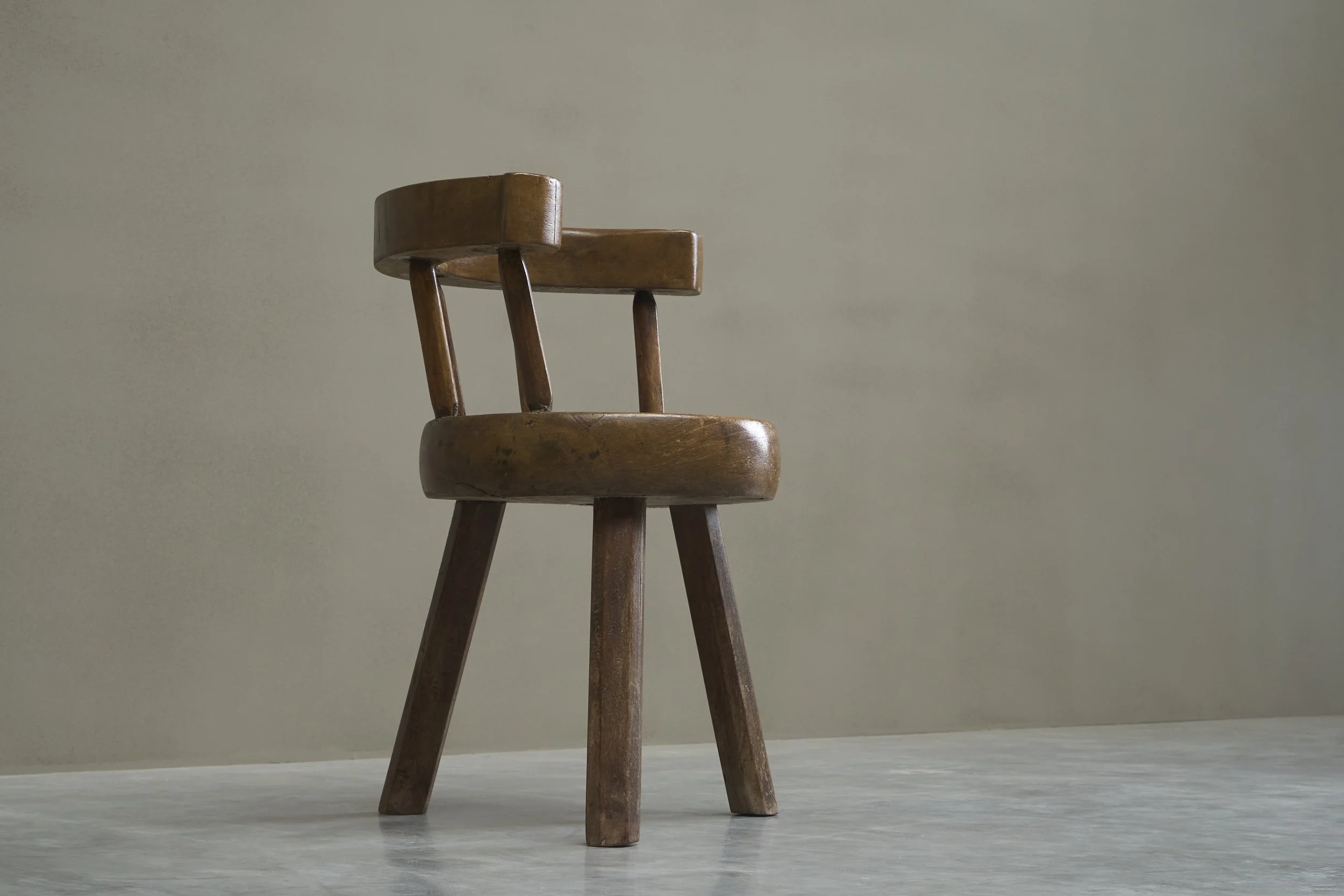 Image 5 of 14
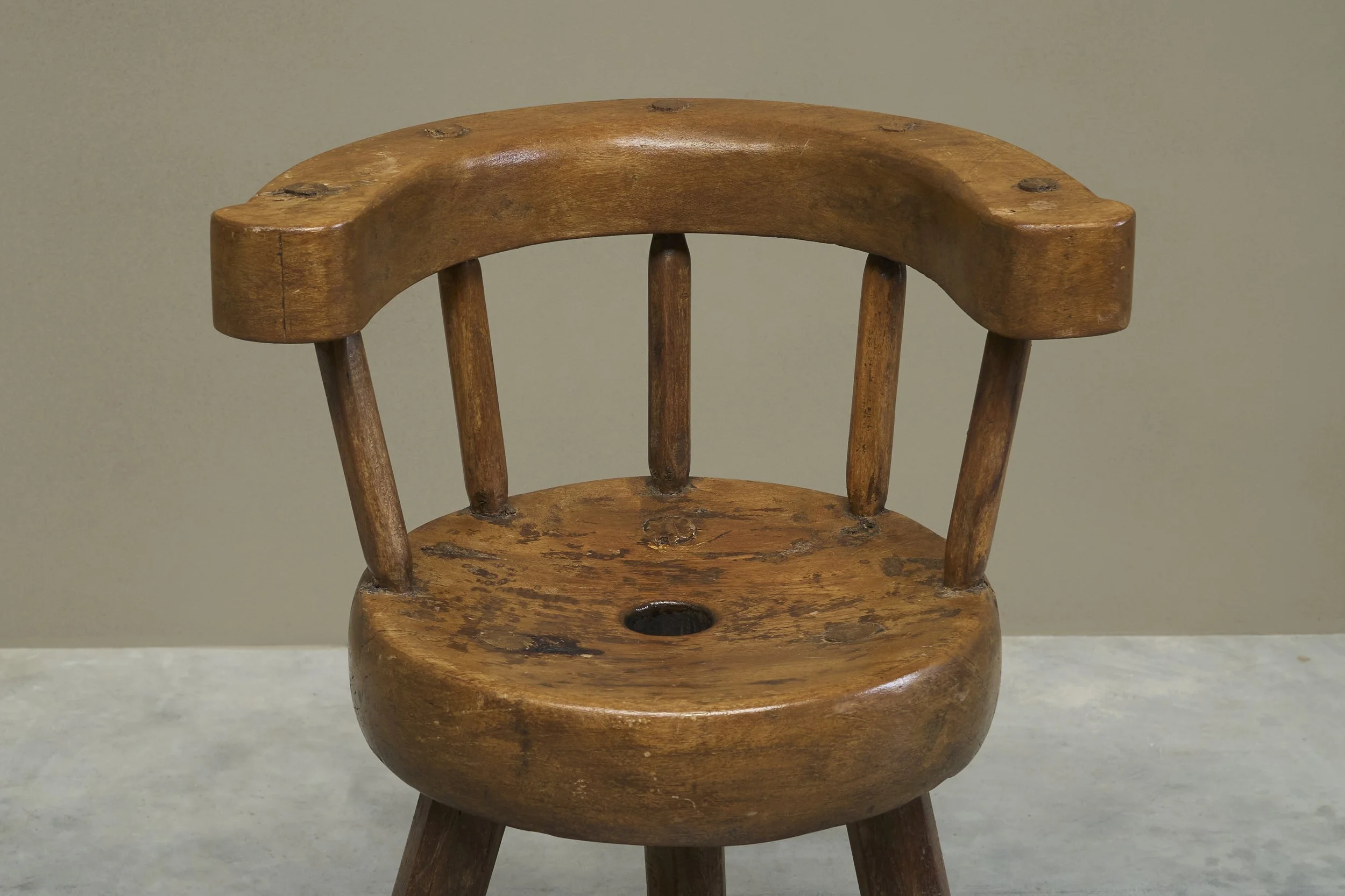 Image 6 of 14
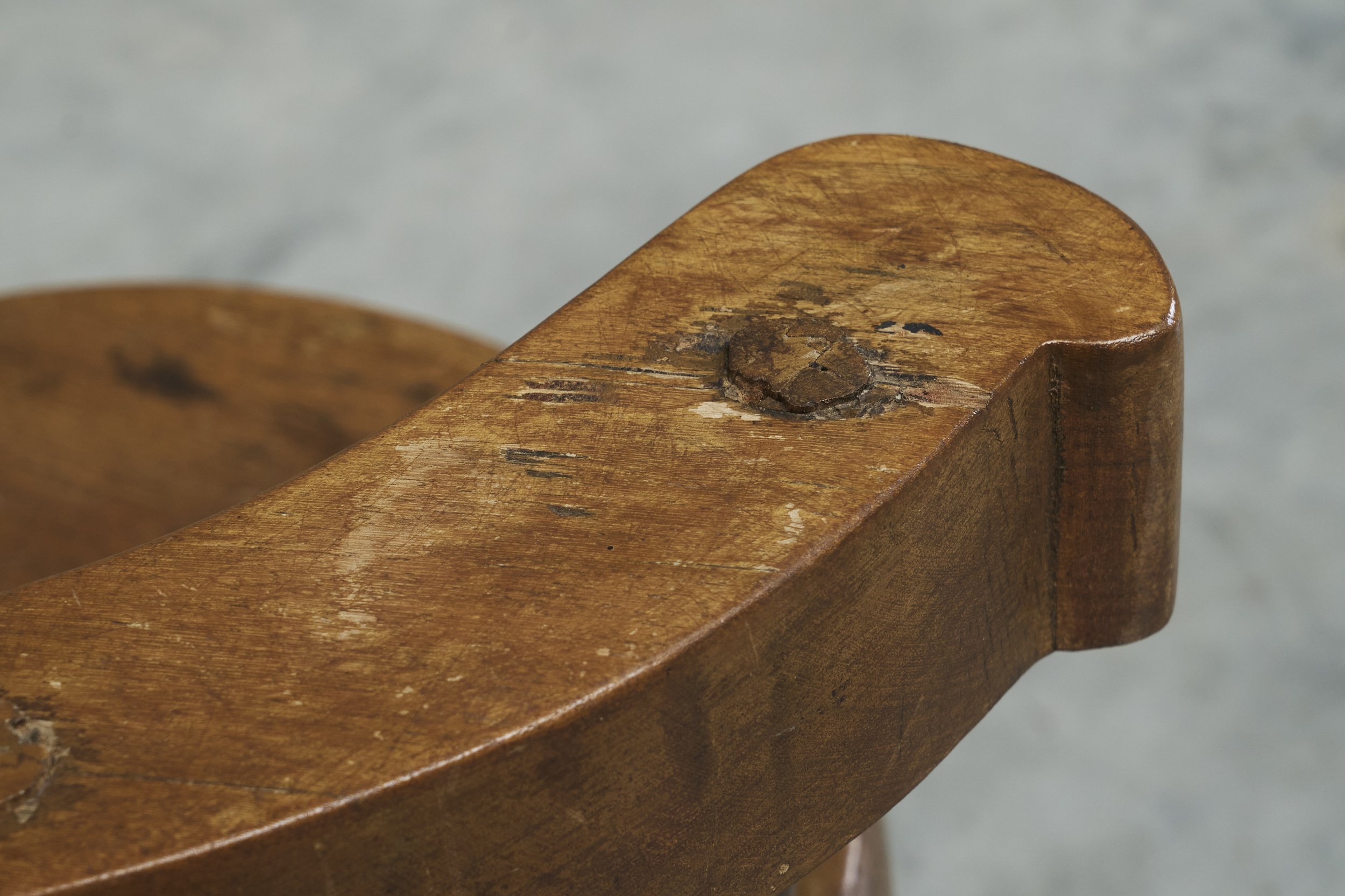 Image 7 of 14
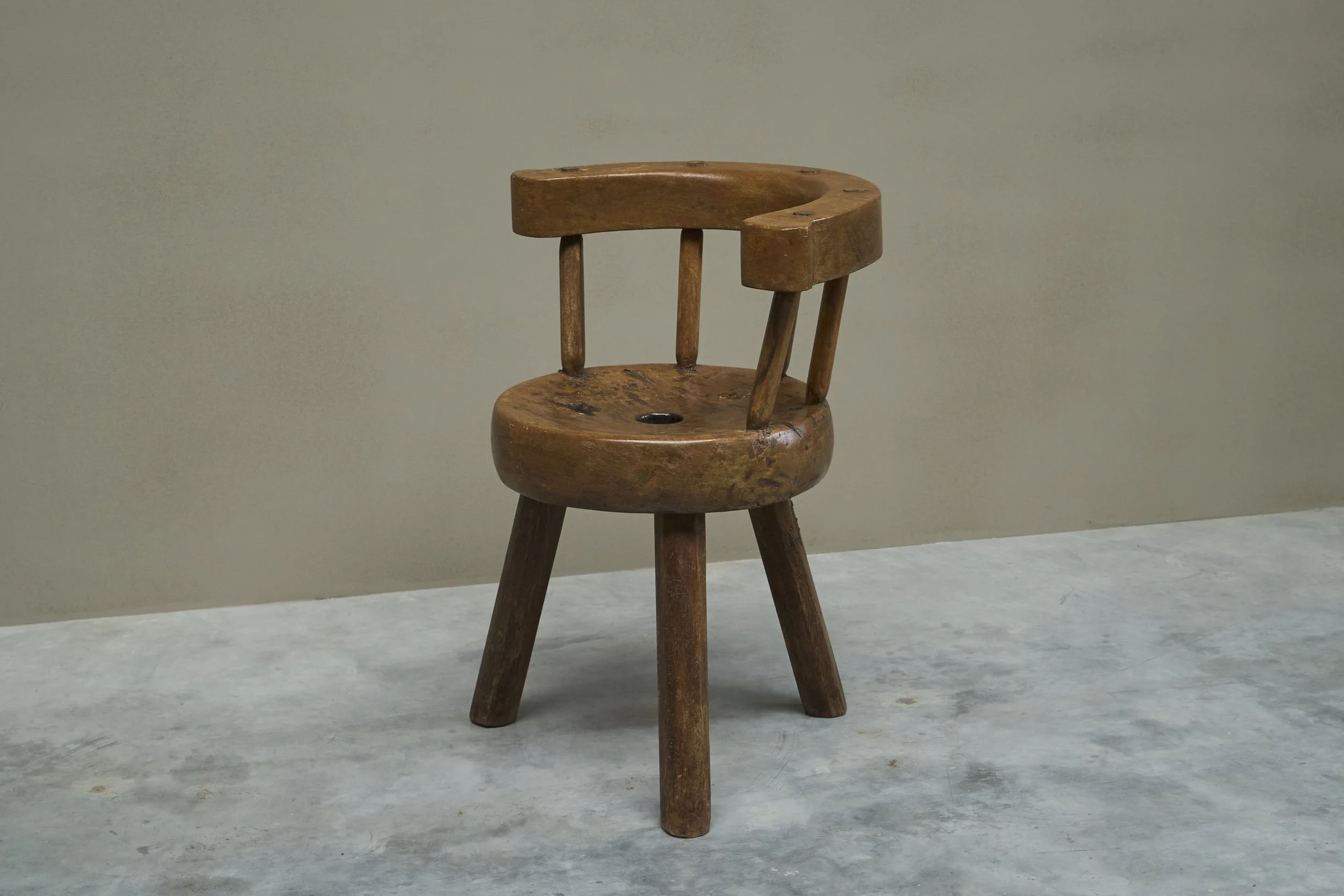 Image 8 of 14
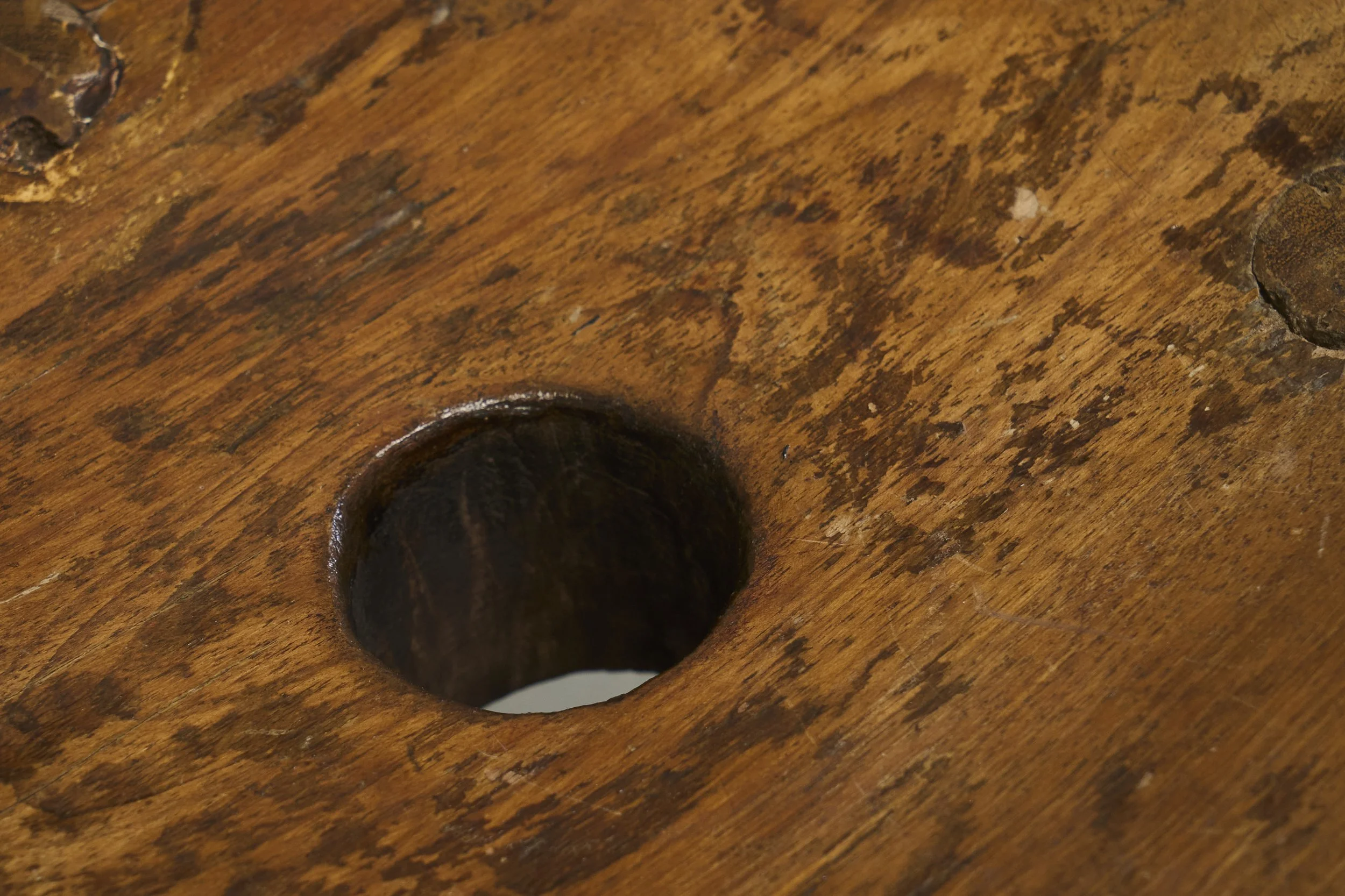 Image 9 of 14
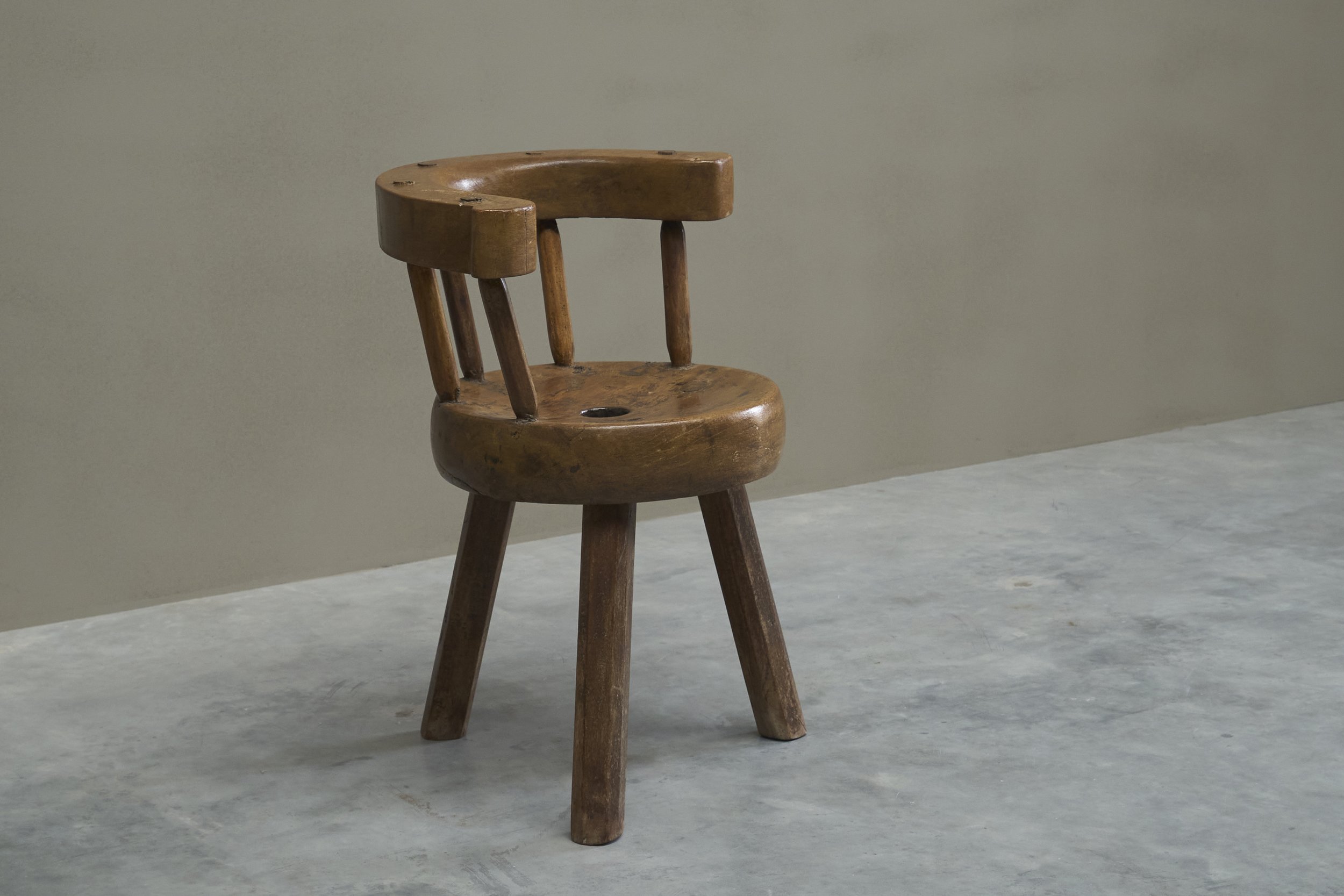 Image 10 of 14
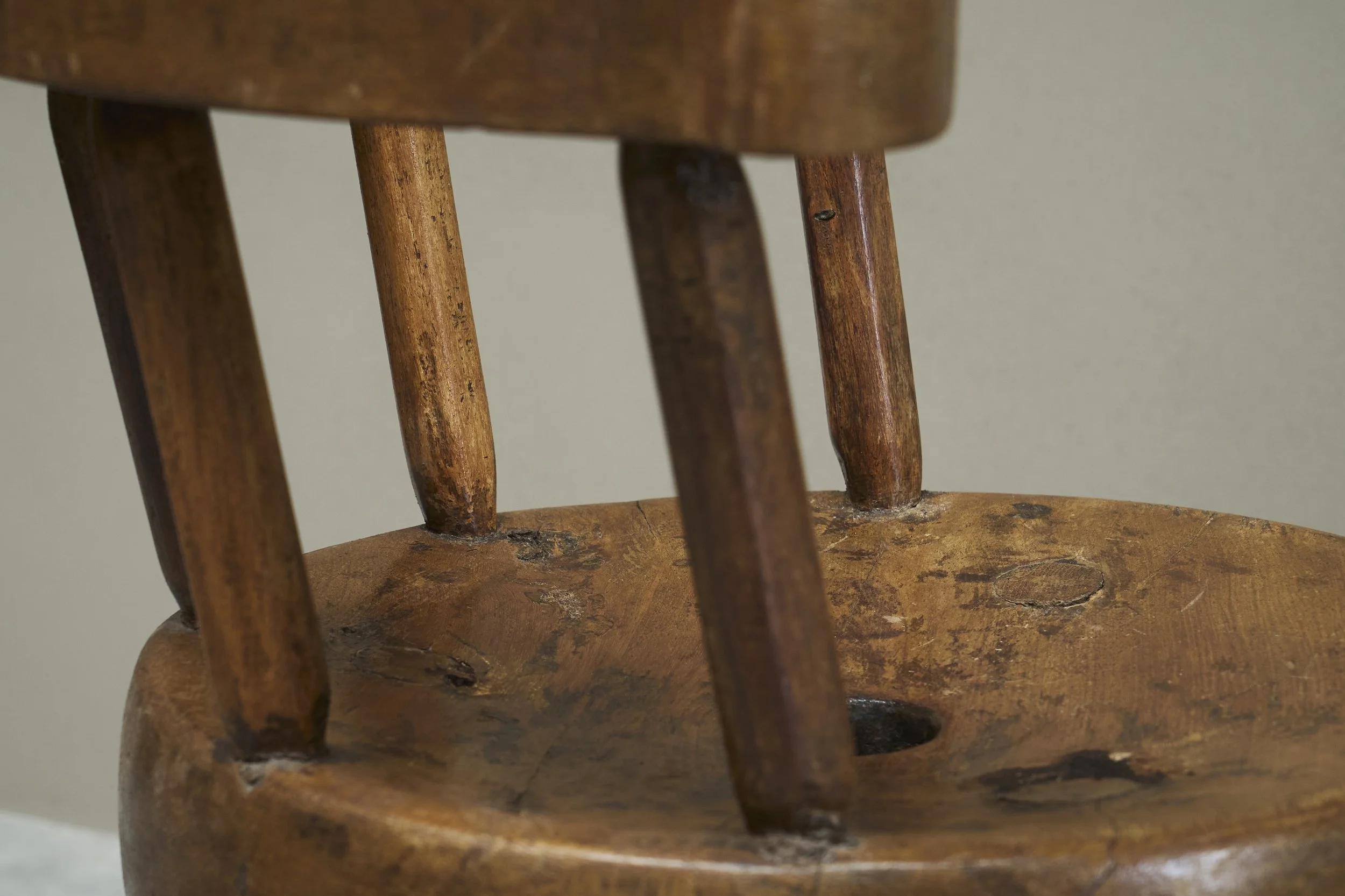 Image 11 of 14
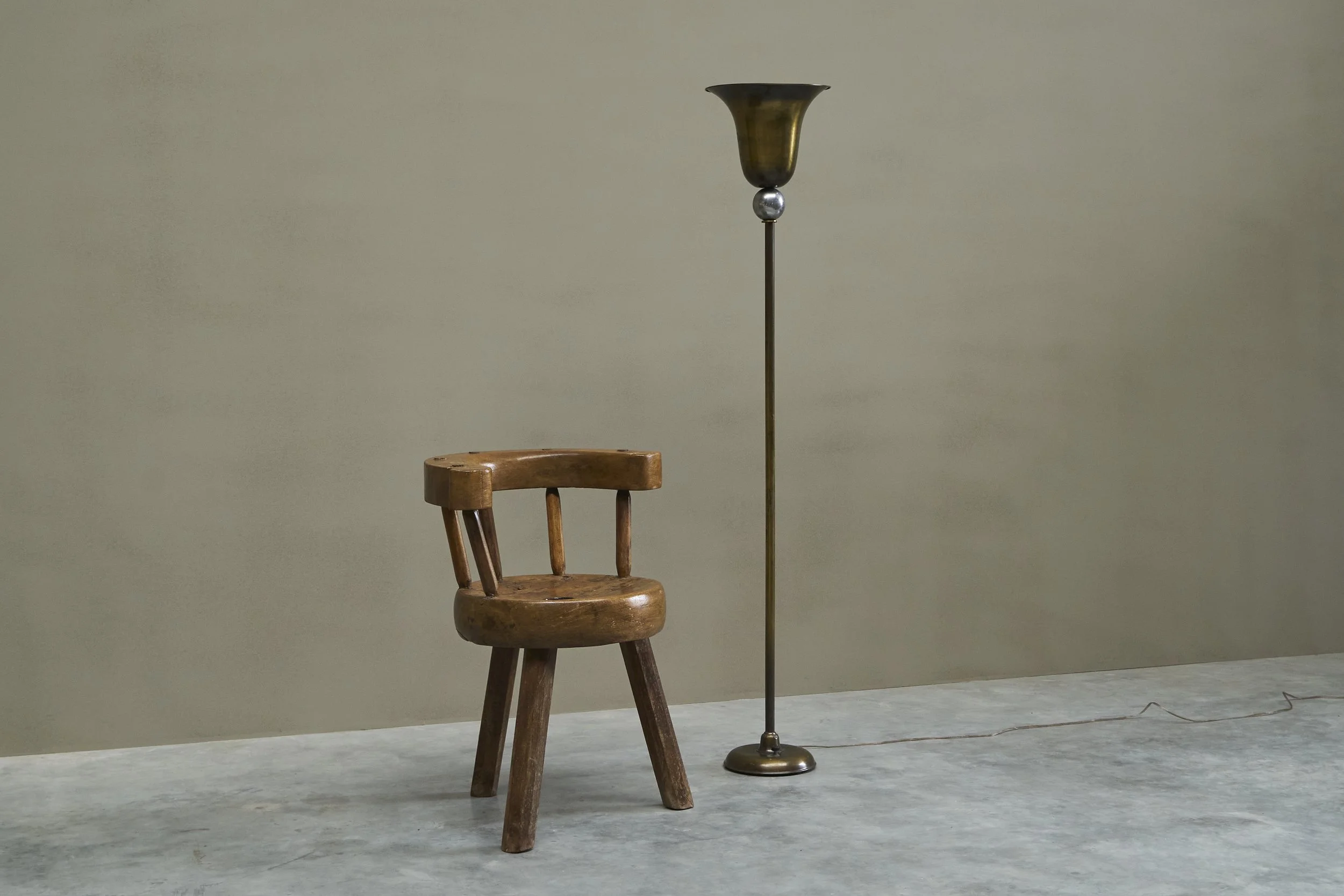 Image 12 of 14
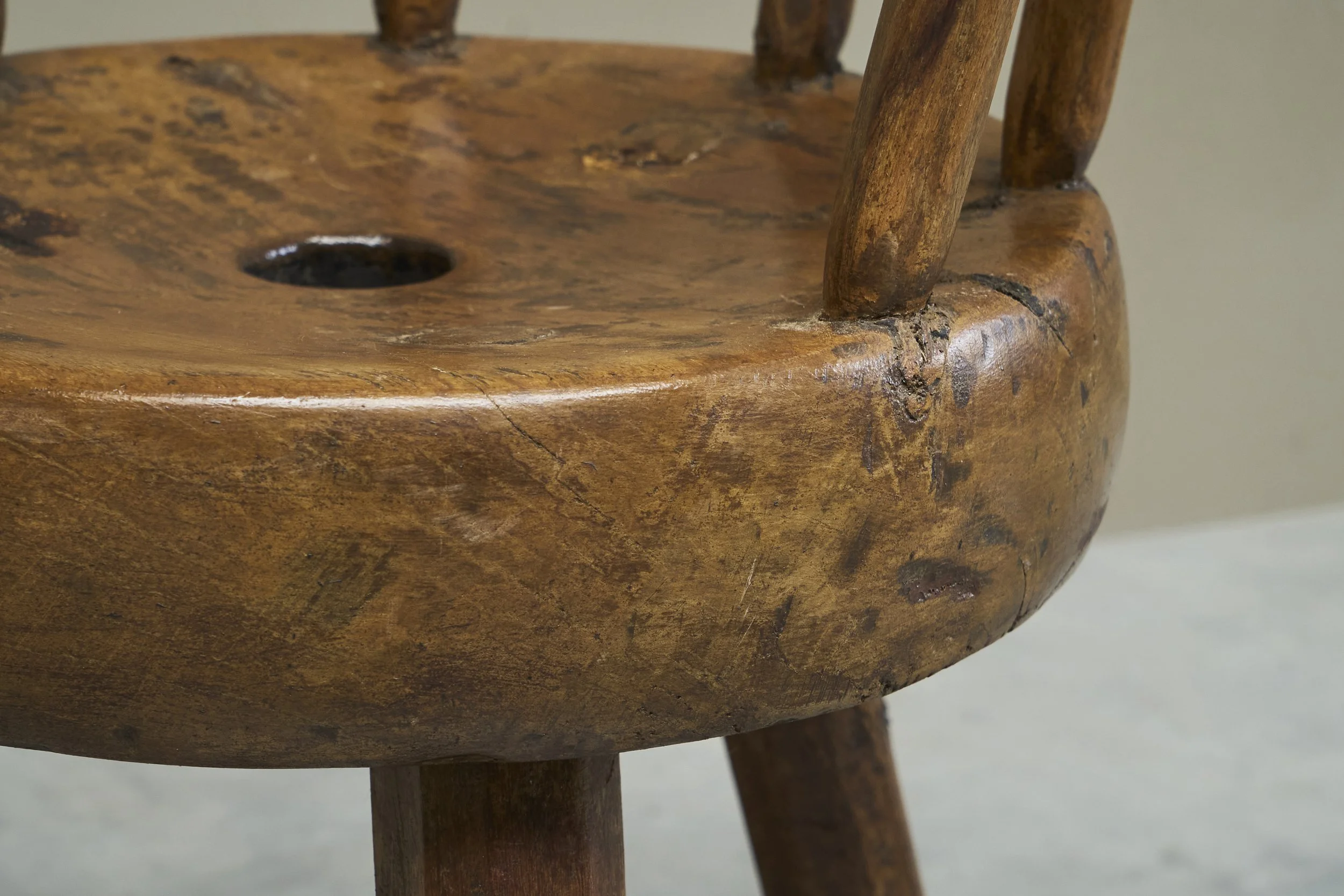 Image 13 of 14
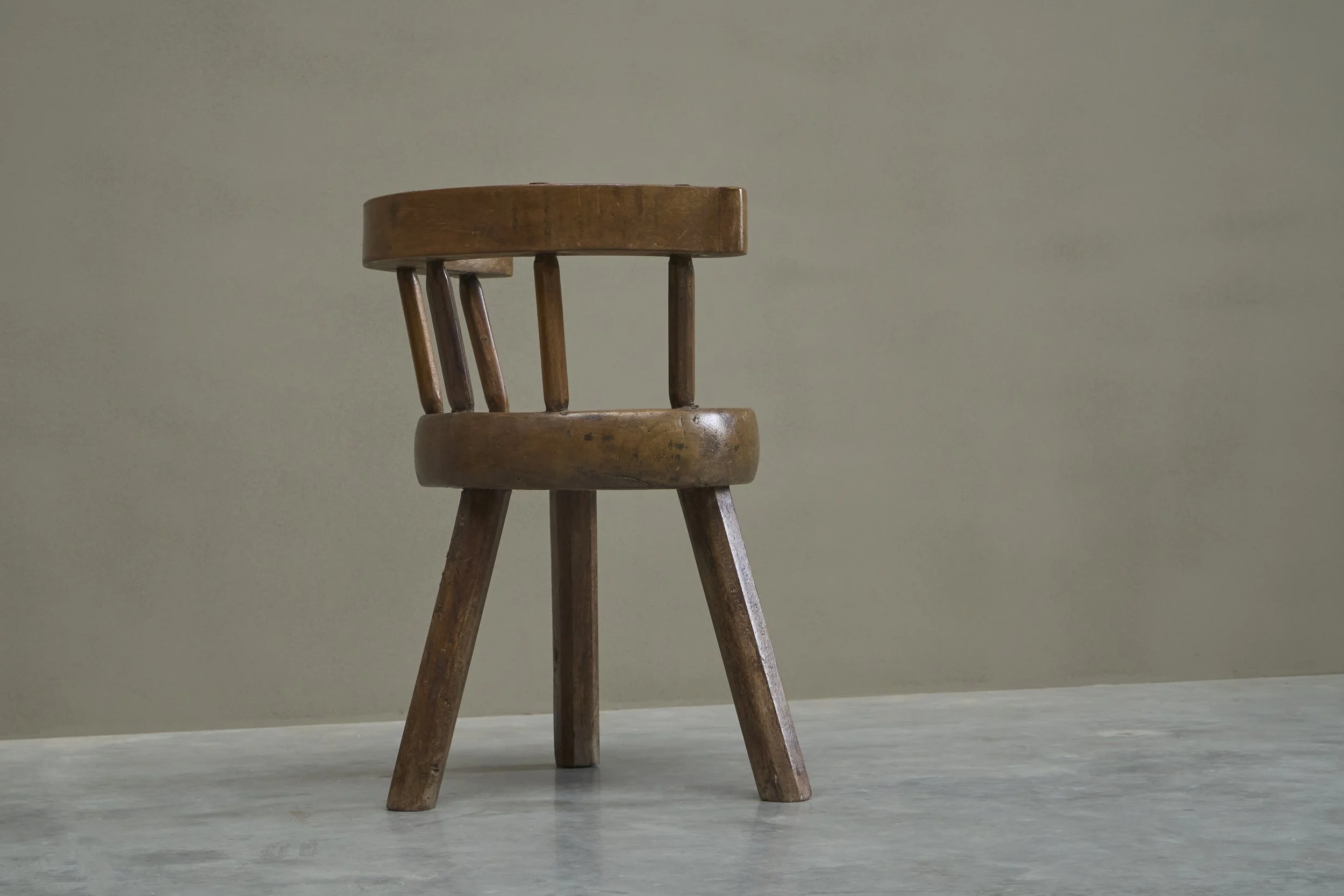 Image 14 of 14