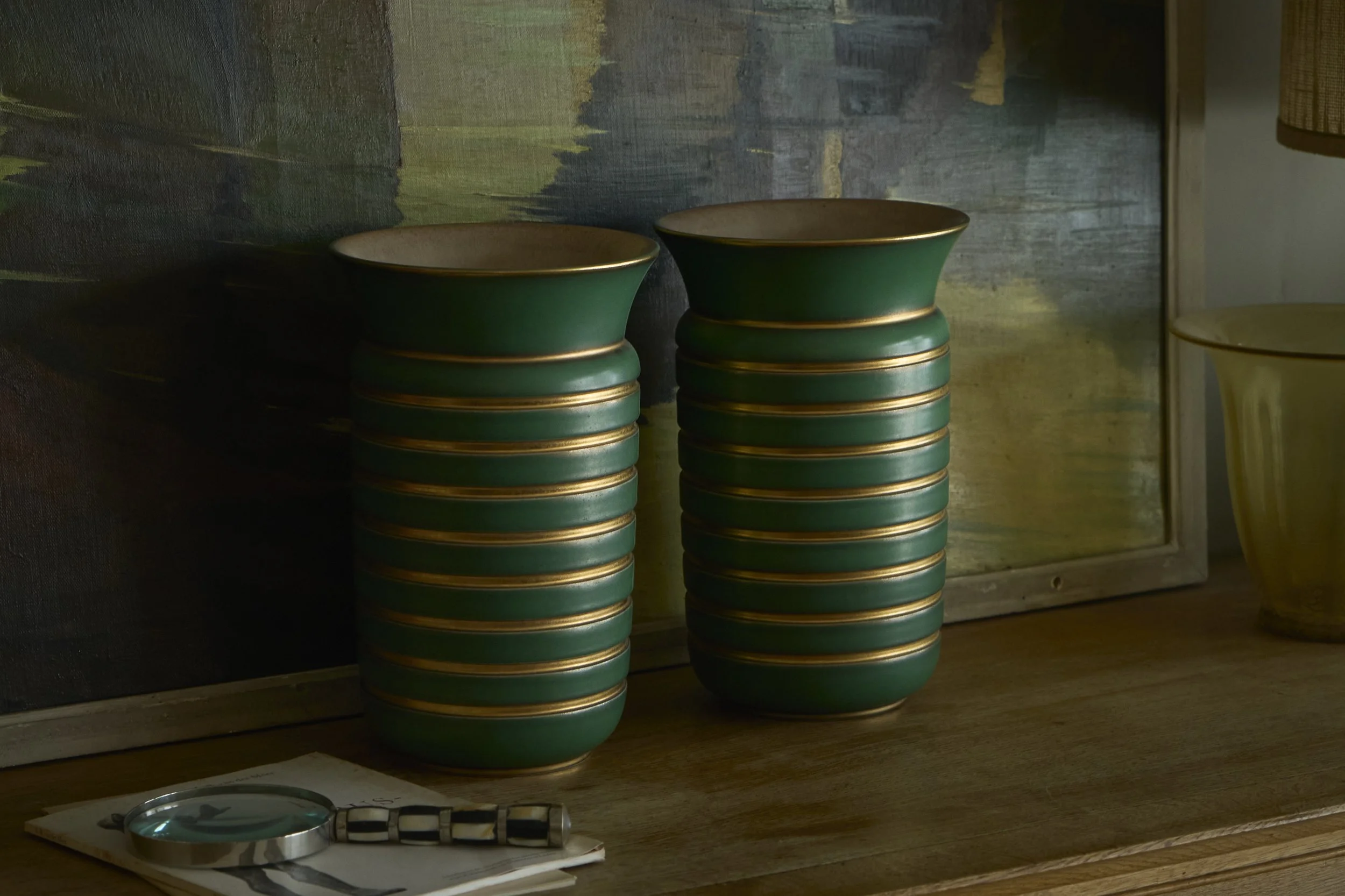
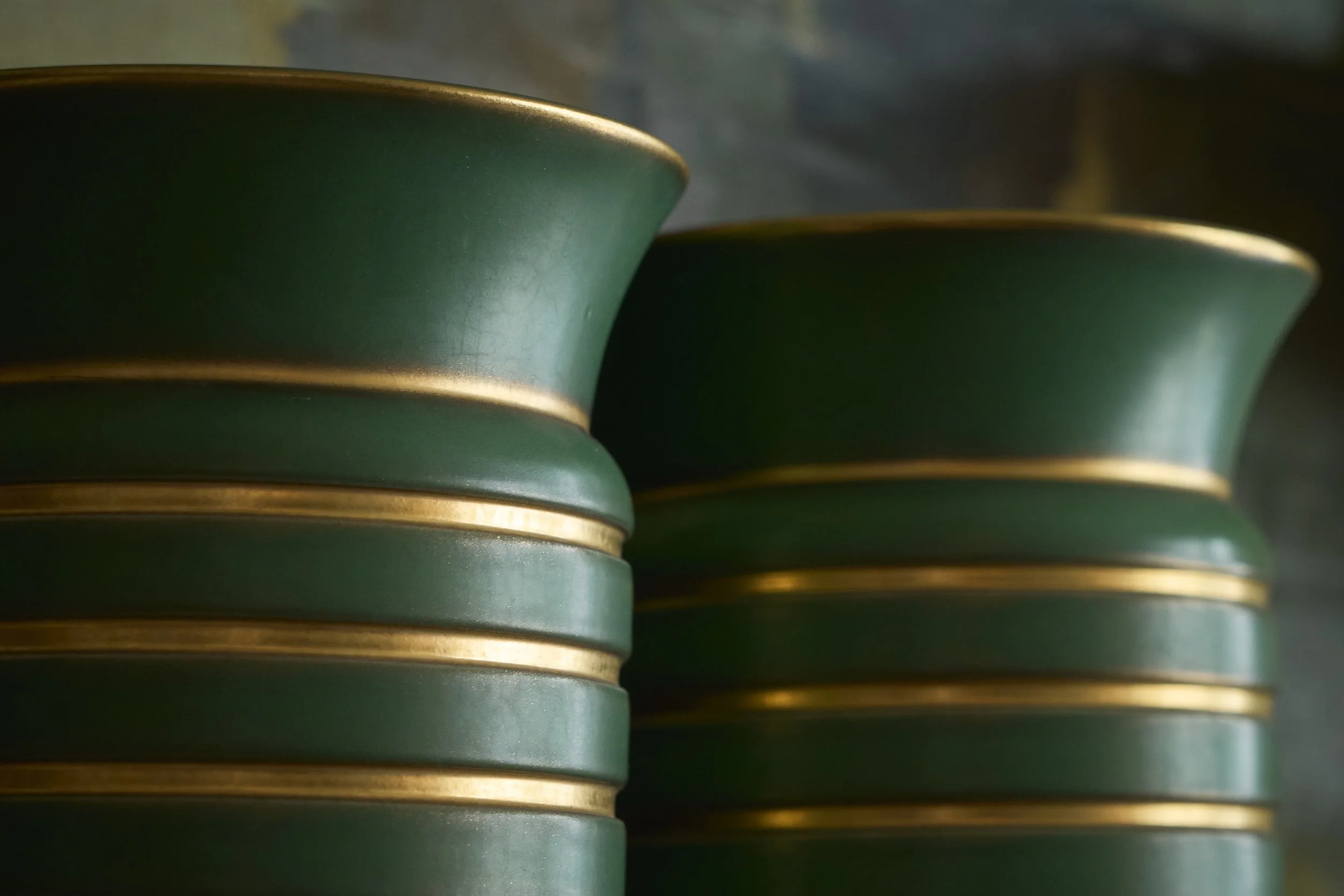
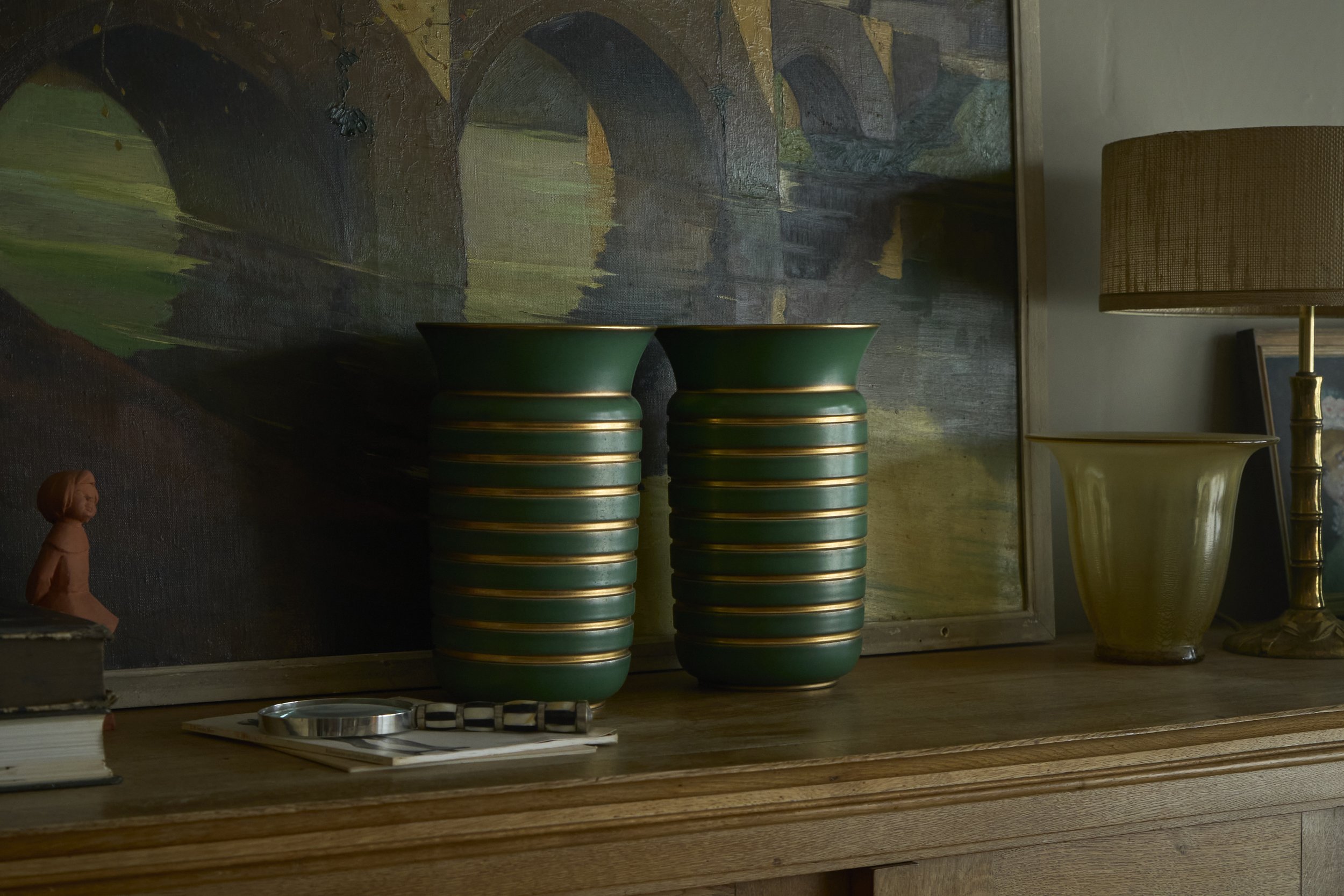
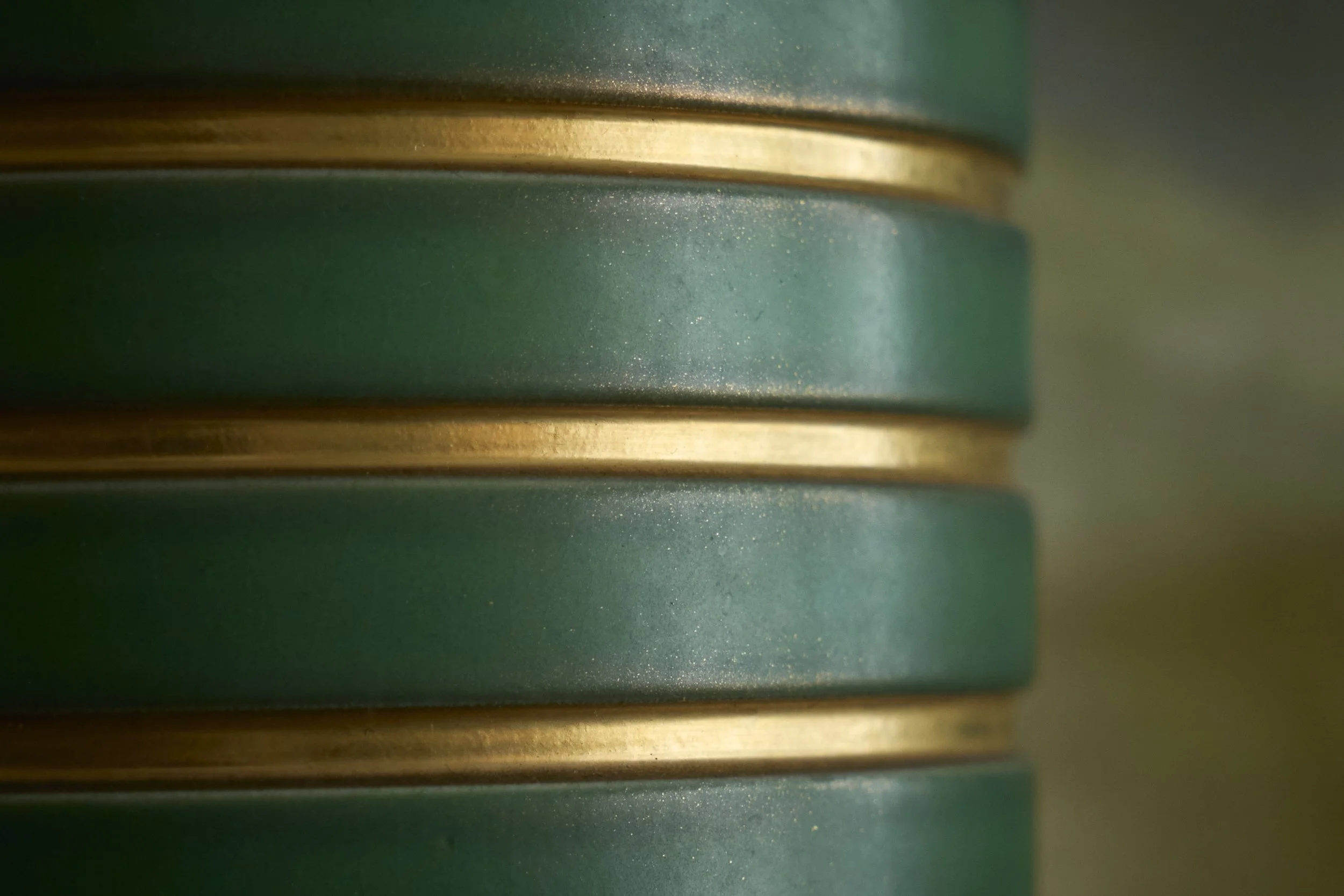
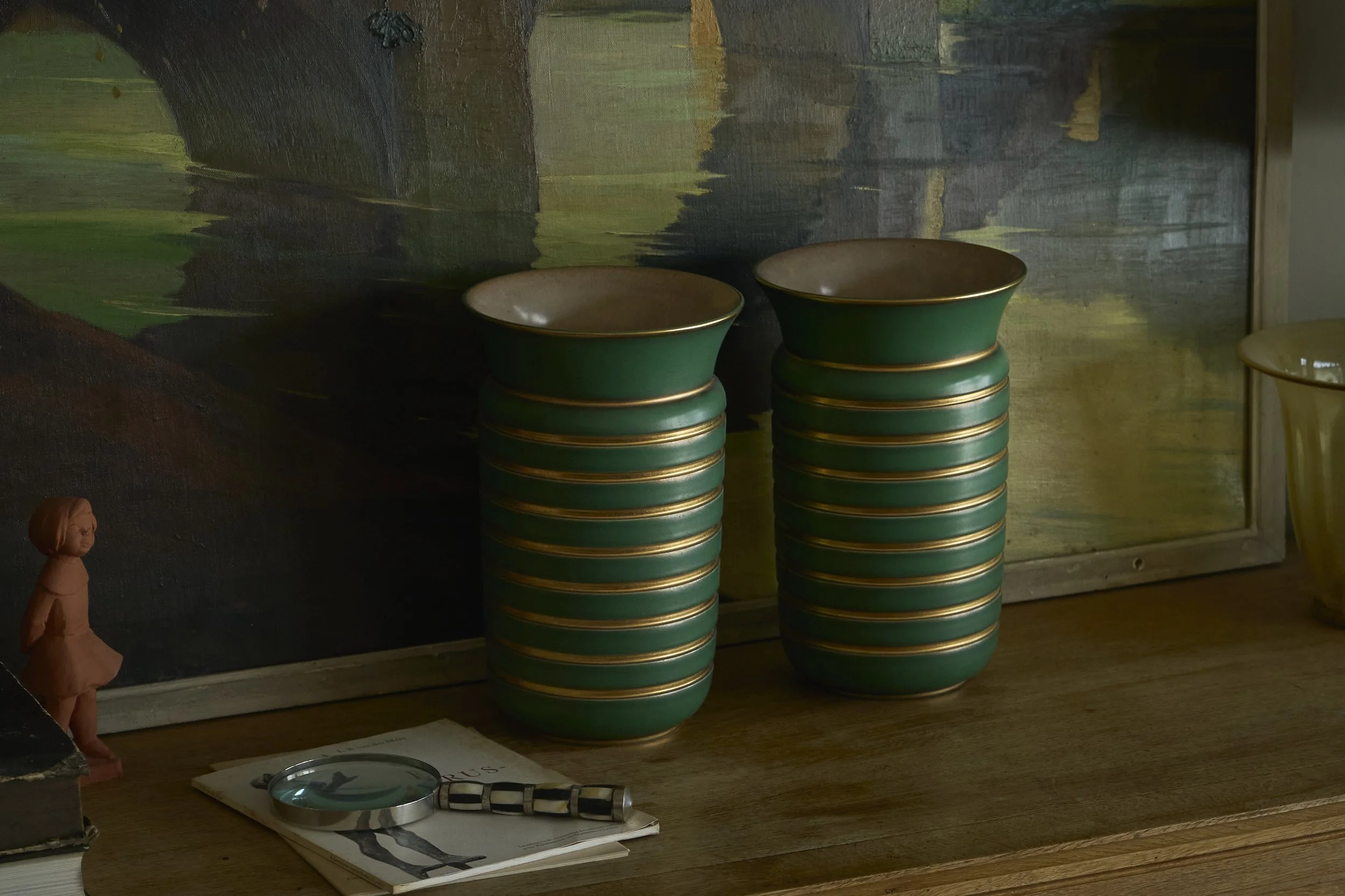
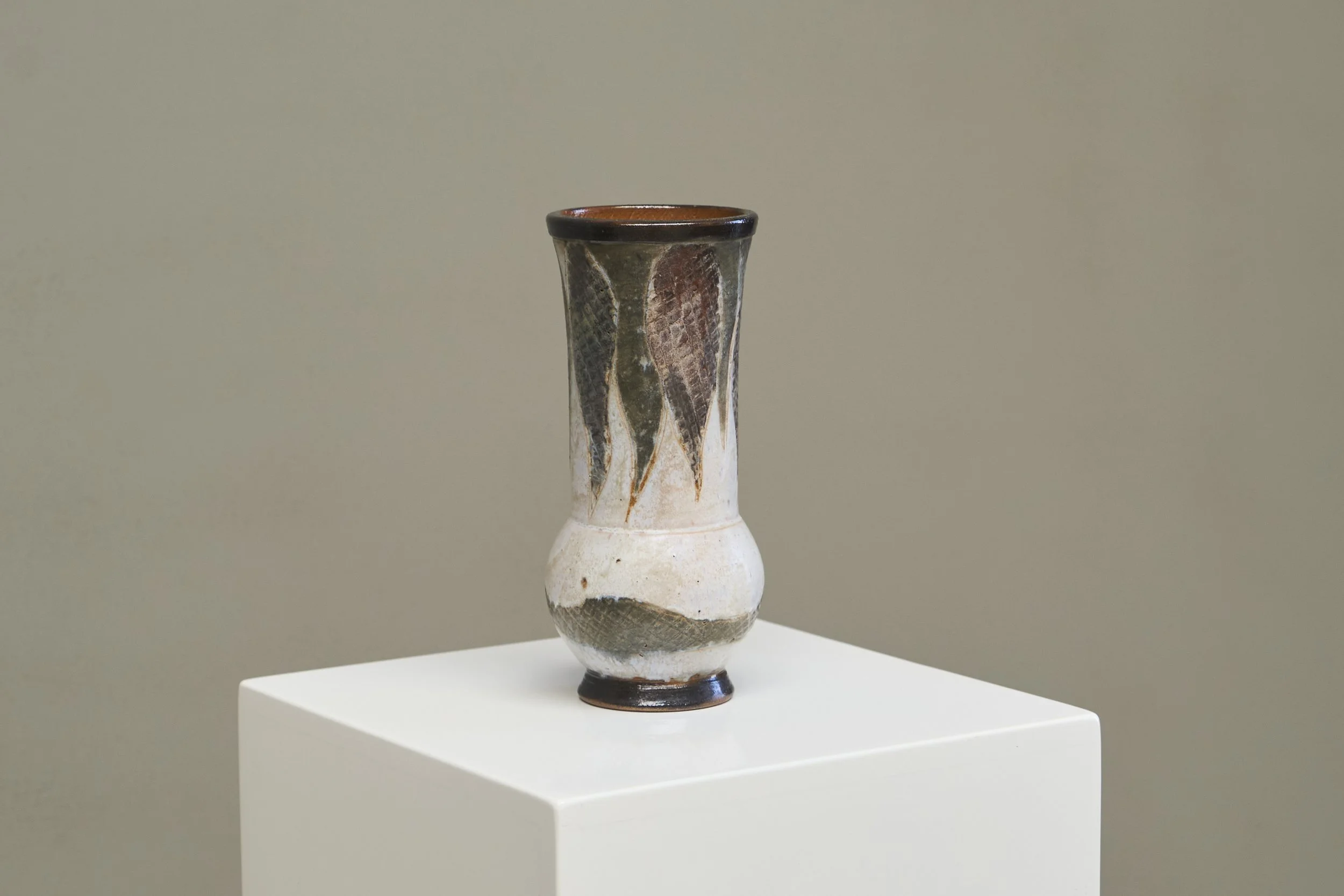
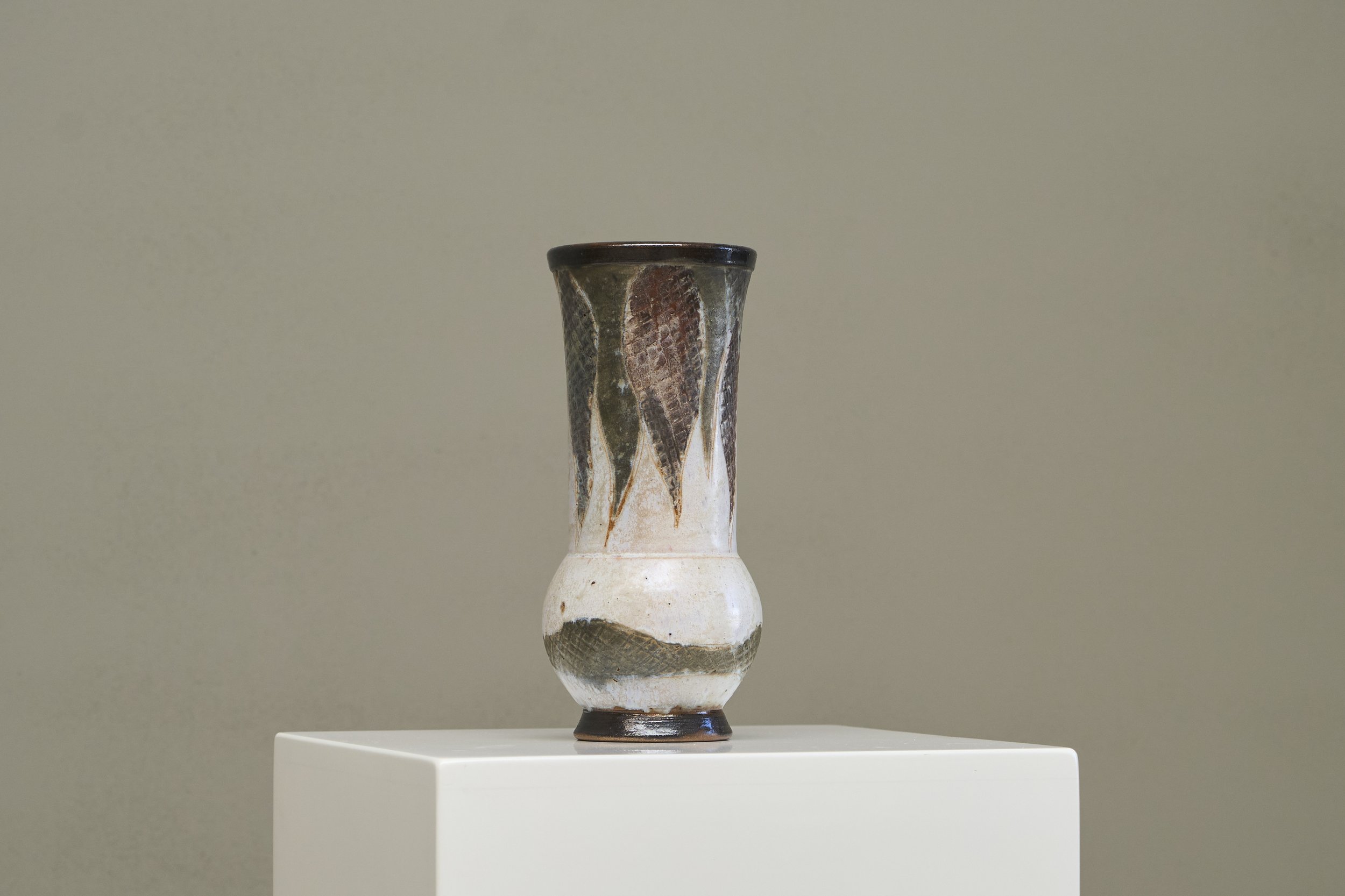
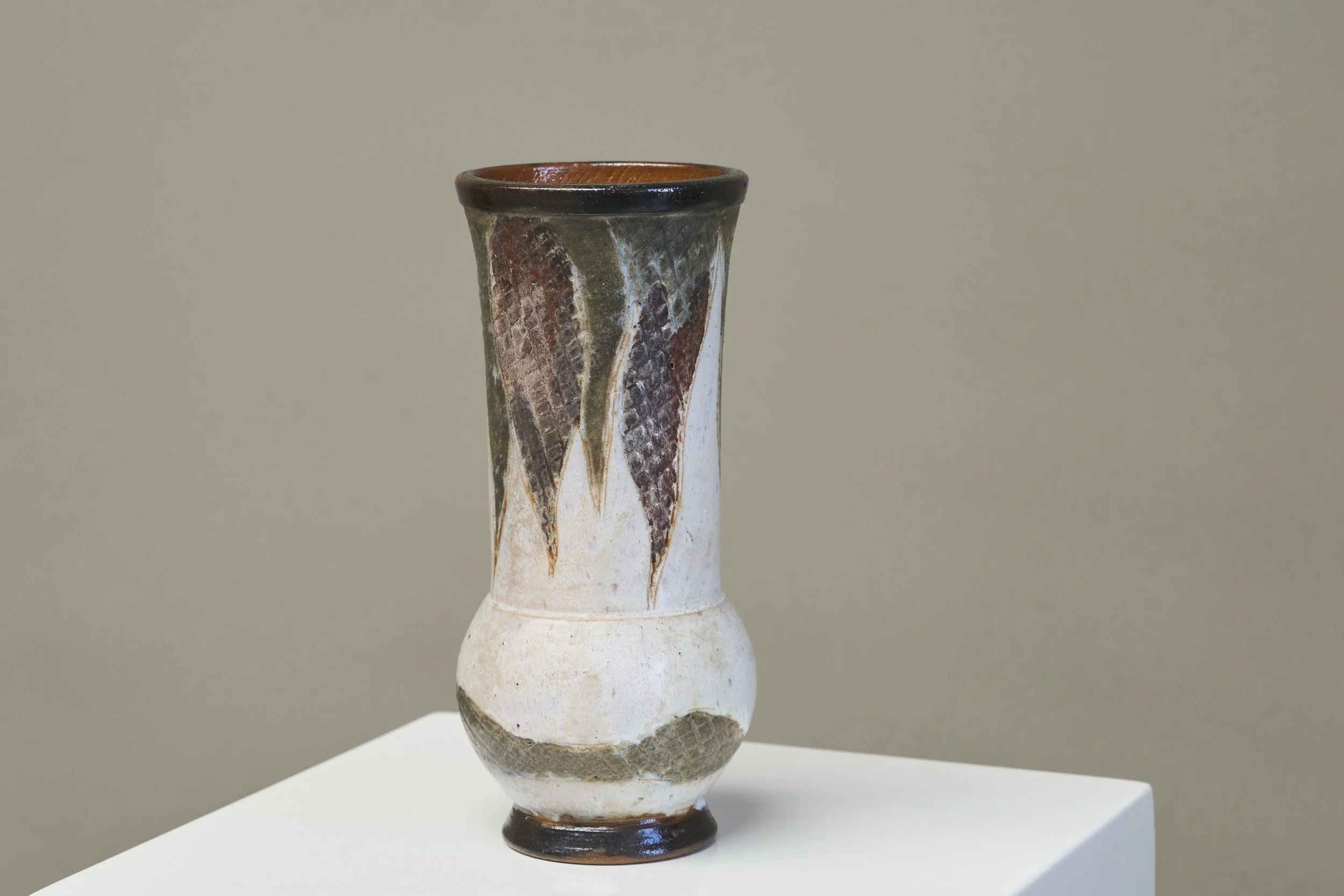
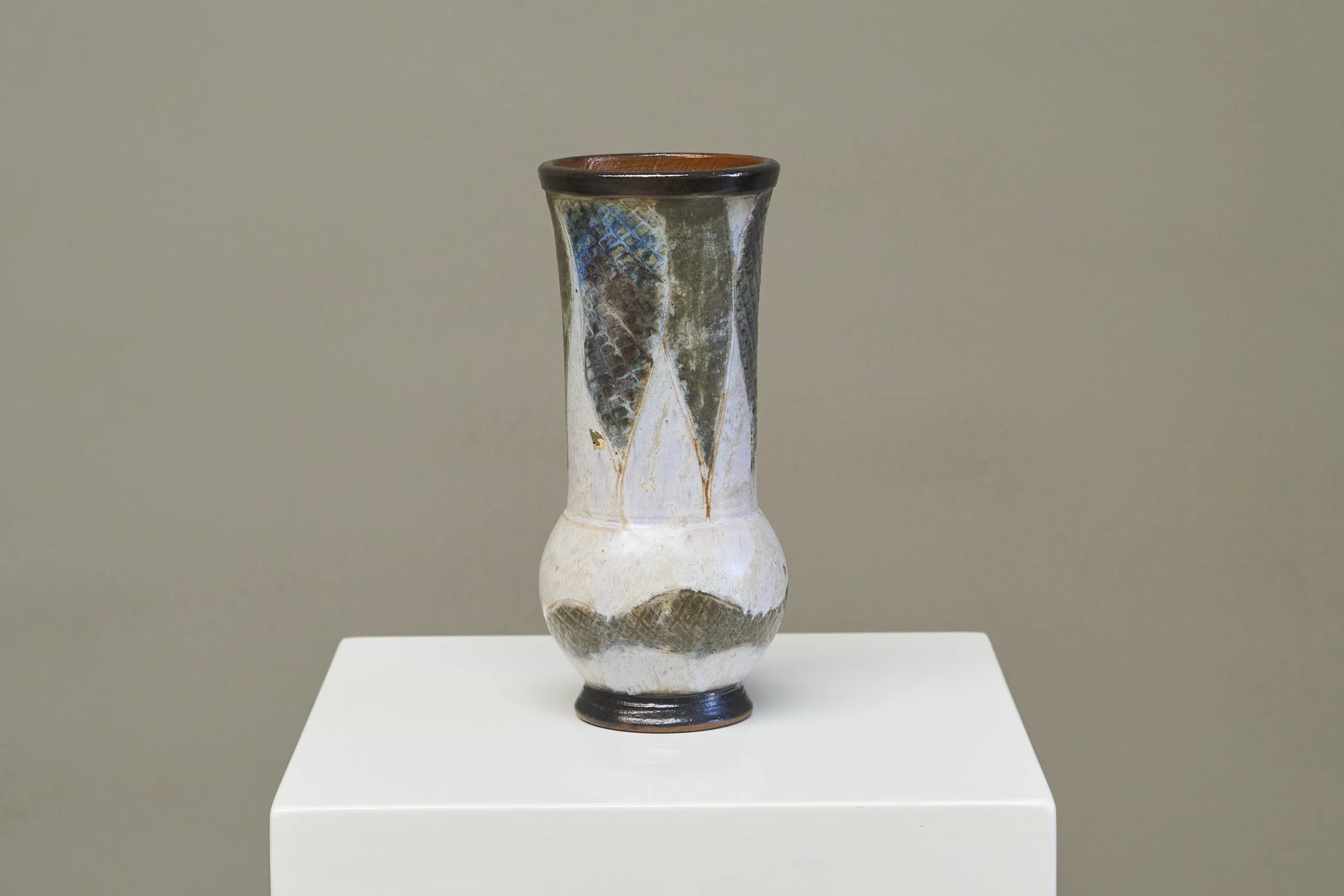
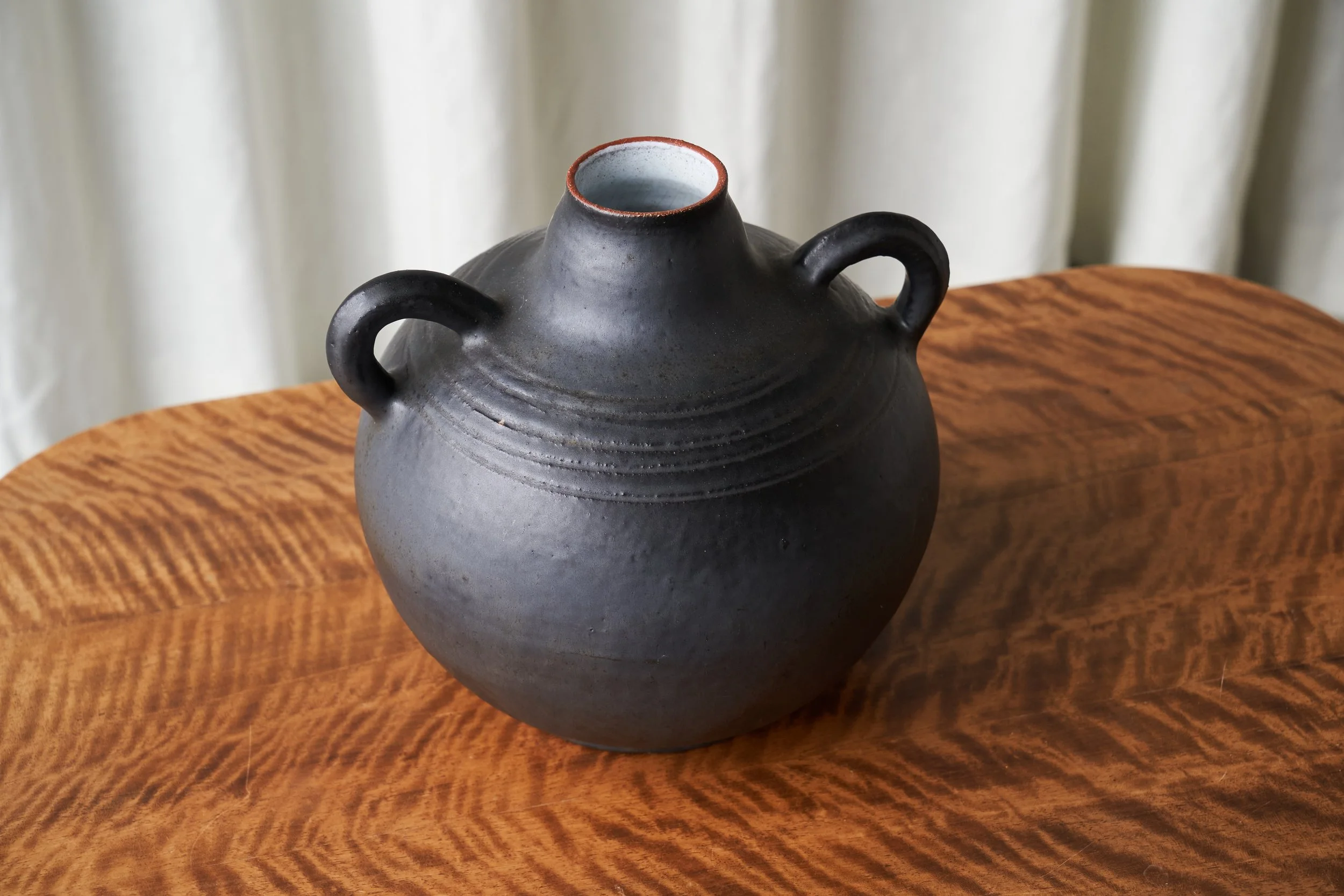
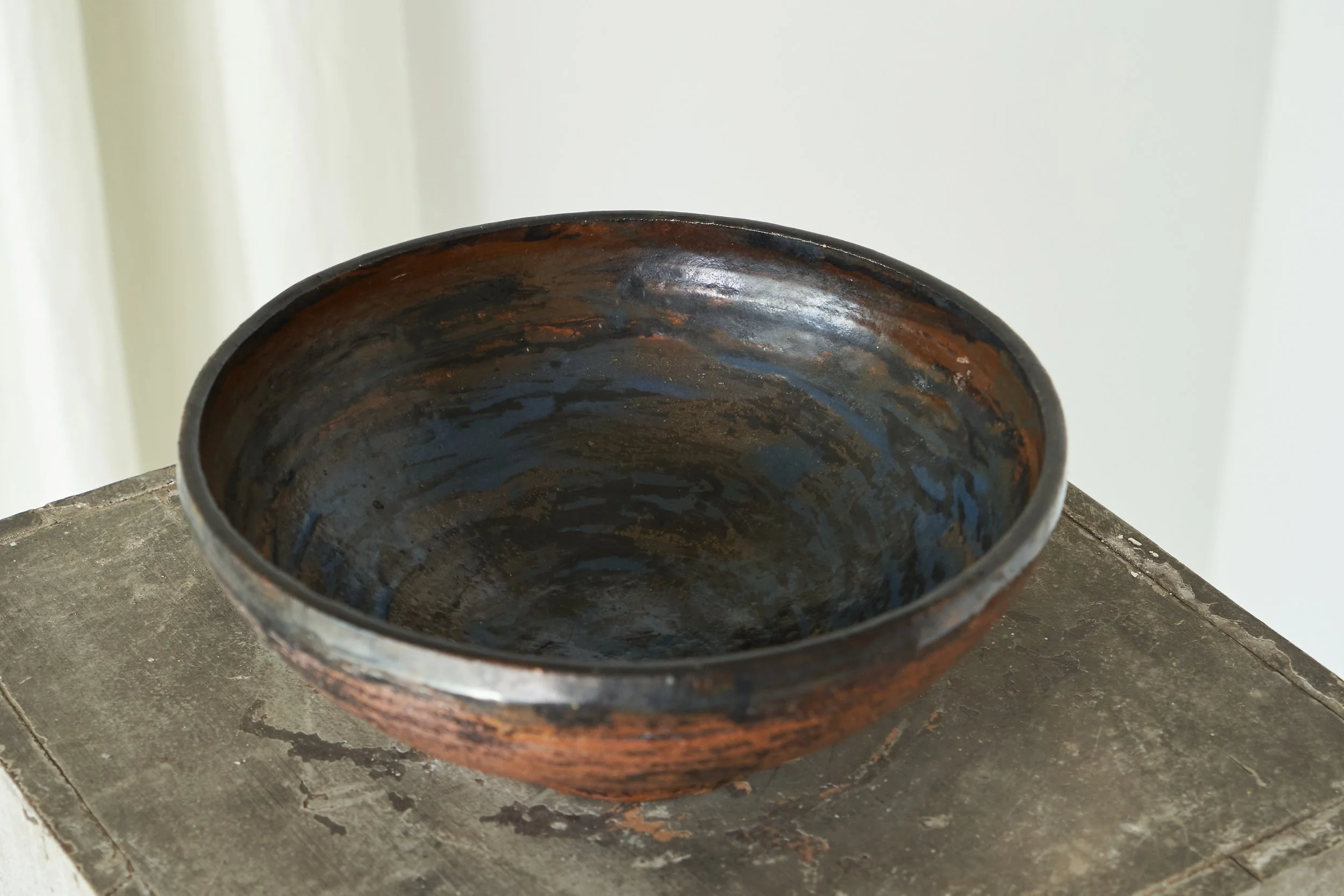
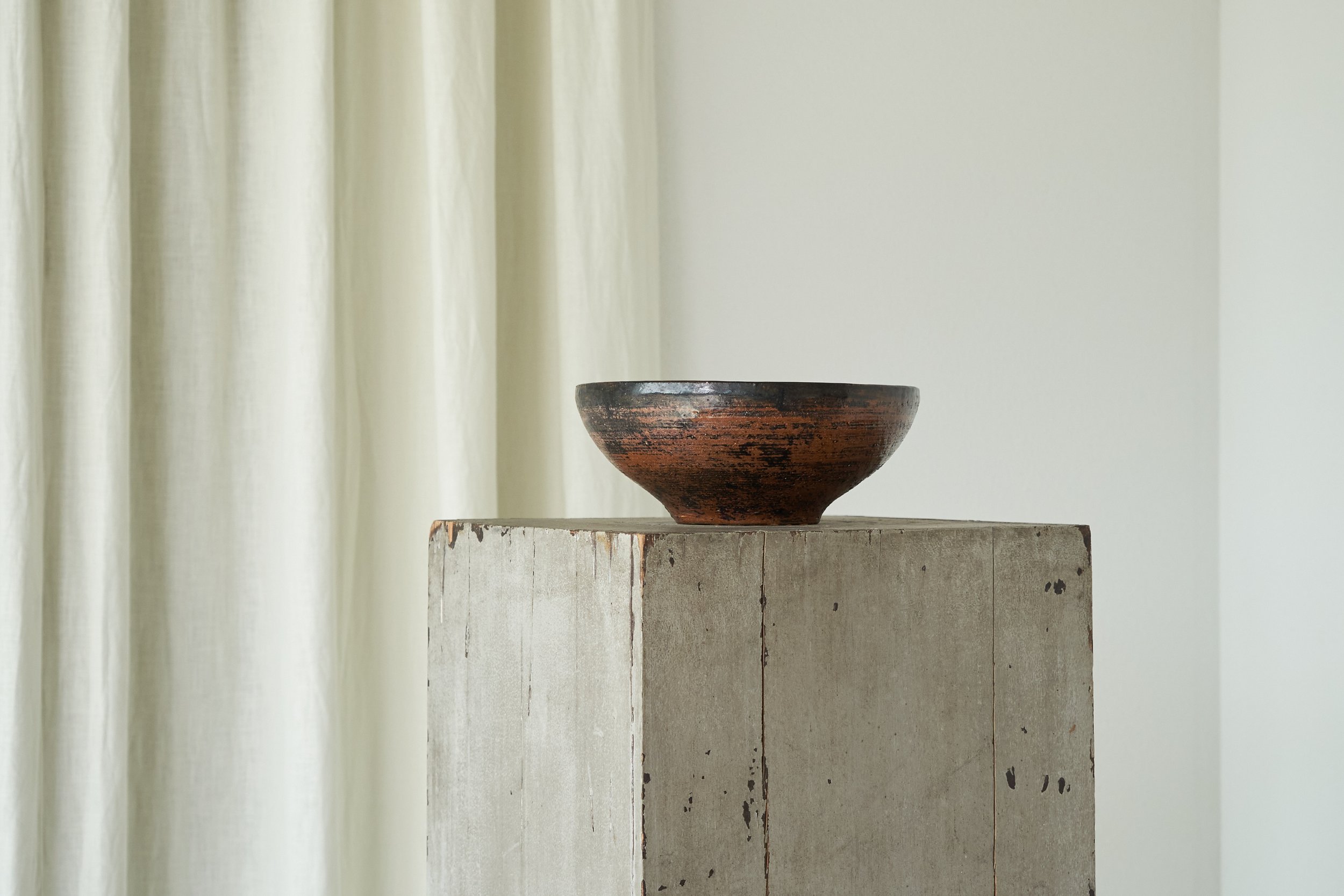
A striking example of Dutch ‘Crisis Pottery’ produced during the economically challenging years of the 1930s. The vase has a gently flaring cylindrical form and its decoration is created through successive layers of sprayed glaze rather than traditional hand painting.
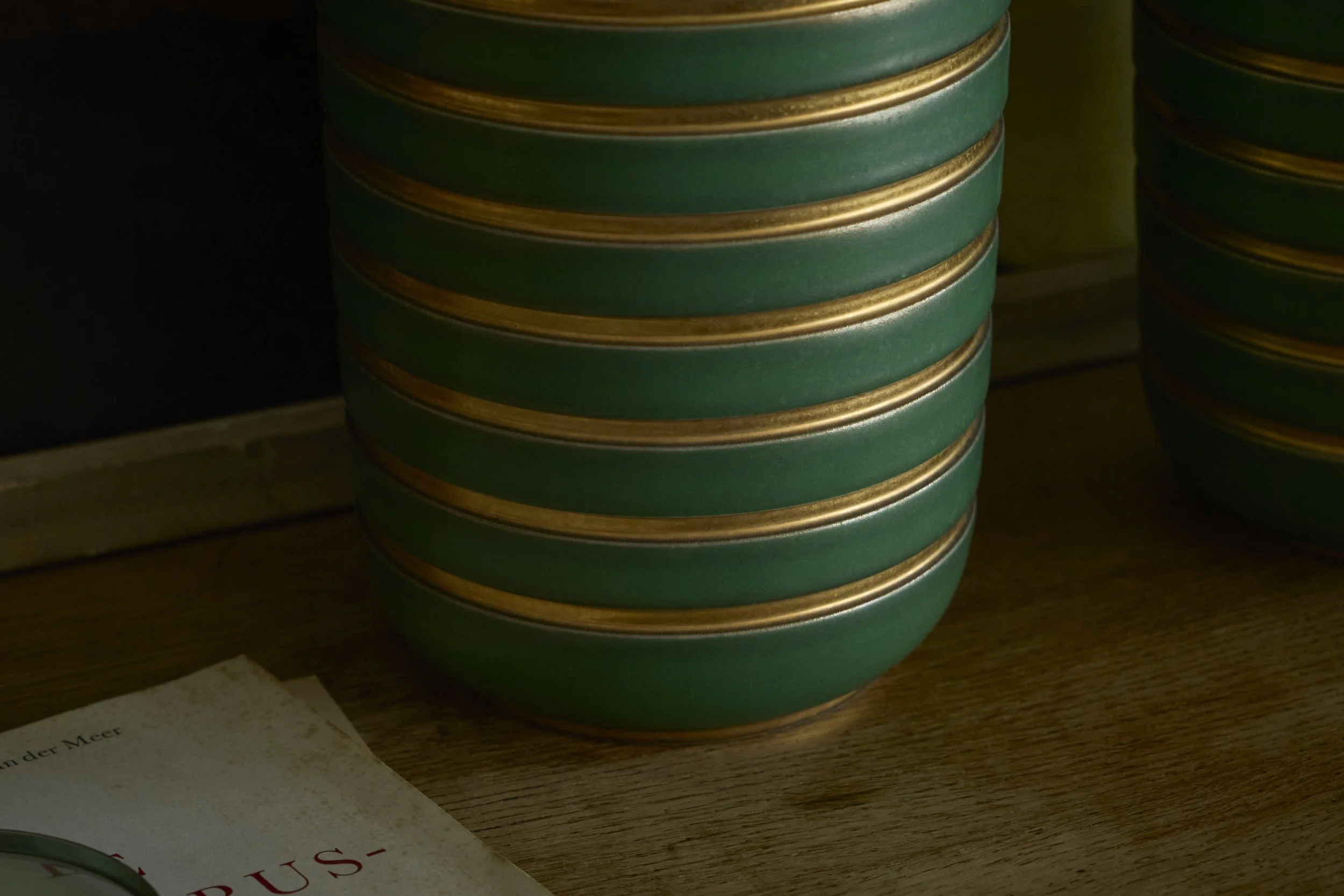
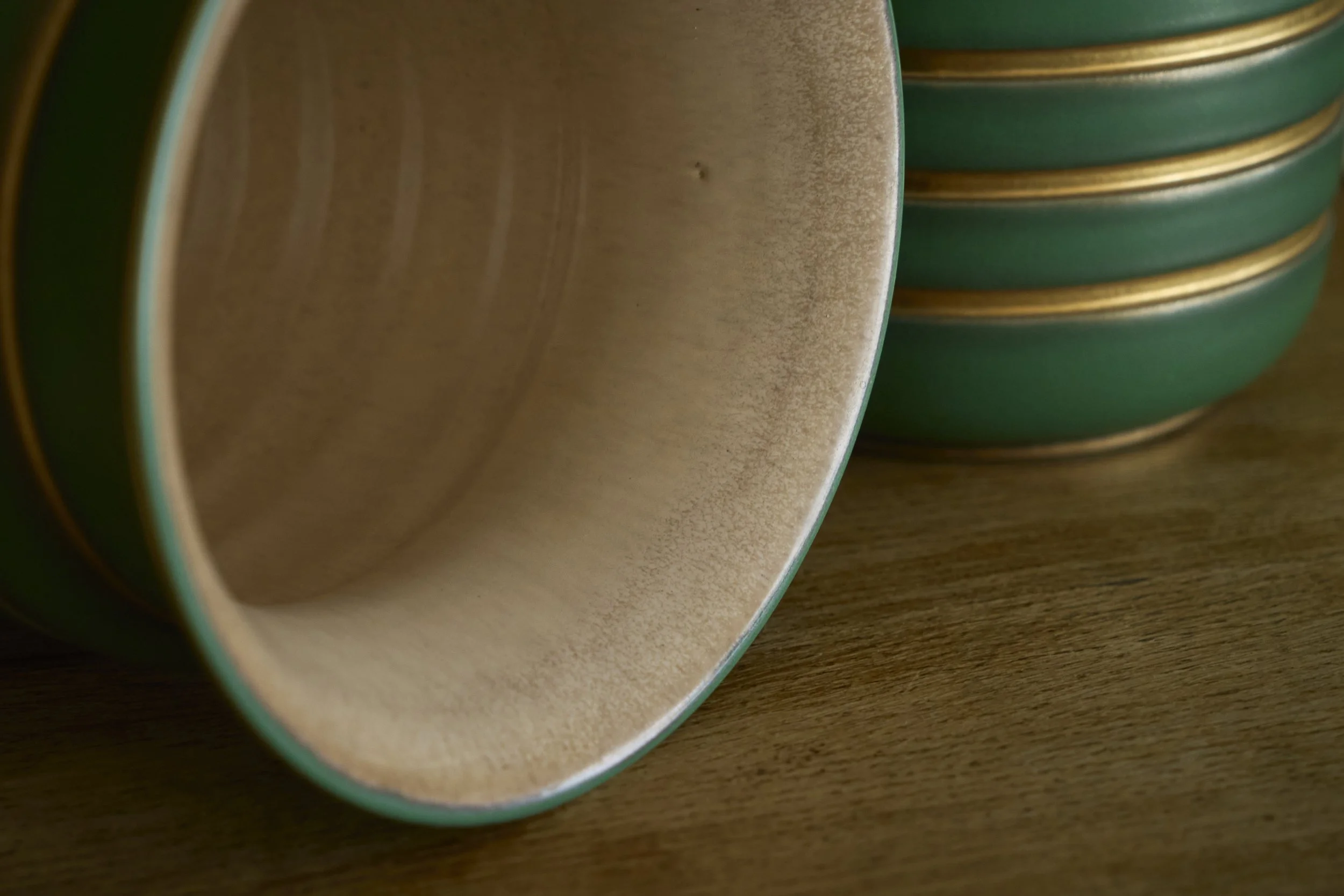
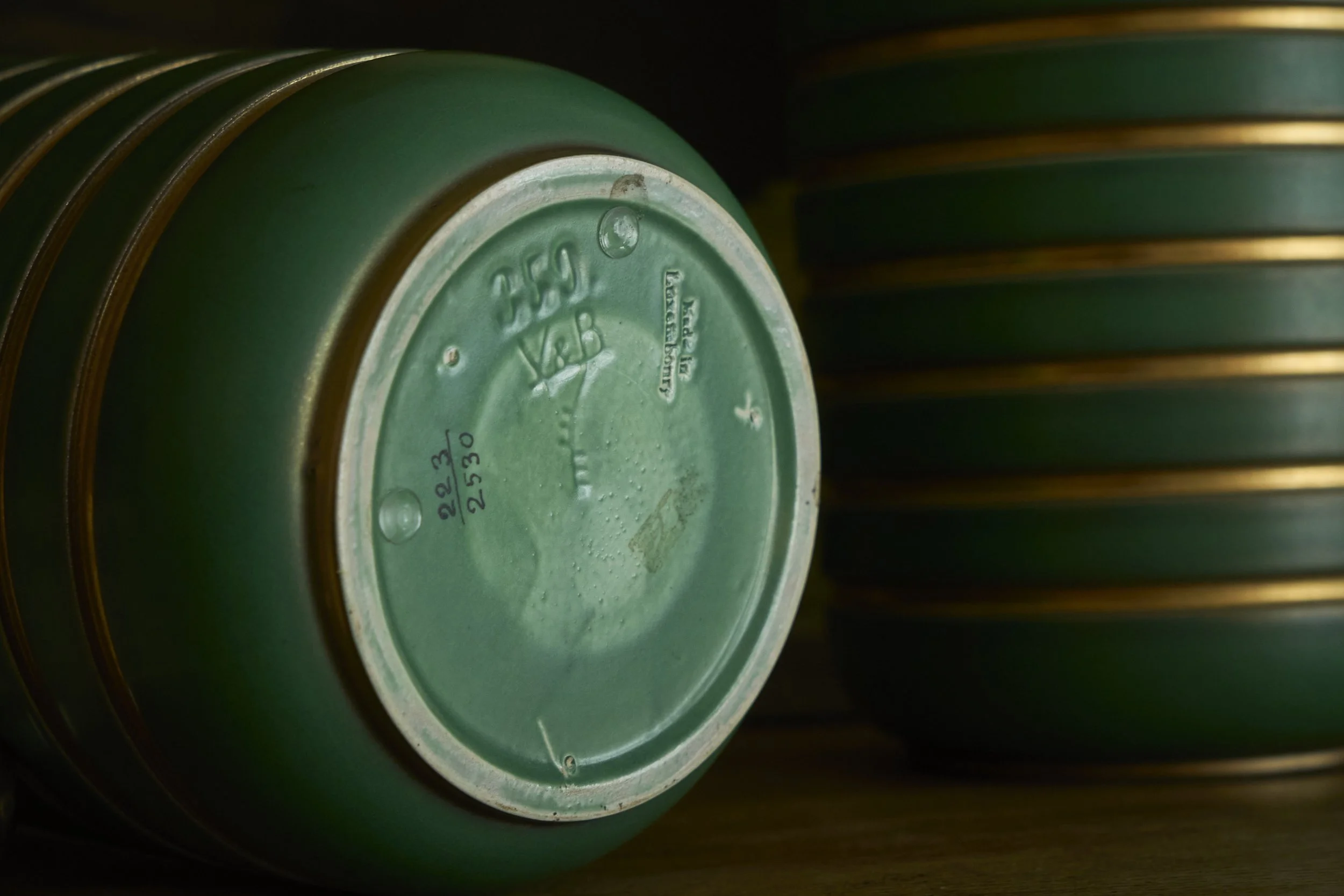
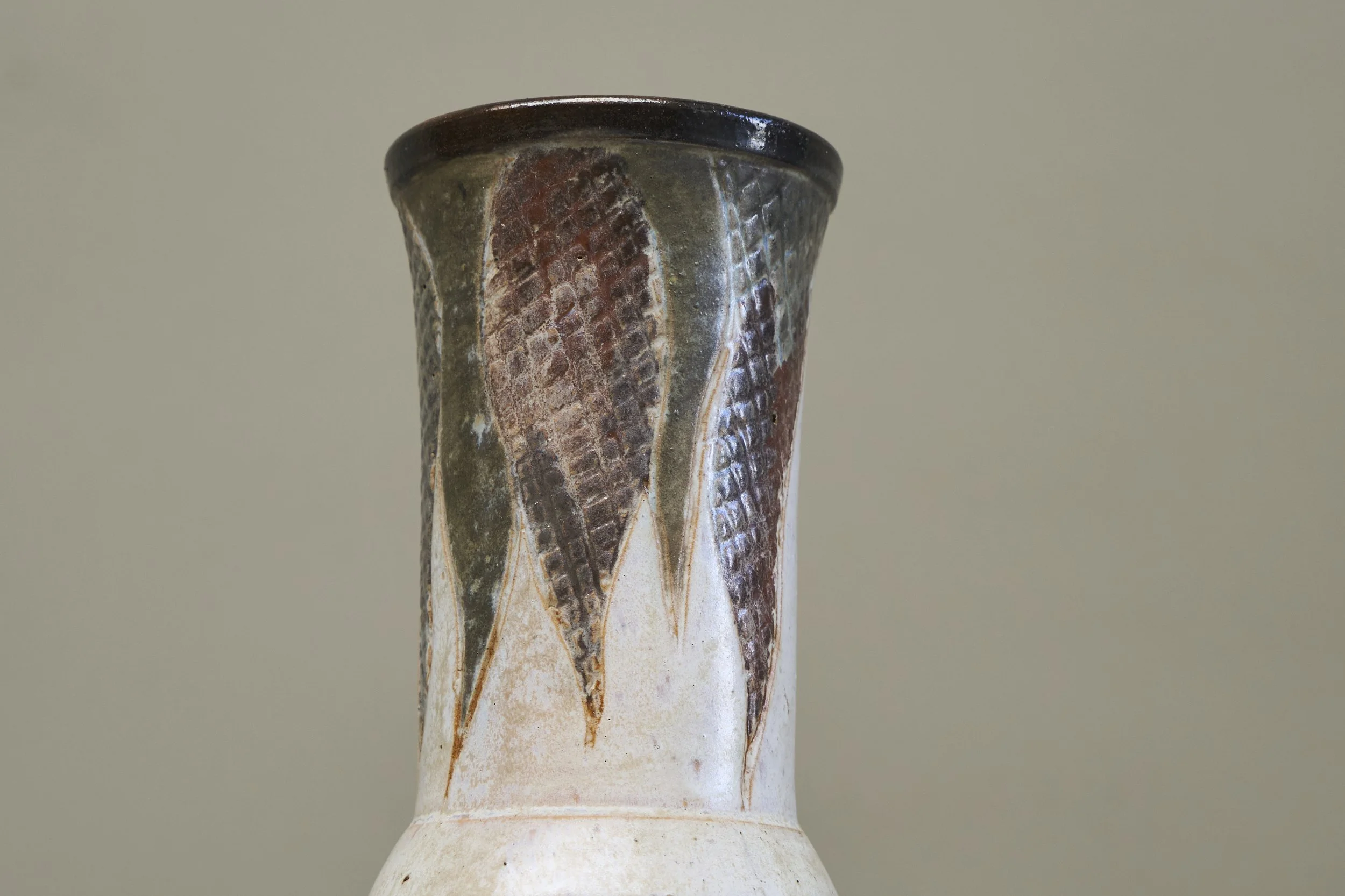
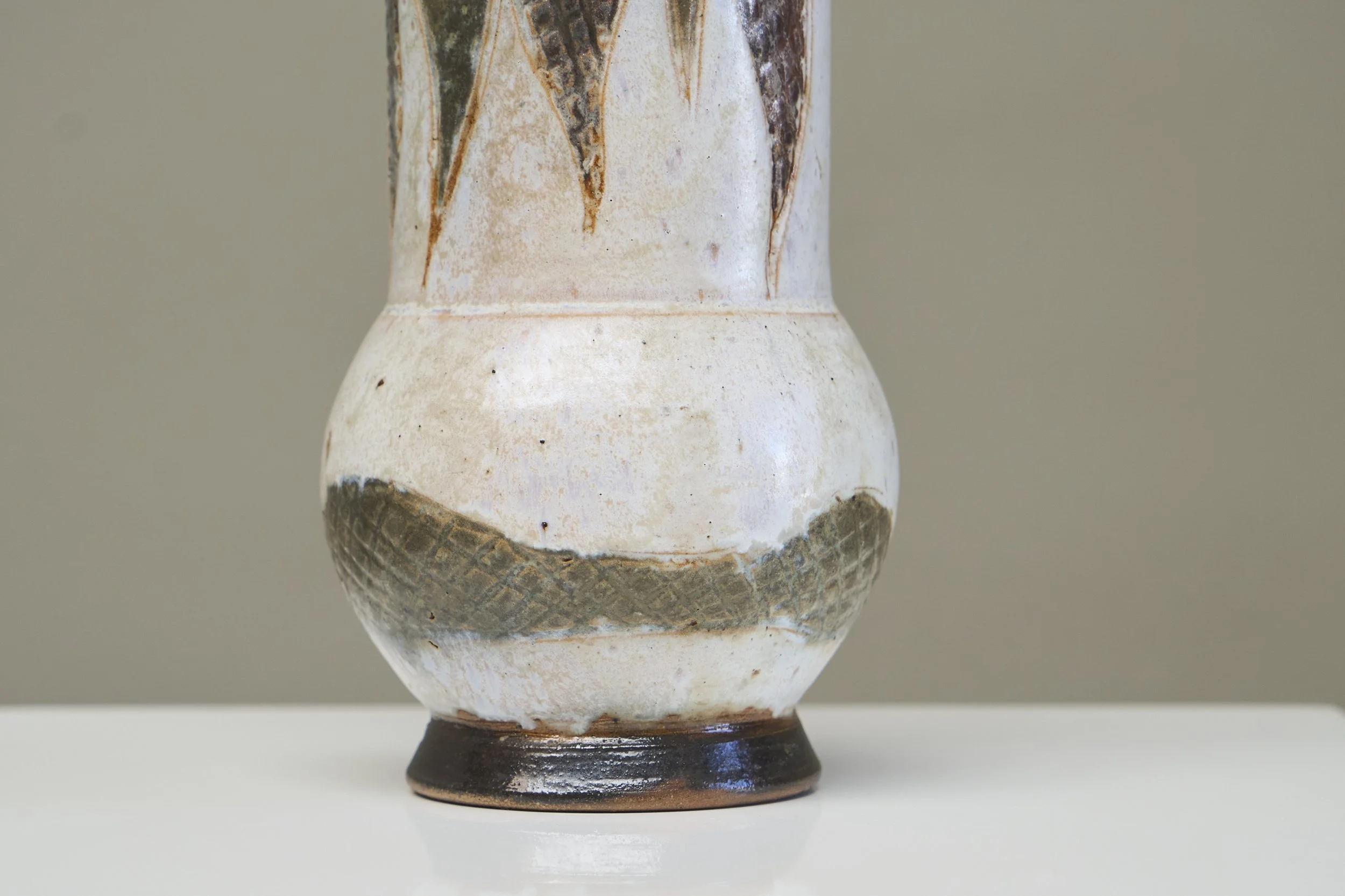
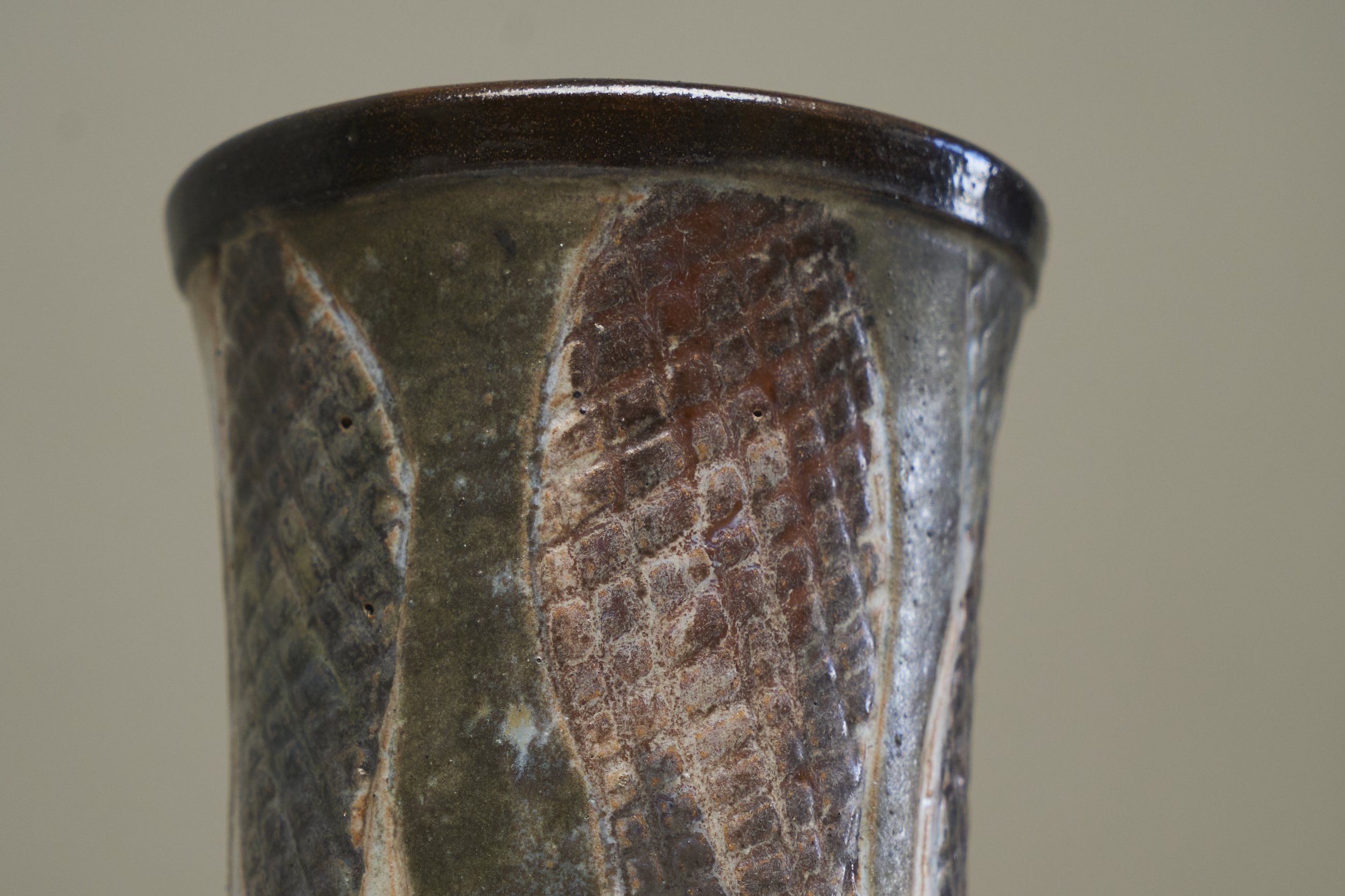
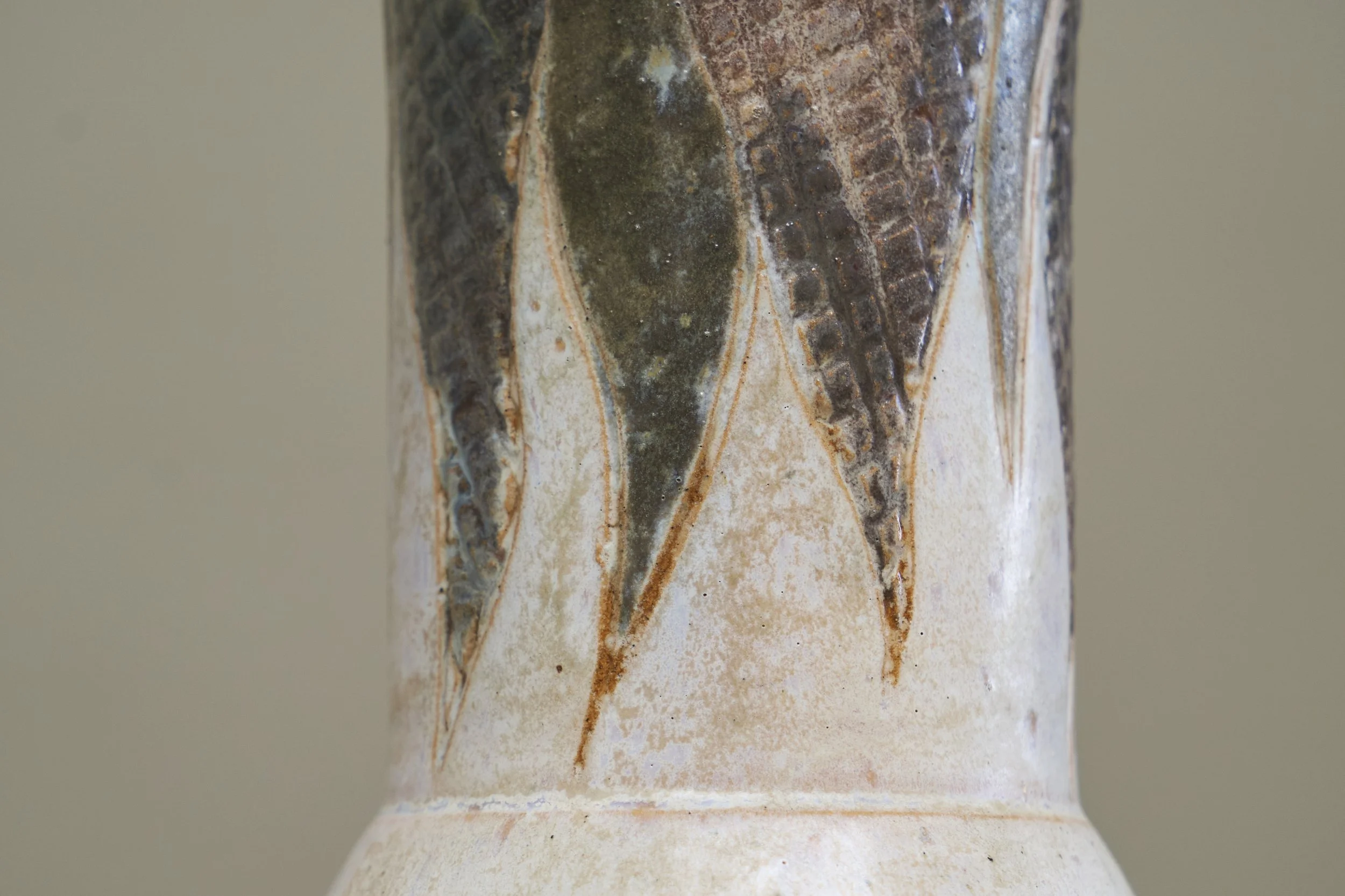
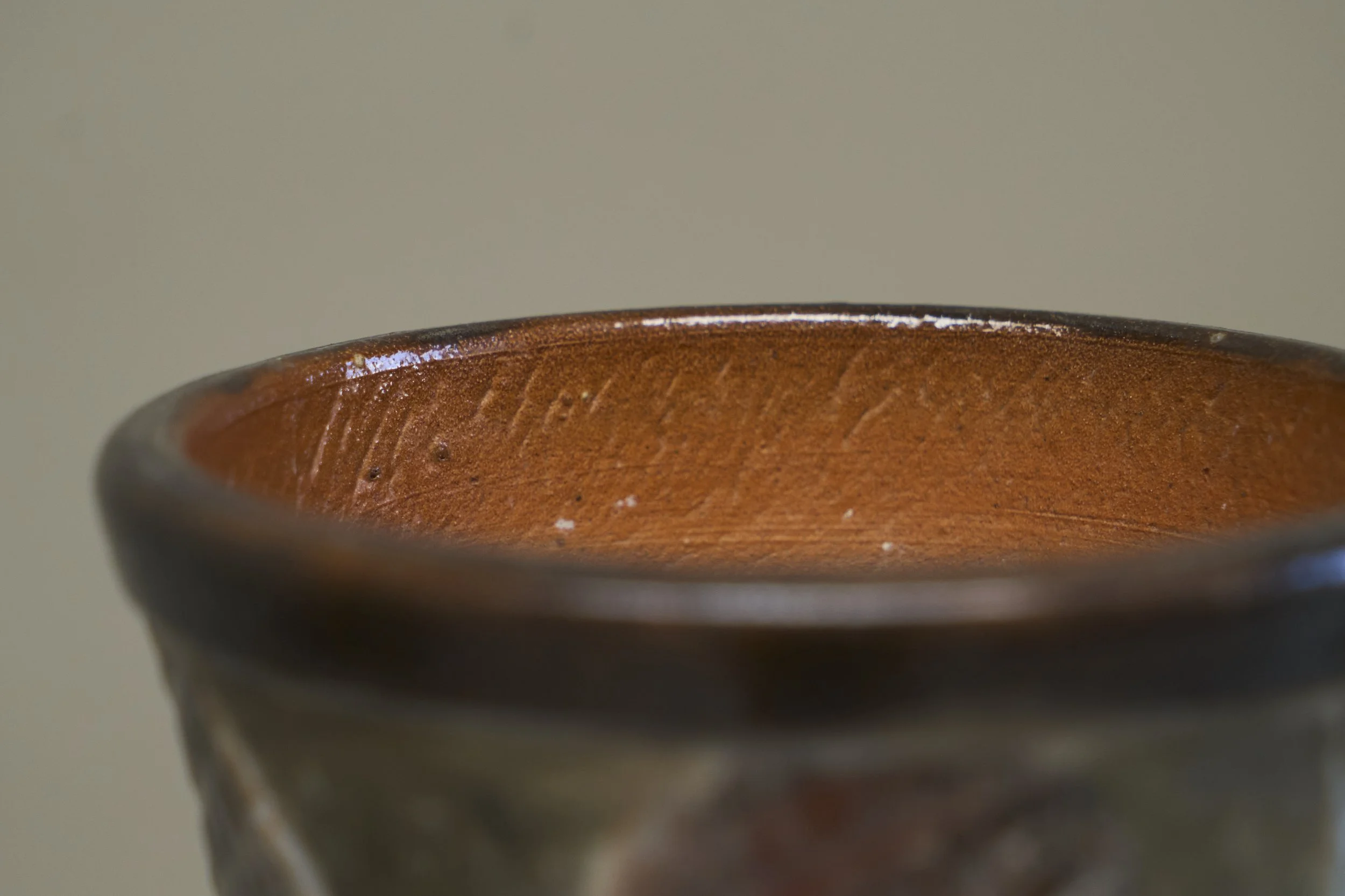
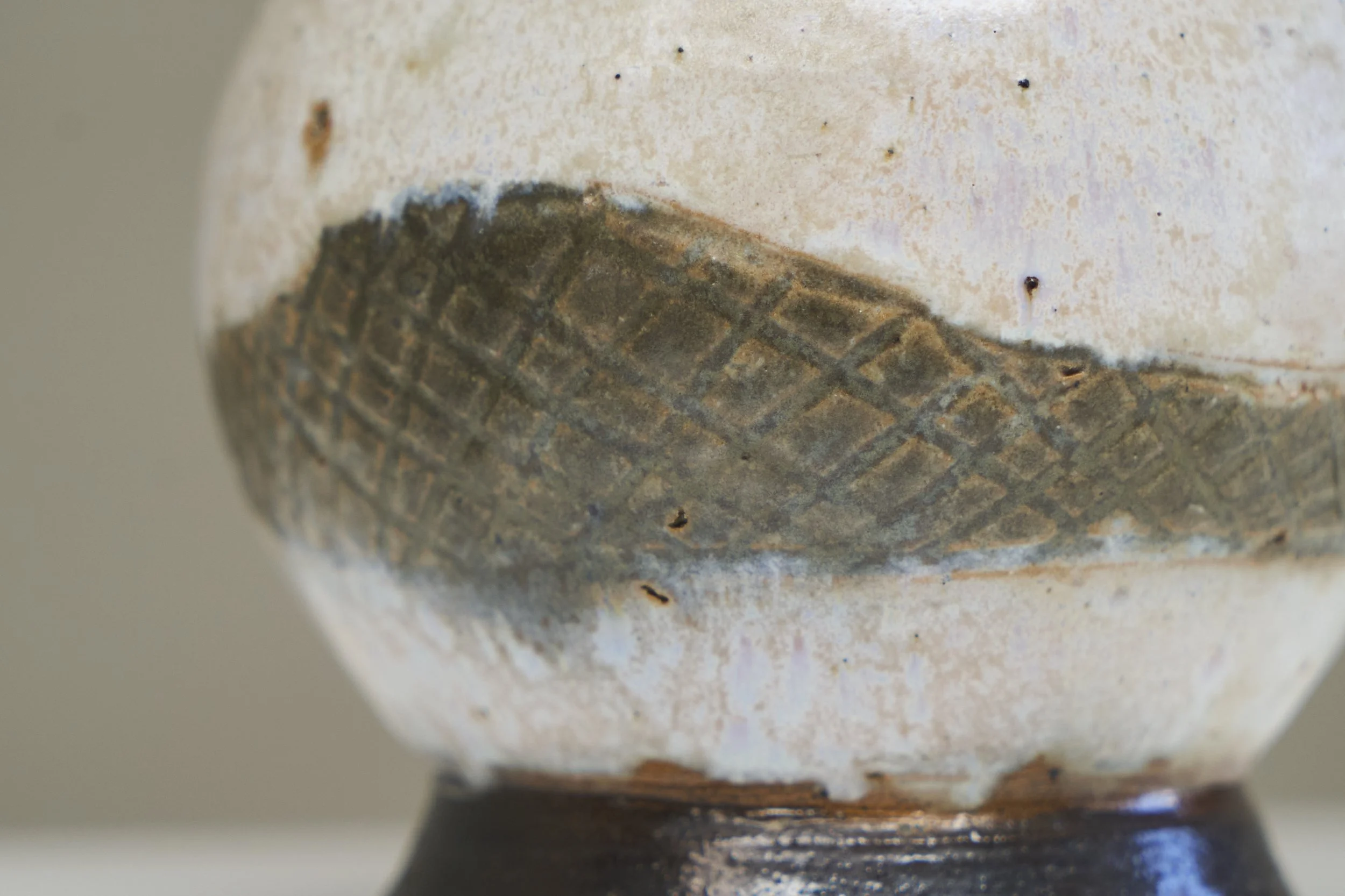
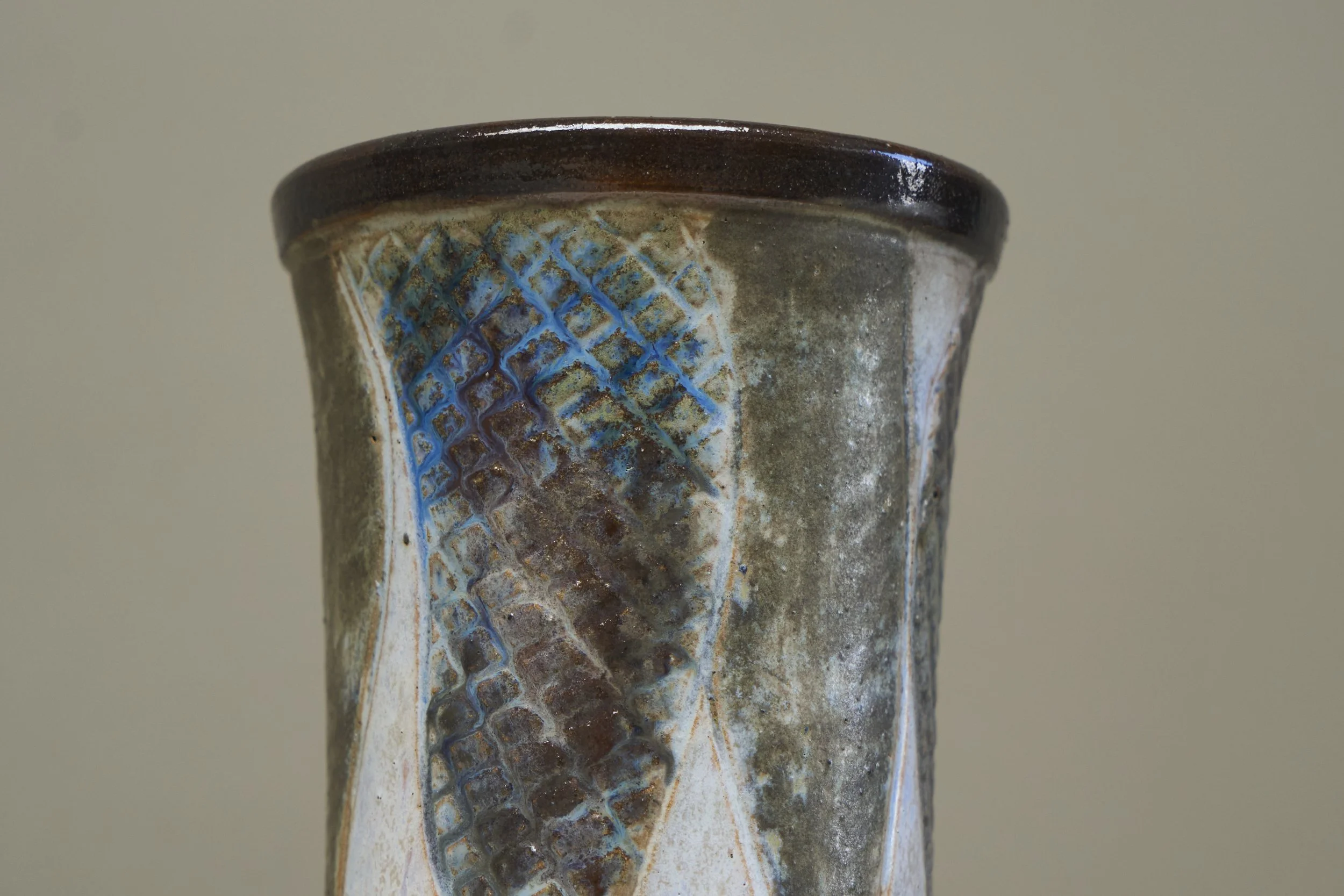
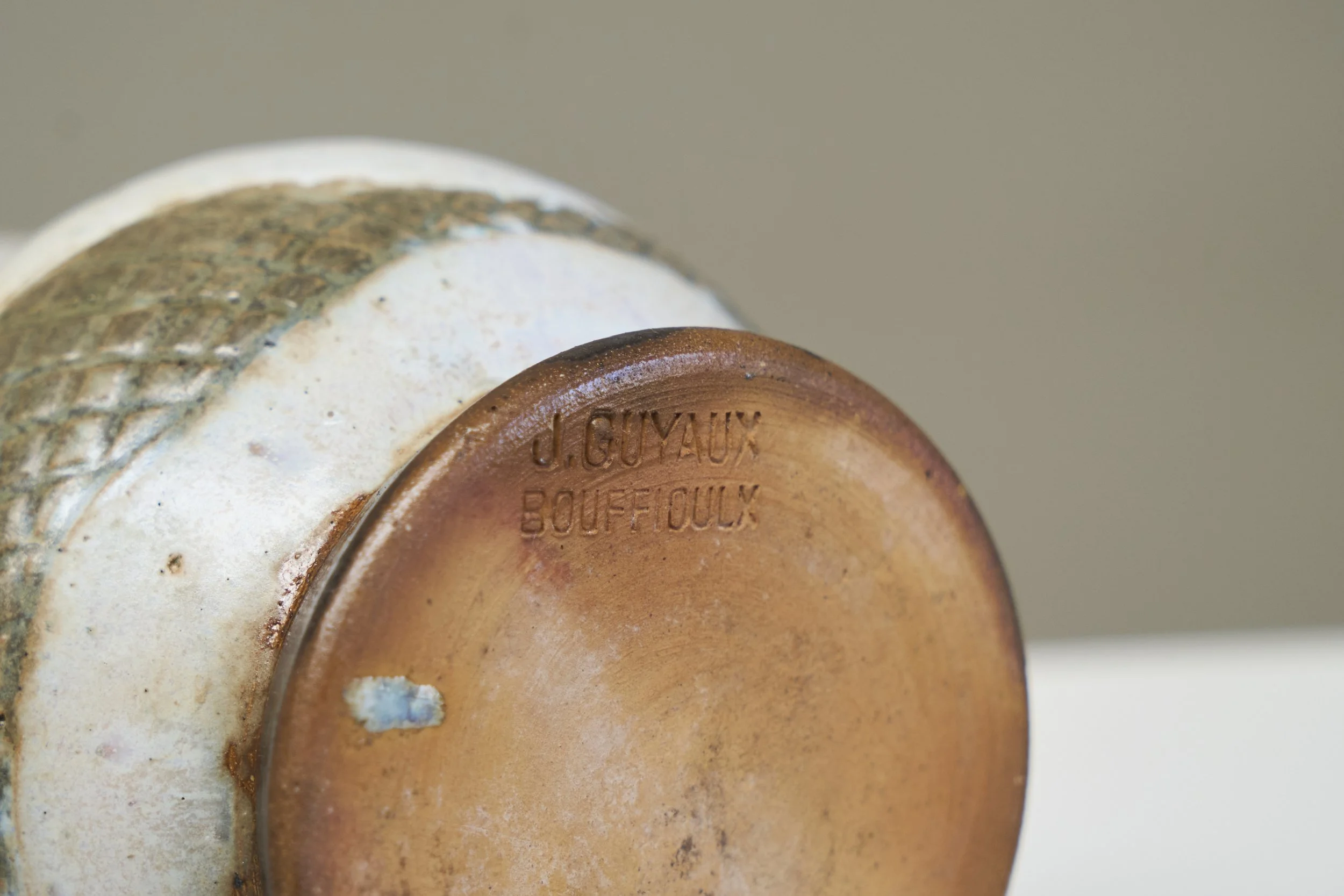
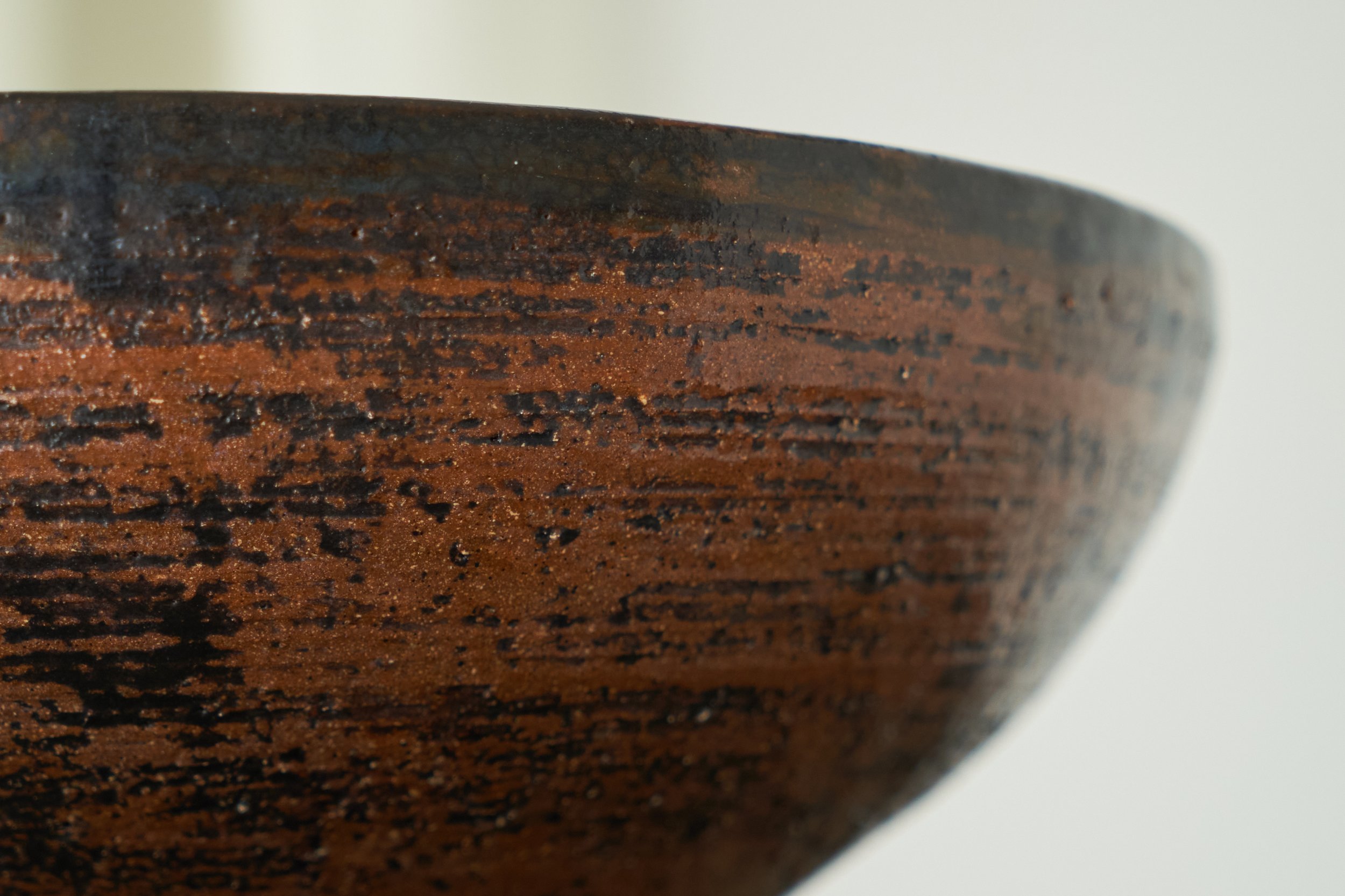
The surface is particularly rich with deep olive and bronze tones overlaid with a mottled green glaze. Iron red dissolves into dark, almost volcanic, patches showing fine craquelure-like edges and areas of exposed clay remain visible along the base. The piece features imperfections as an integral part of the decorative process, showing the spontaneity with which these glazes were applied.
Both sculptural and painterly, this vase is a fine representative of a brief but highly distinctive chapter in Dutch ceramic history.
About Dutch ‘Crisis Pottery’
The Dutch so called ‘Crisis Pottery’ pieces of the 1930s were born in a period of economic uncertainty. Faced with rising costs and a changing market, potteries developed new ways of working. Spray-glazed surfaces replaced much of the labour-intensive hand painting, decoration became more restrained, and attention shifted towards form, proportion and the subtle interplay of colour and glaze.
What emerged was not merely a more economical type of pottery, but a distinctly modern one. Although conceived during a period of economic restraint, pieces such as this possess a remarkable visual confidence. The decoration is no longer dependent on elaborate ornament, but on the dialogue between colour, texture and material. It is precisely this shift that gives these pieces enduring appeal.
Dimensions: W. 11 x D. 11 x H. 12 cm
INQUIRE ABOUT THIS PIECE
MAKE AN OFFER
A striking example of Dutch ‘Crisis Pottery’ produced during the economically challenging years of the 1930s. The vase has a gently flaring cylindrical form and its decoration is created through successive layers of sprayed glaze rather than traditional hand painting.
The surface is particularly rich with deep olive and bronze tones overlaid with a mottled green glaze. Iron red dissolves into dark, almost volcanic, patches showing fine craquelure-like edges and areas of exposed clay remain visible along the base. The piece features imperfections as an integral part of the decorative process, showing the spontaneity with which these glazes were applied.
Both sculptural and painterly, this vase is a fine representative of a brief but highly distinctive chapter in Dutch ceramic history.
About Dutch ‘Crisis Pottery’
The Dutch so called ‘Crisis Pottery’ pieces of the 1930s were born in a period of economic uncertainty. Faced with rising costs and a changing market, potteries developed new ways of working. Spray-glazed surfaces replaced much of the labour-intensive hand painting, decoration became more restrained, and attention shifted towards form, proportion and the subtle interplay of colour and glaze.
What emerged was not merely a more economical type of pottery, but a distinctly modern one. Although conceived during a period of economic restraint, pieces such as this possess a remarkable visual confidence. The decoration is no longer dependent on elaborate ornament, but on the dialogue between colour, texture and material. It is precisely this shift that gives these pieces enduring appeal.
Dimensions: W. 11 x D. 11 x H. 12 cm
INQUIRE ABOUT THIS PIECE
MAKE AN OFFER

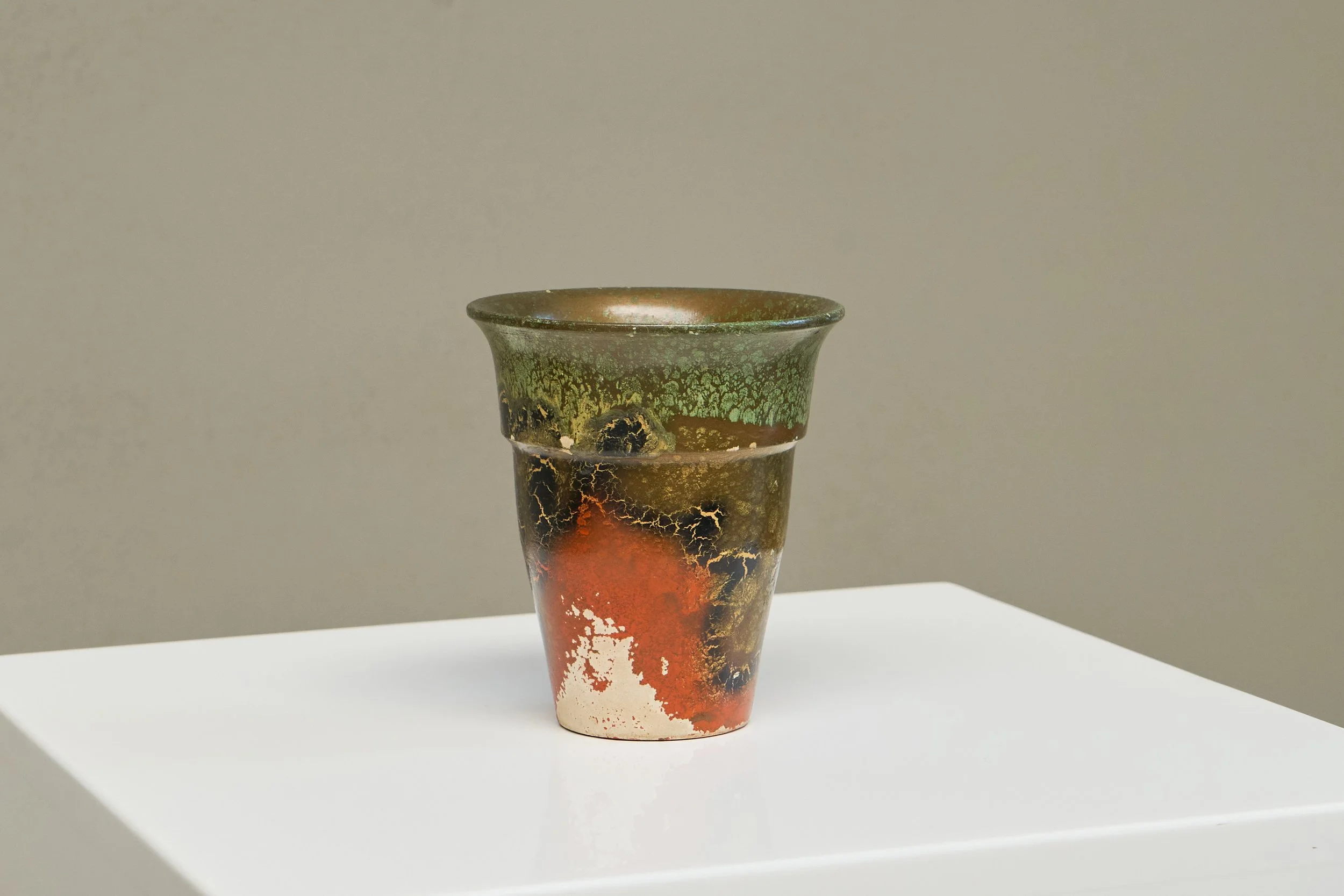 Image 1 of 7
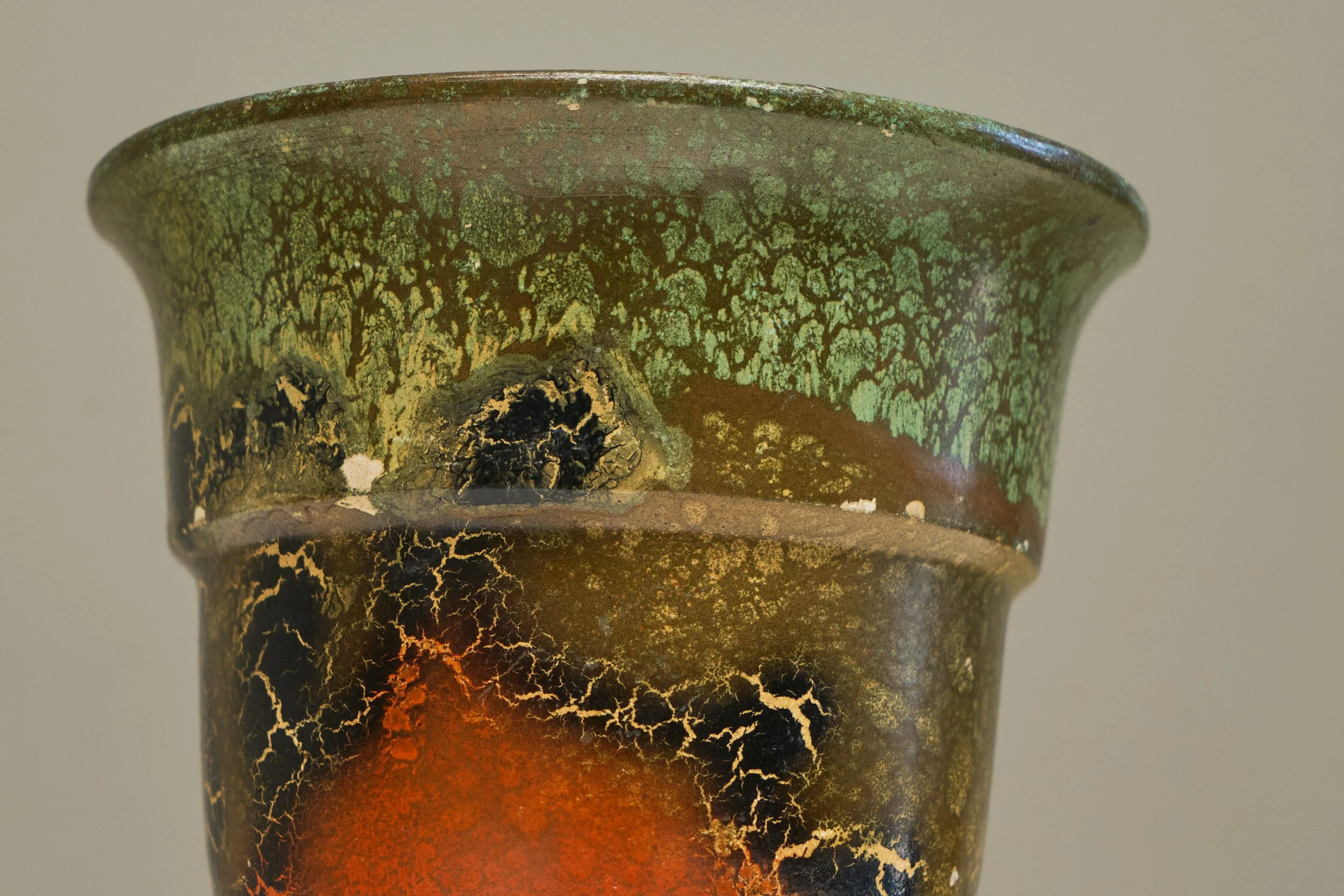 Image 2 of 7
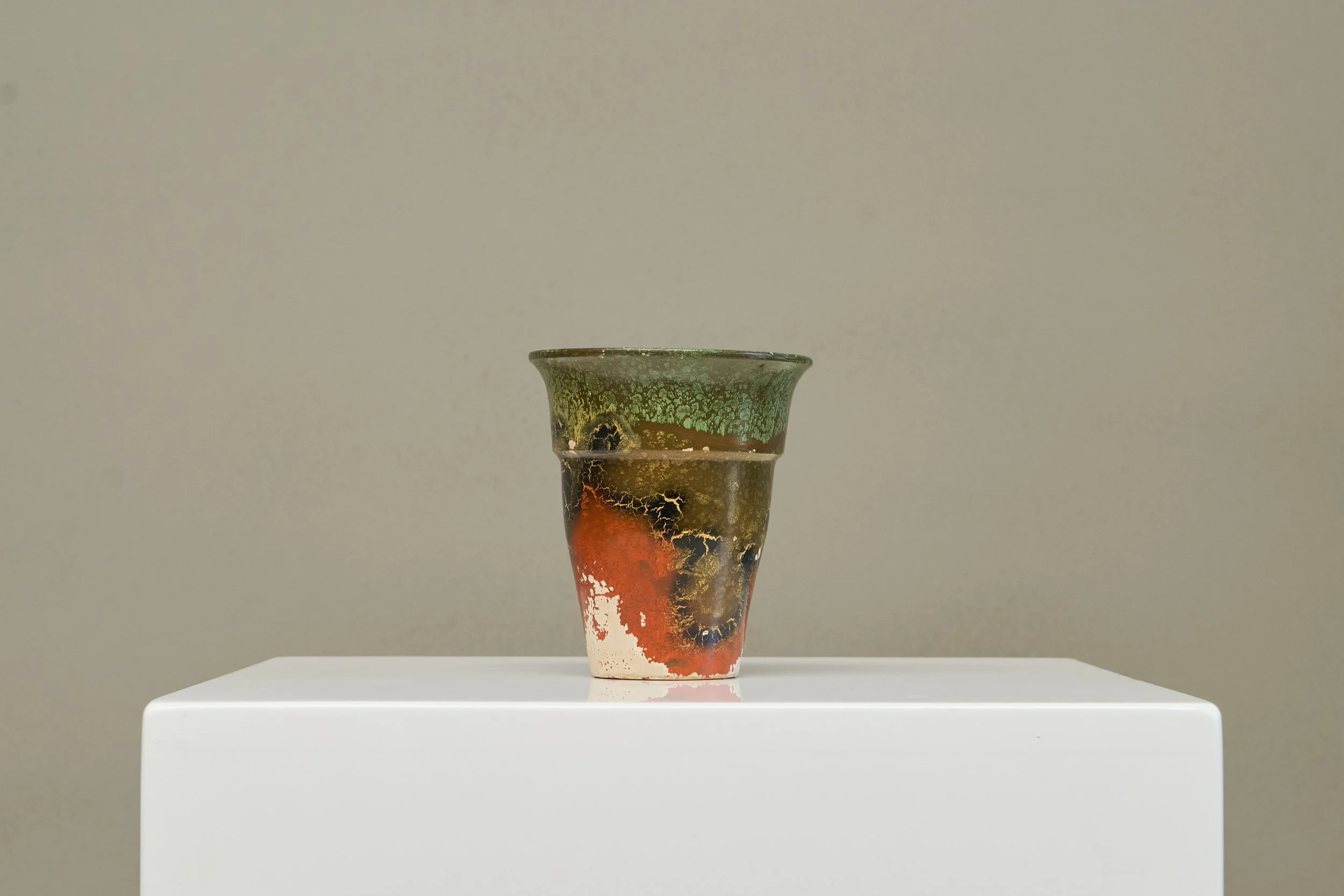 Image 3 of 7
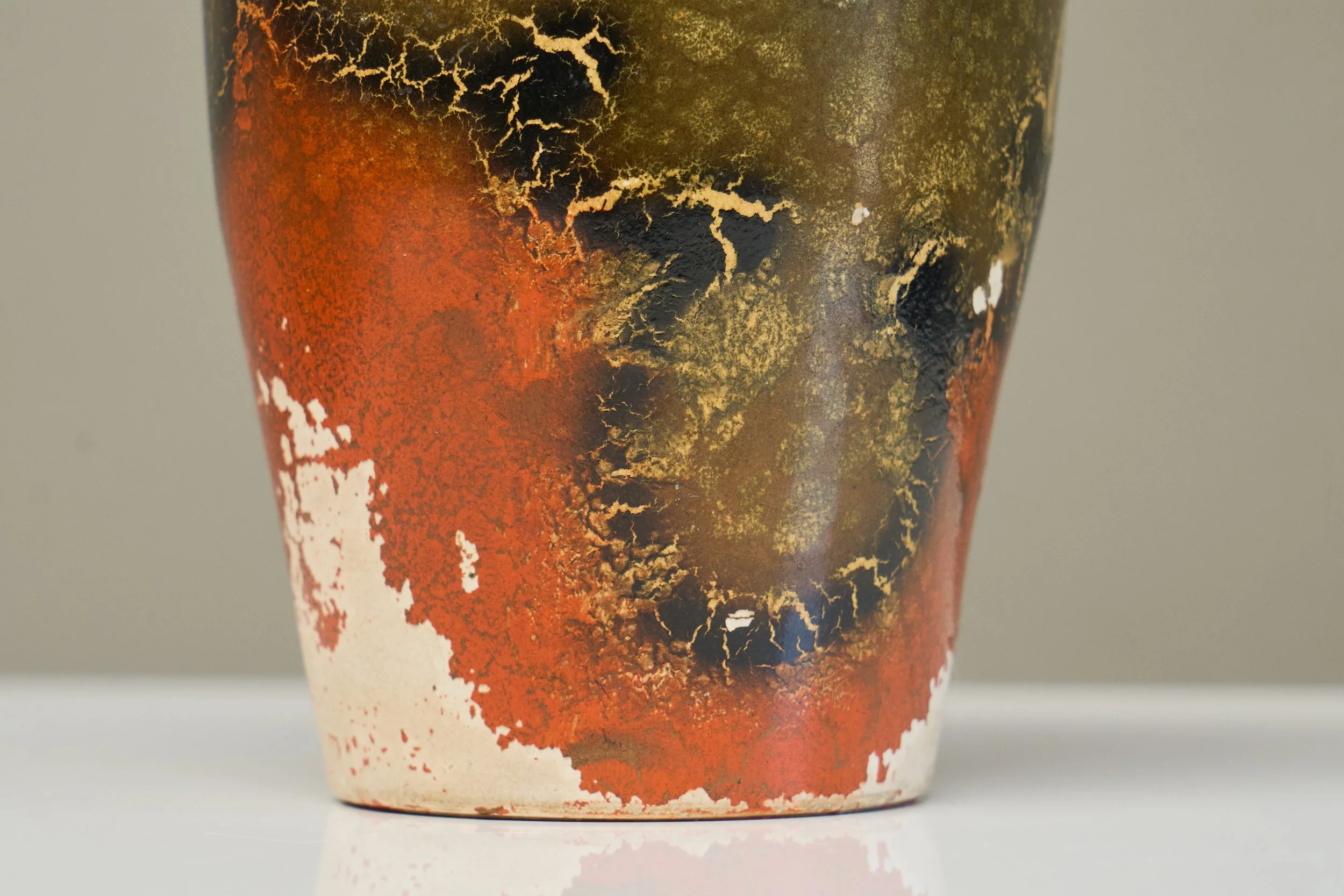 Image 4 of 7
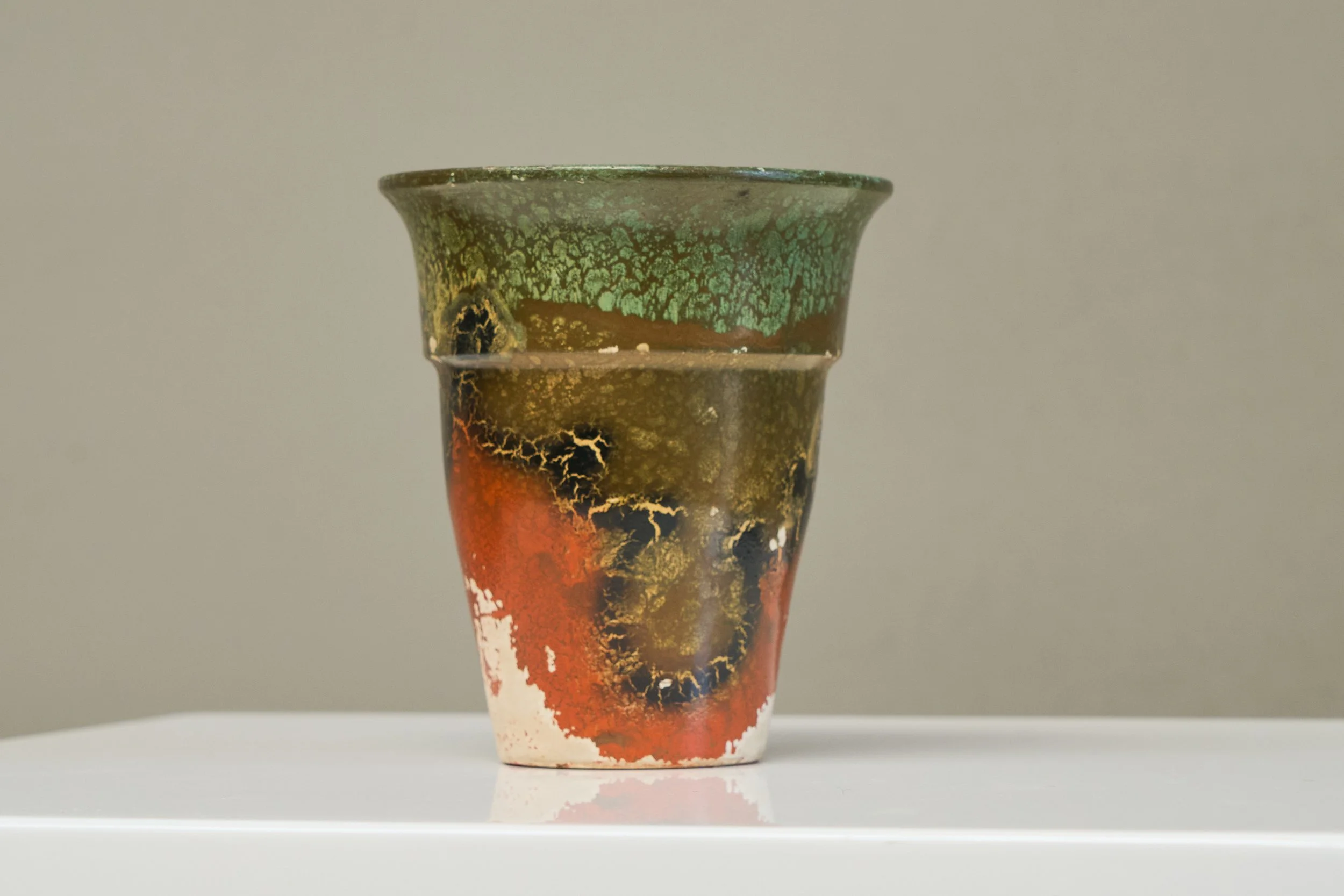 Image 5 of 7
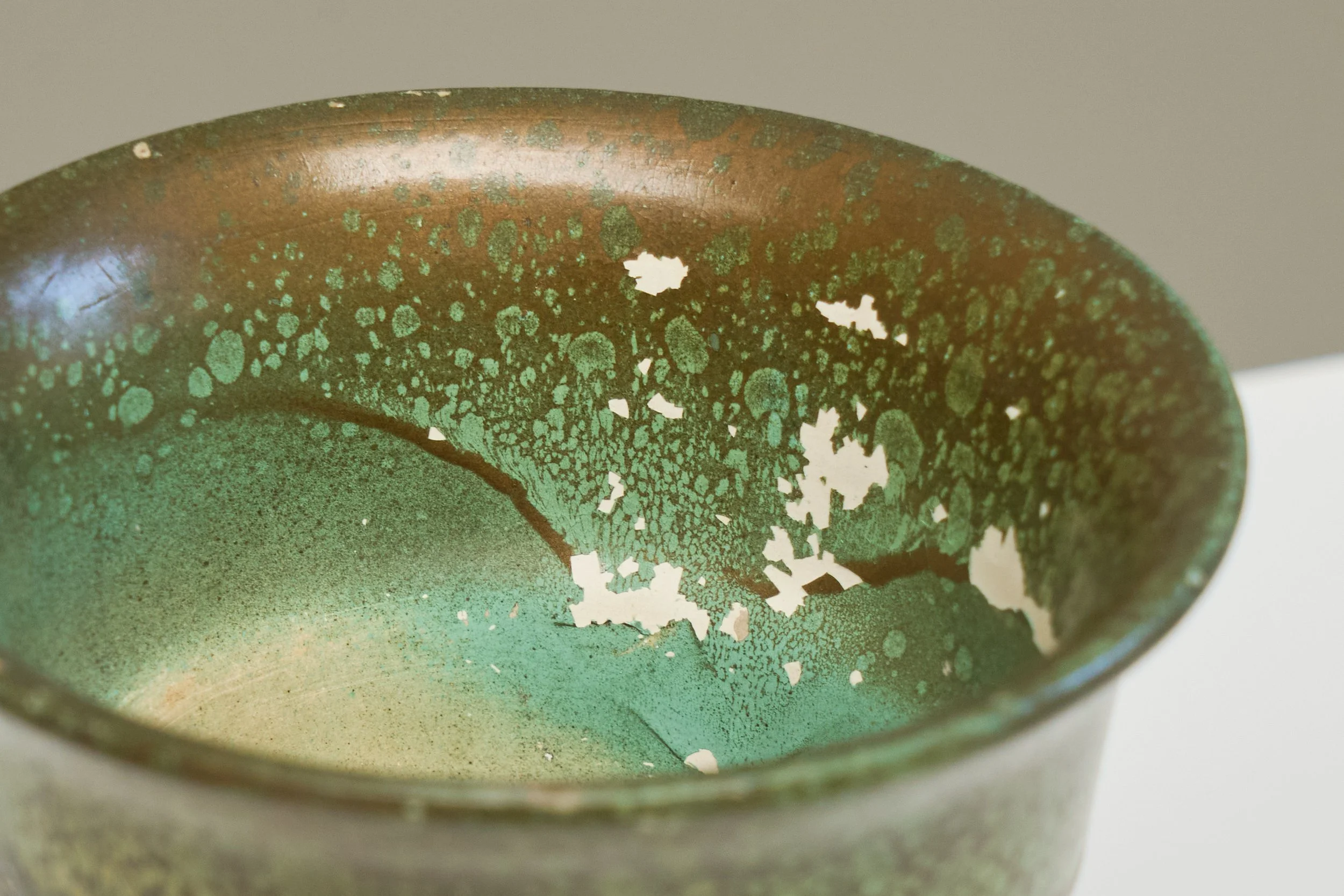 Image 6 of 7
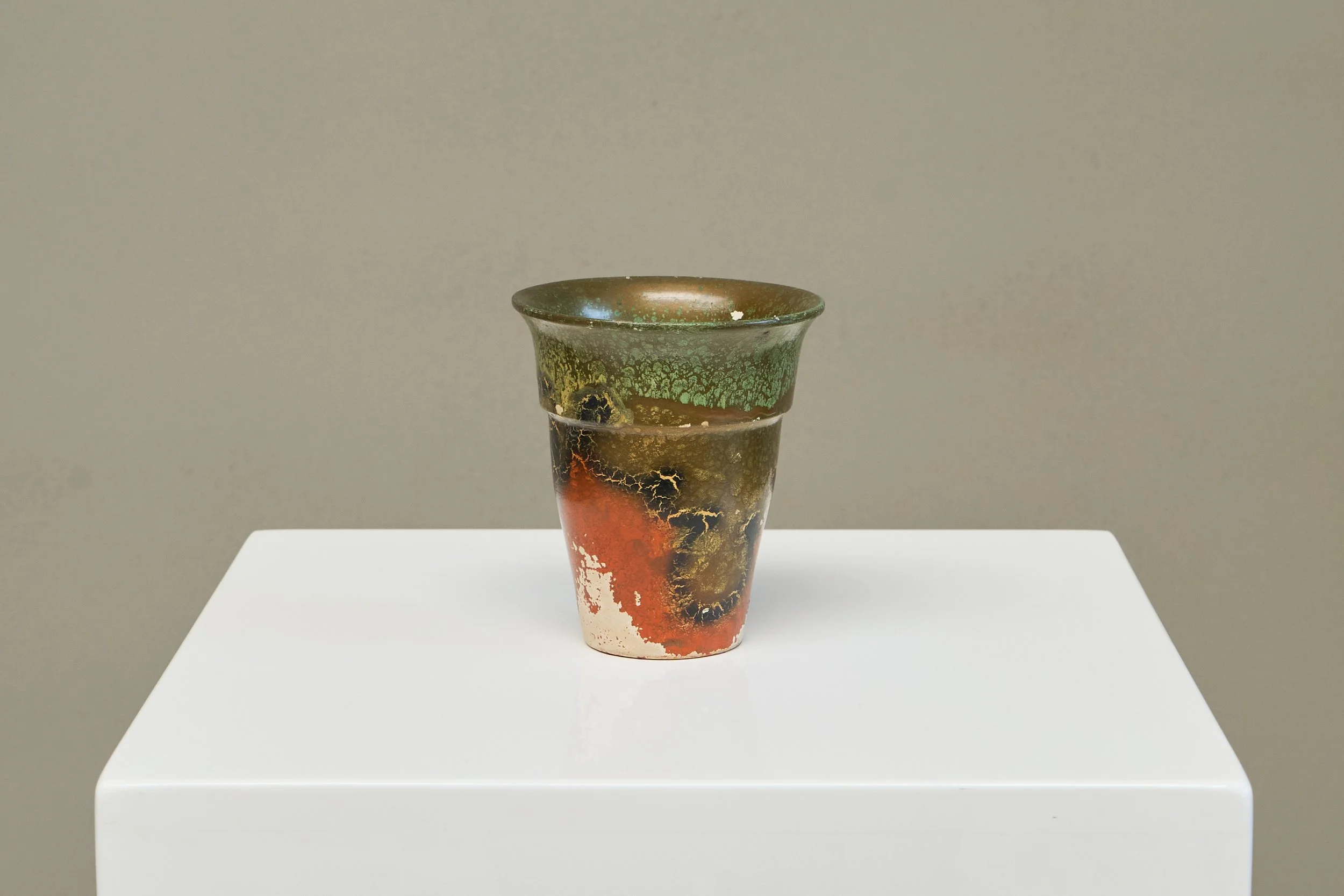 Image 7 of 7