An exceptional musical Amsterdam longcase clock / Amsterdams staand horloge by renowned maker Laurens or Lourens Eichelaar. Amsterdam, around 1750.
Made in burl walnut veneer with solid ebony Atlas and Victoria sculptures on top, multiple calender functions, moon phase dial and a five song carillon that plays beautifully.
It’s incredible to think this clock is almost 300 years old. The amount of craftsmanship, refined mechanical precision and artistic value is truly astounding.
The finely engraved and silvered dial, signed Laurens Eichelaar, Amsterdam, is enriched with gilt-brass ornament and incorporates a subsidiary seconds dial, calendar indication and an elaborate moon-phase display. The latter is particularly expressive, with an engraved lunar face emerging from finely worked clouds against a star filled sky.
Behind the dial lies an intricate mechanical movement incorporating an extensive musical carillon, with a large pinned brass cylinder operating a series of tuned bells and capable of playing five different melodies. The five melodies can be specifically selected with a handle next to the clock face. The combination of astronomical indications, calendar functions and a complex musical mechanism reflects the considerable technical sophistication of Amsterdam clockmaking during the 18th century.
The movement is driven by three weights and has a duration of eight days. It is regulated by anchor escapement in combination with a pendulum.
The richly figured burl walnut case on claw-and-ball feet is crowned by three sculptural figures carved in ebony: Atlas carrying the celestial globe, flanked by two winged female figures holding trumpets and torches. The deep black of the carved figures forms a striking contrast with the warmth of the walnut, lending the clock a particularly distinguished appearance.
Laurens Eichelaar was an Amsterdam clockmaker active during the middle decades of the 18th century, known for finely executed longcase clocks with elaborate movements and richly decorated cases. His work is represented in museum collections, e.g. in the collection of the prestigious Museum Boijmans Van Beuningen in Rotterdam The Netherlands.
Overall this clock is a particularly accomplished example of Dutch 18th-century clockmaking. A stunning piece of craftsmanship and visual elegance.
Dimensions: W. 64 x D. 32 x H. 286 cm
INQUIRE ABOUT THIS PIECE
MAKE AN OFFER

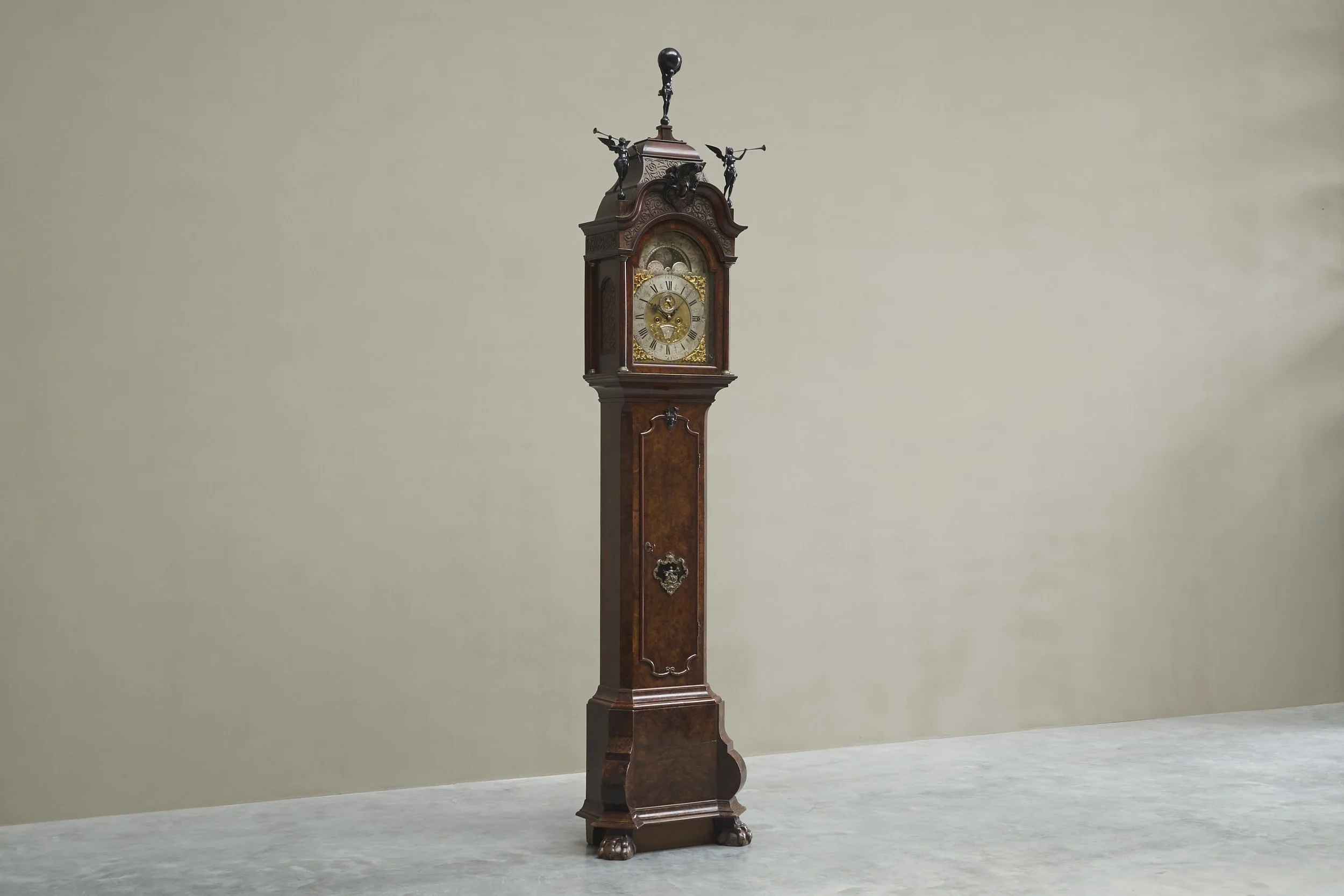 Image 1 of 24
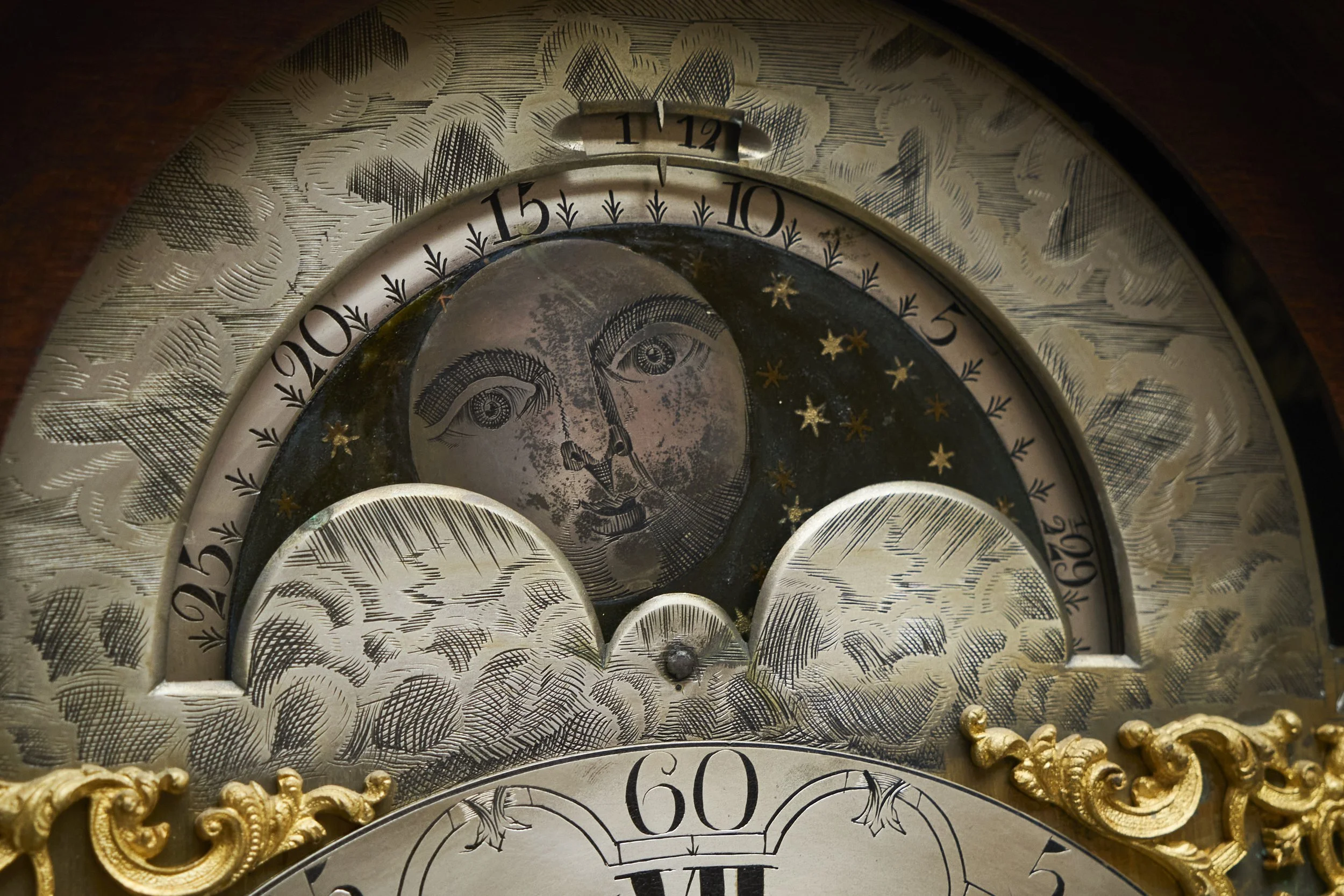 Image 2 of 24
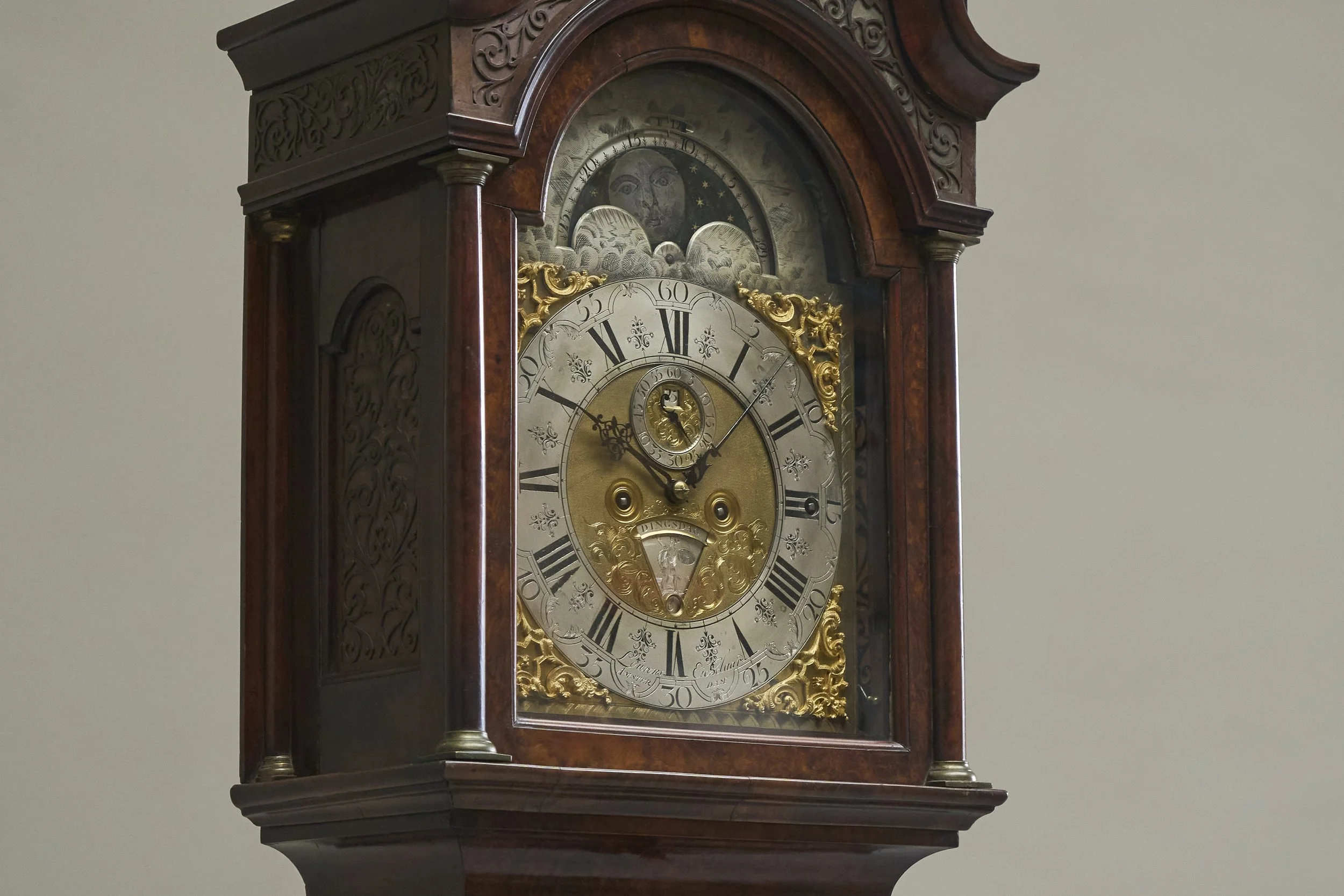 Image 3 of 24
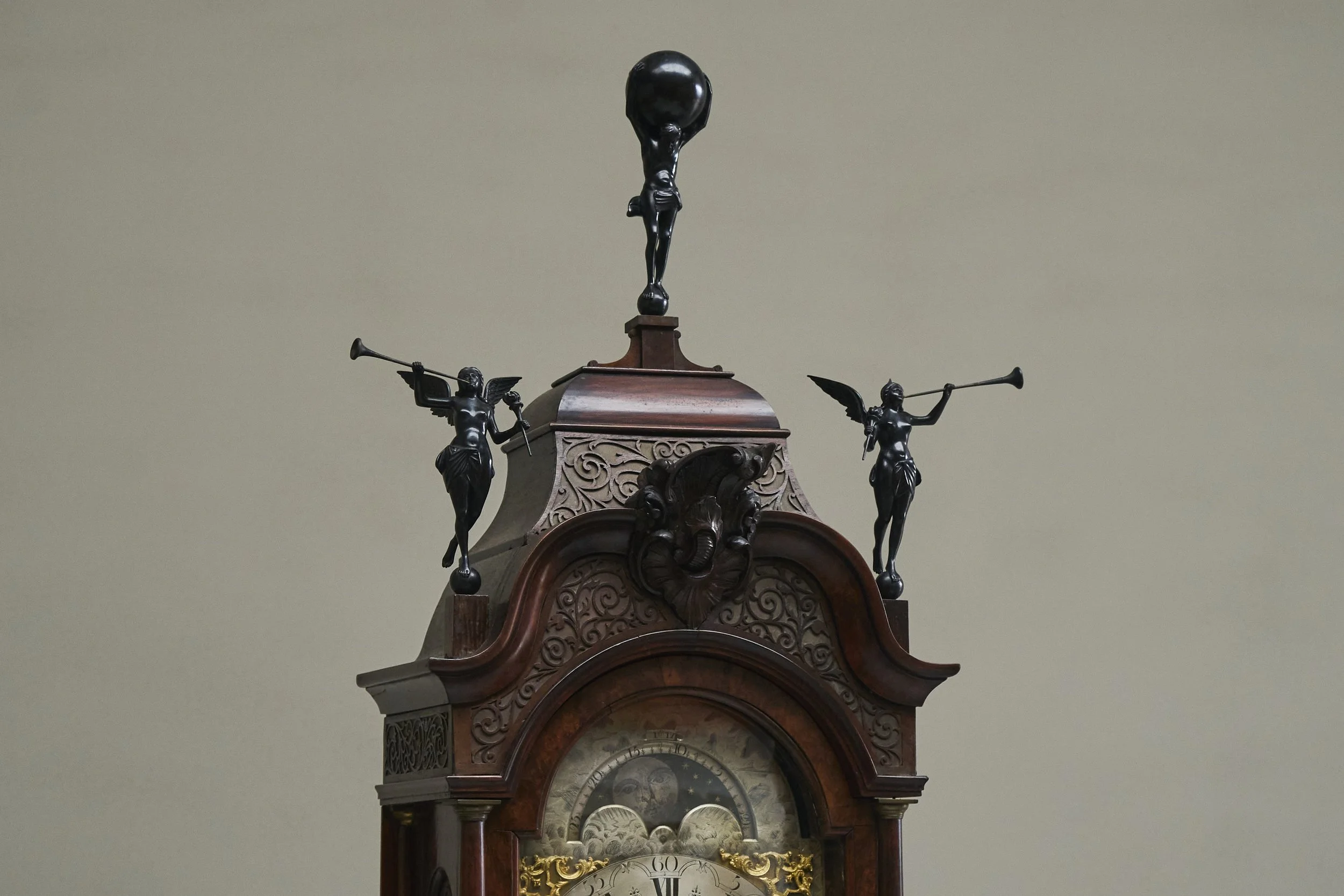 Image 4 of 24
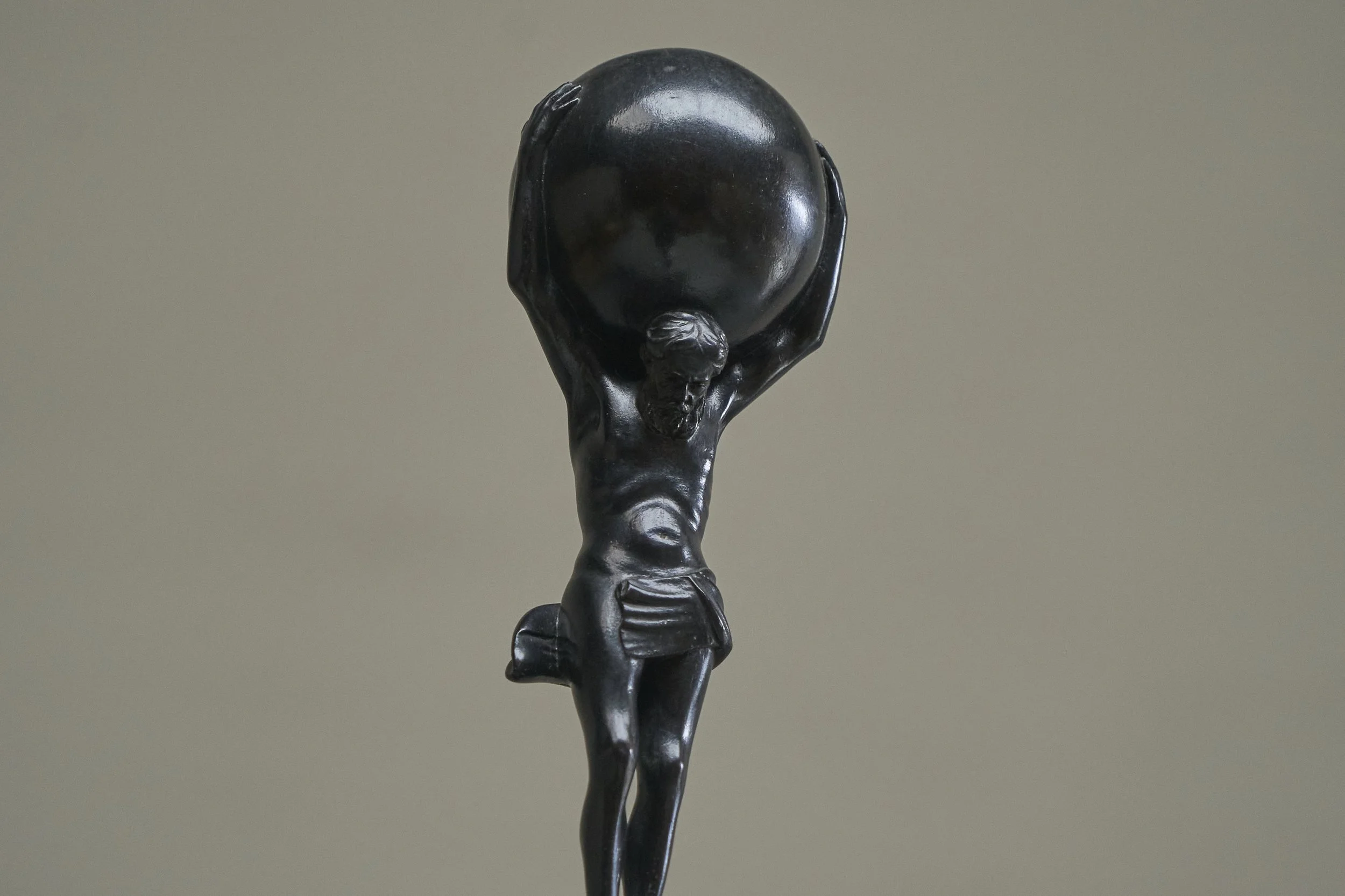 Image 5 of 24
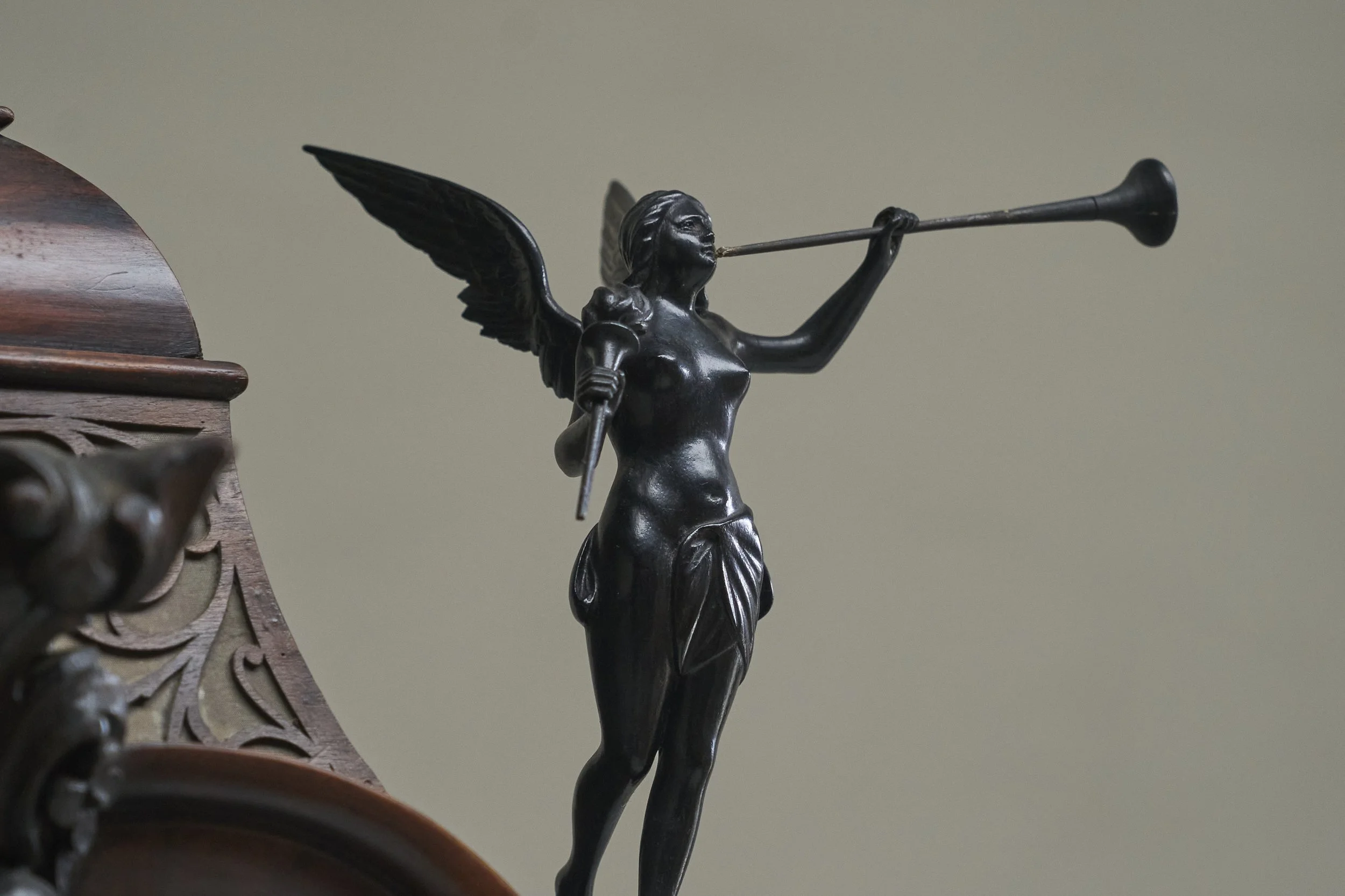 Image 6 of 24
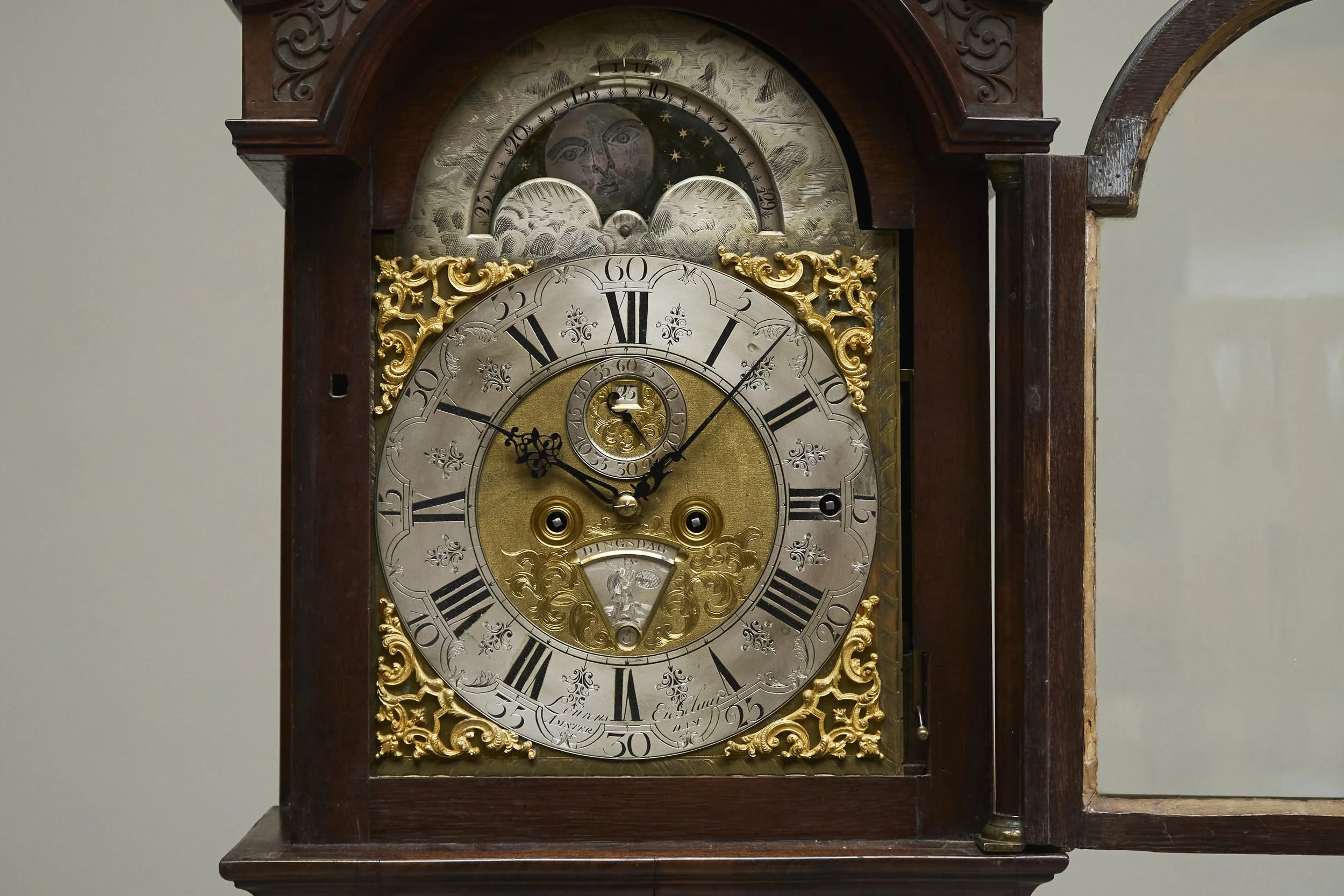 Image 7 of 24
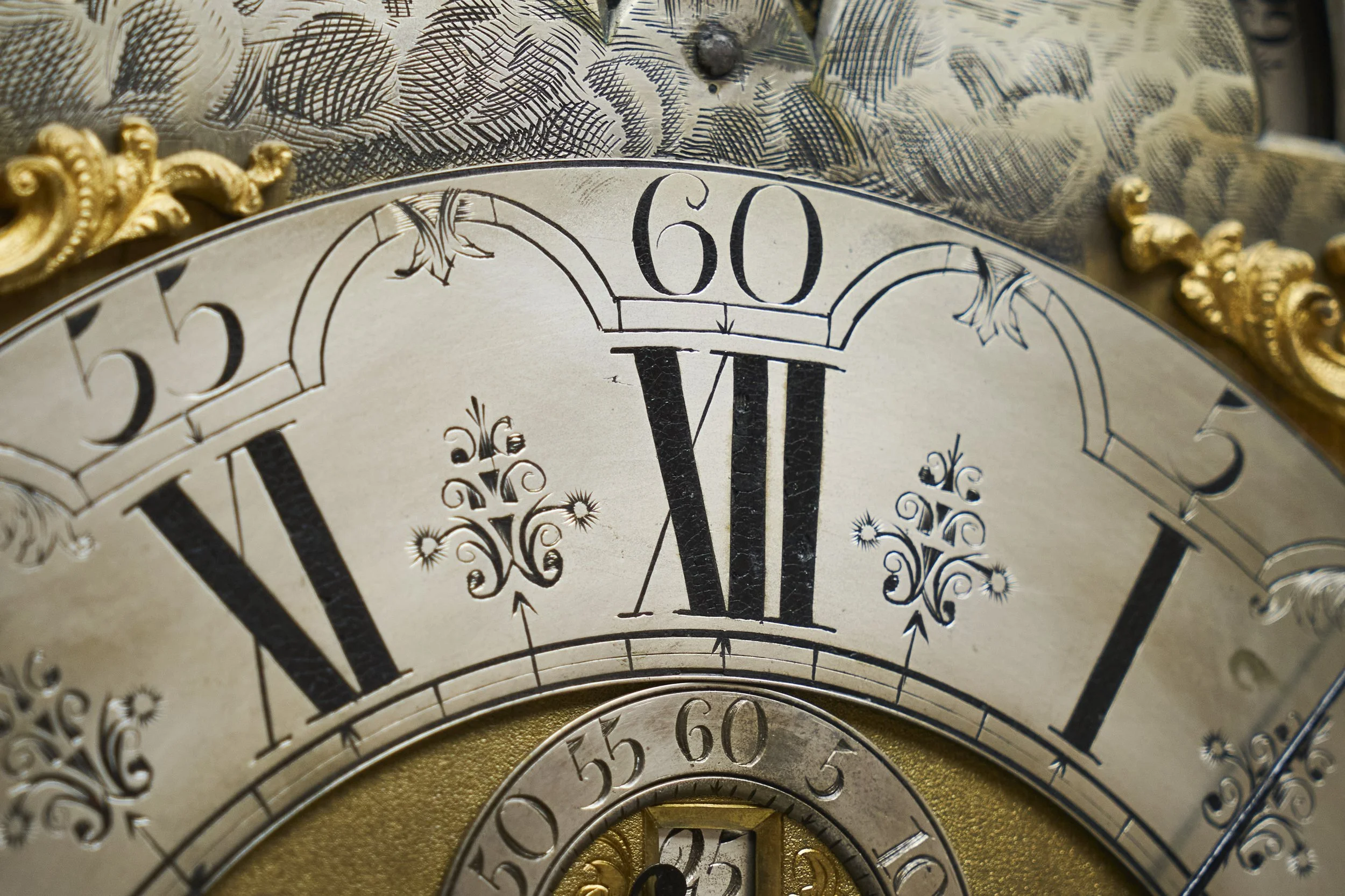 Image 8 of 24
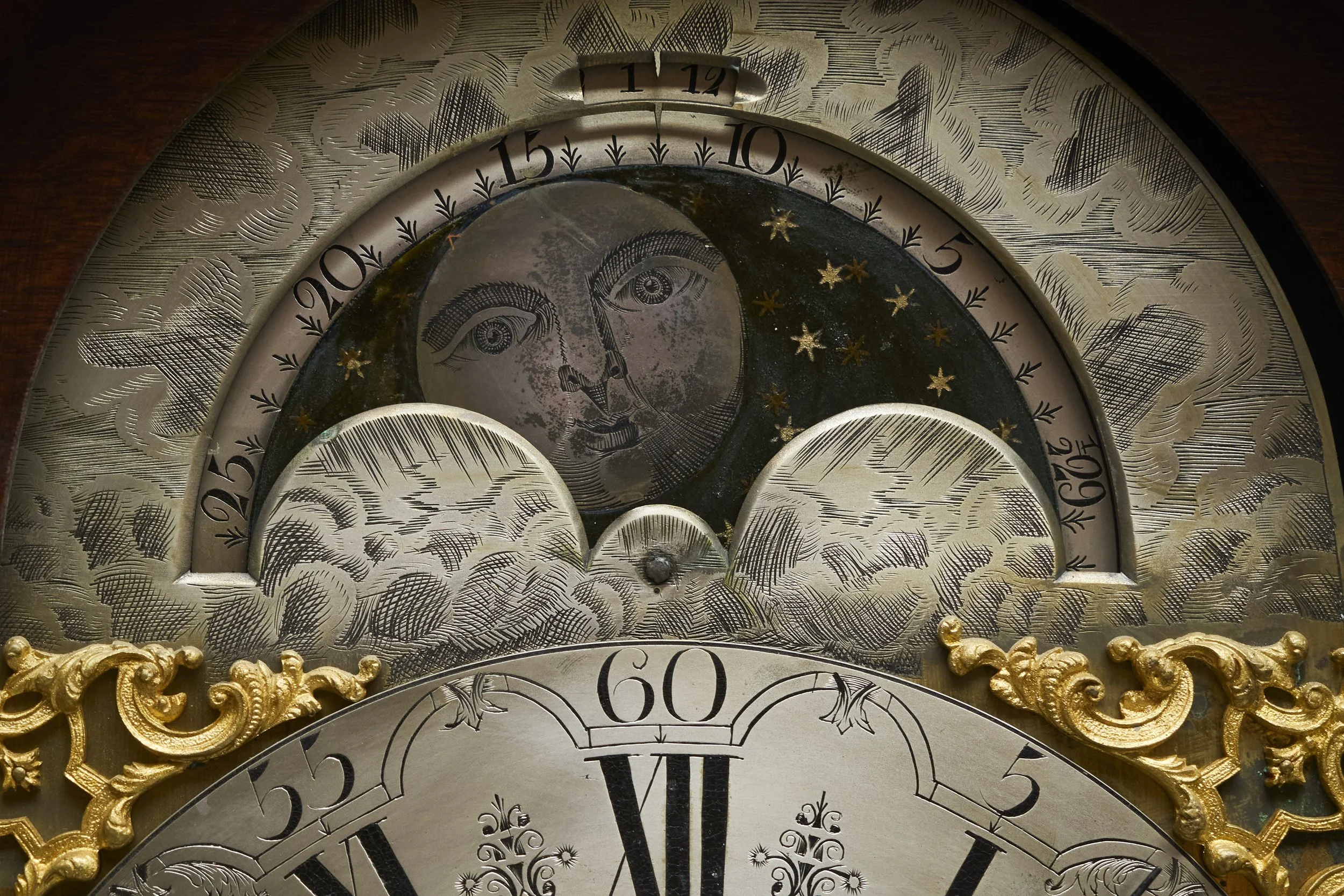 Image 9 of 24
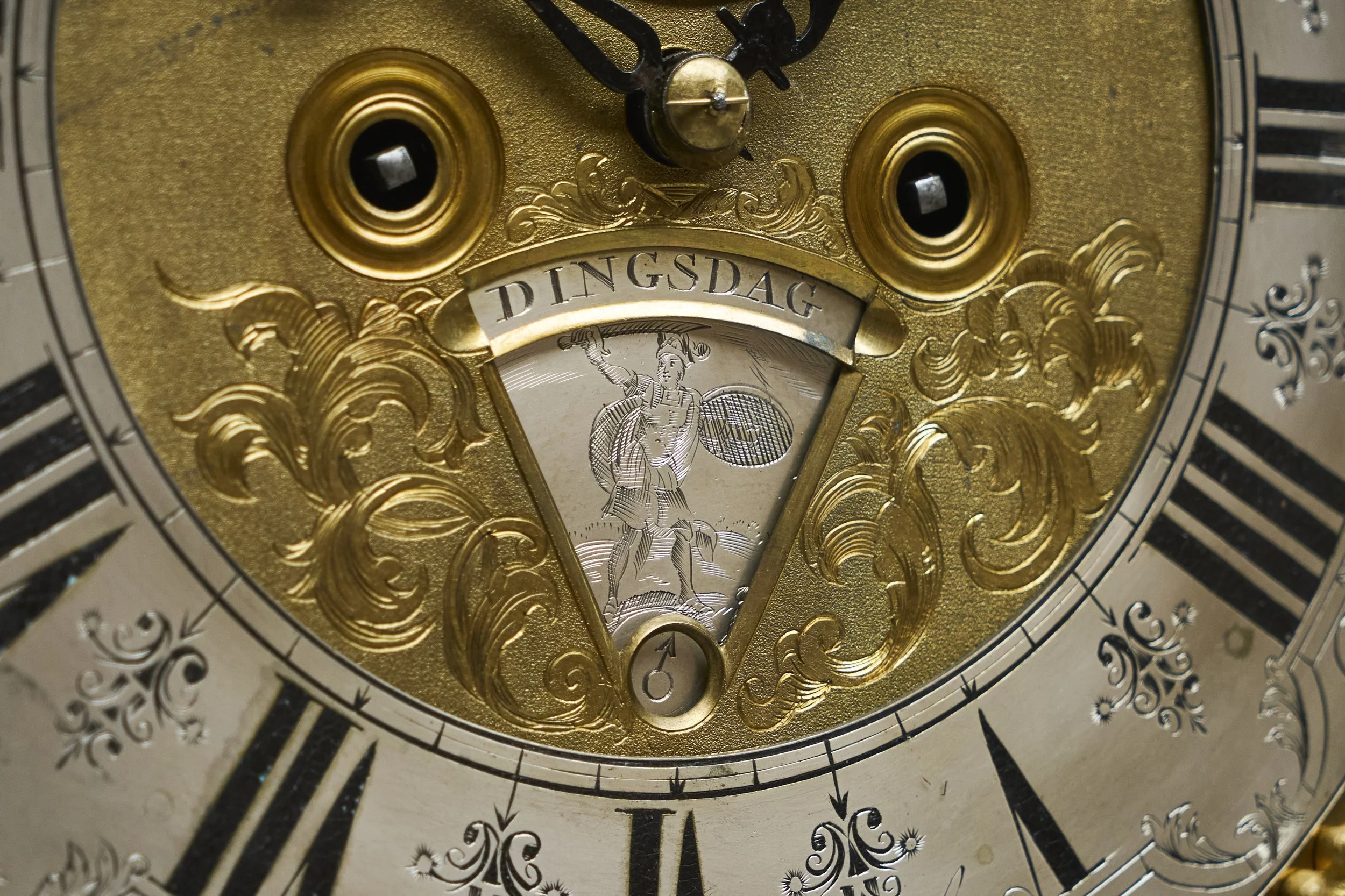 Image 10 of 24
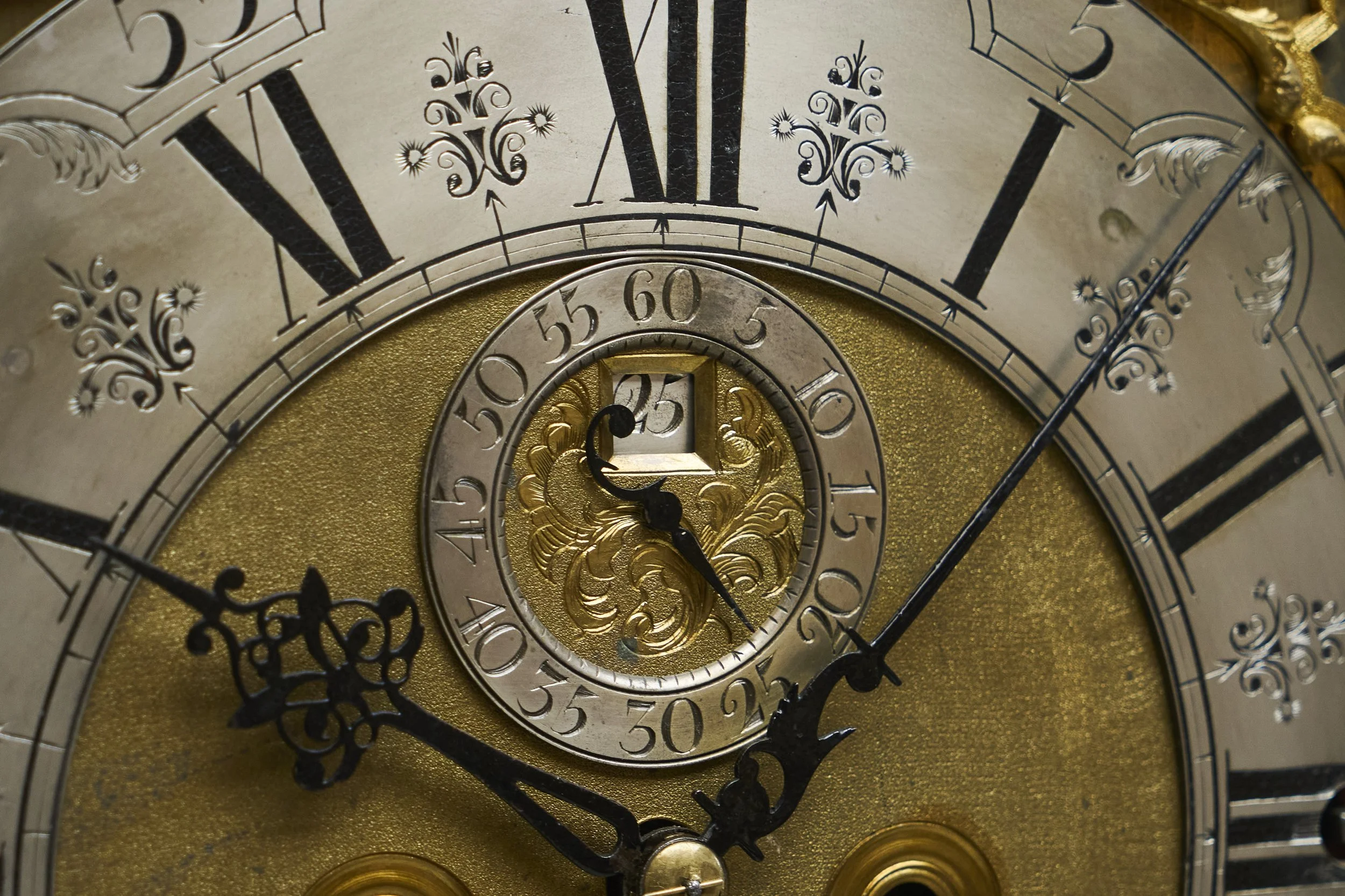 Image 11 of 24
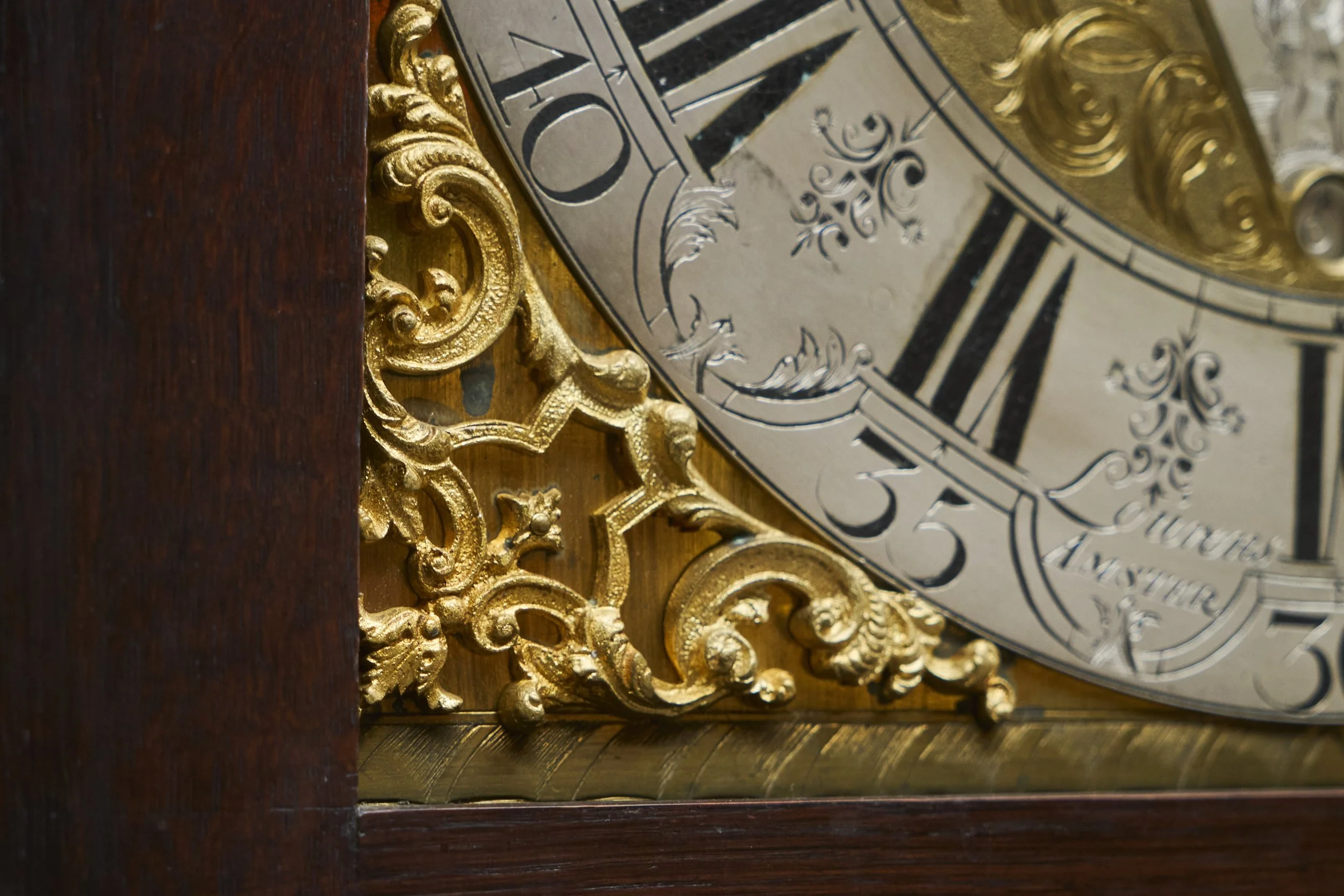 Image 12 of 24
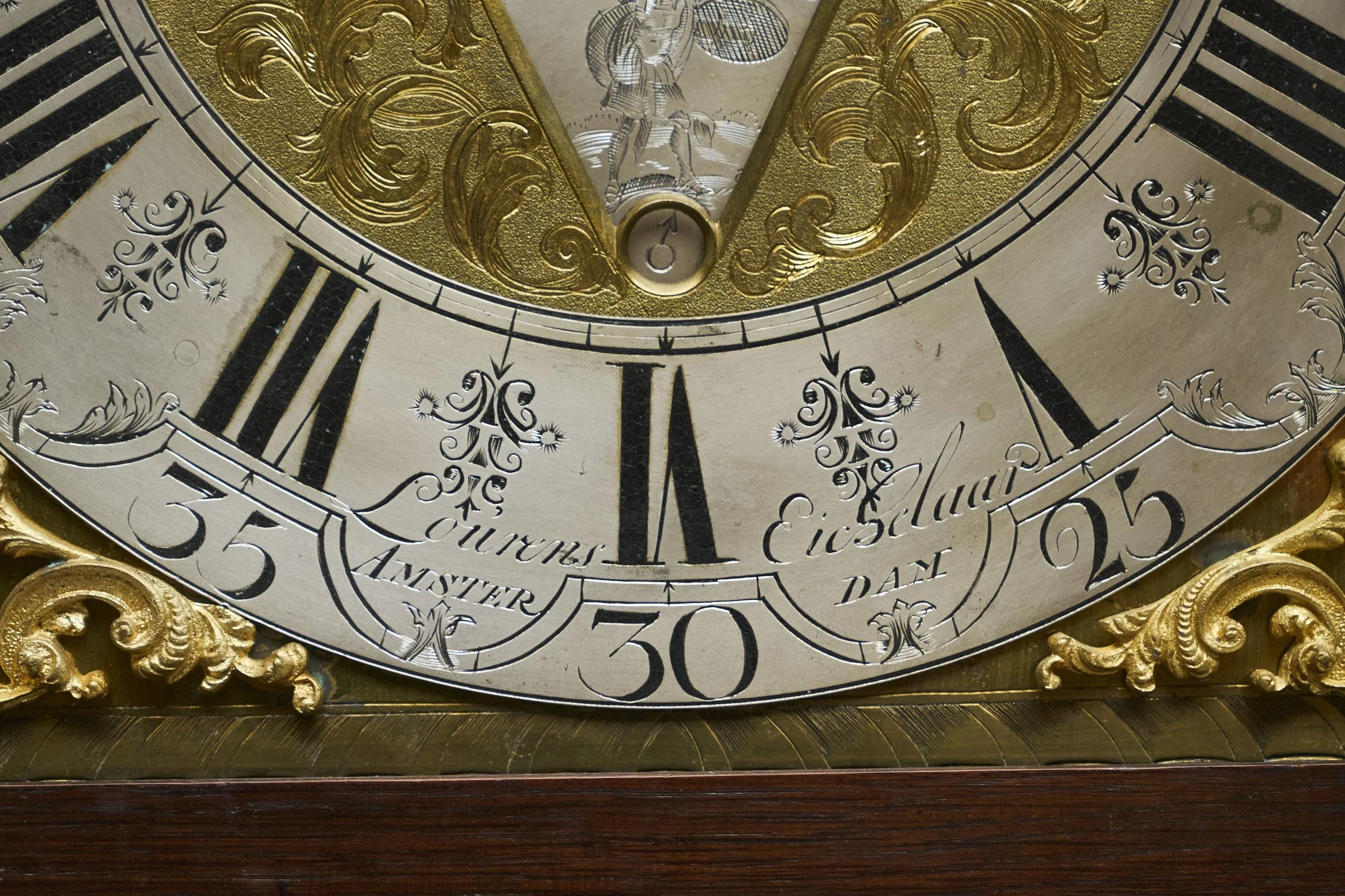 Image 13 of 24
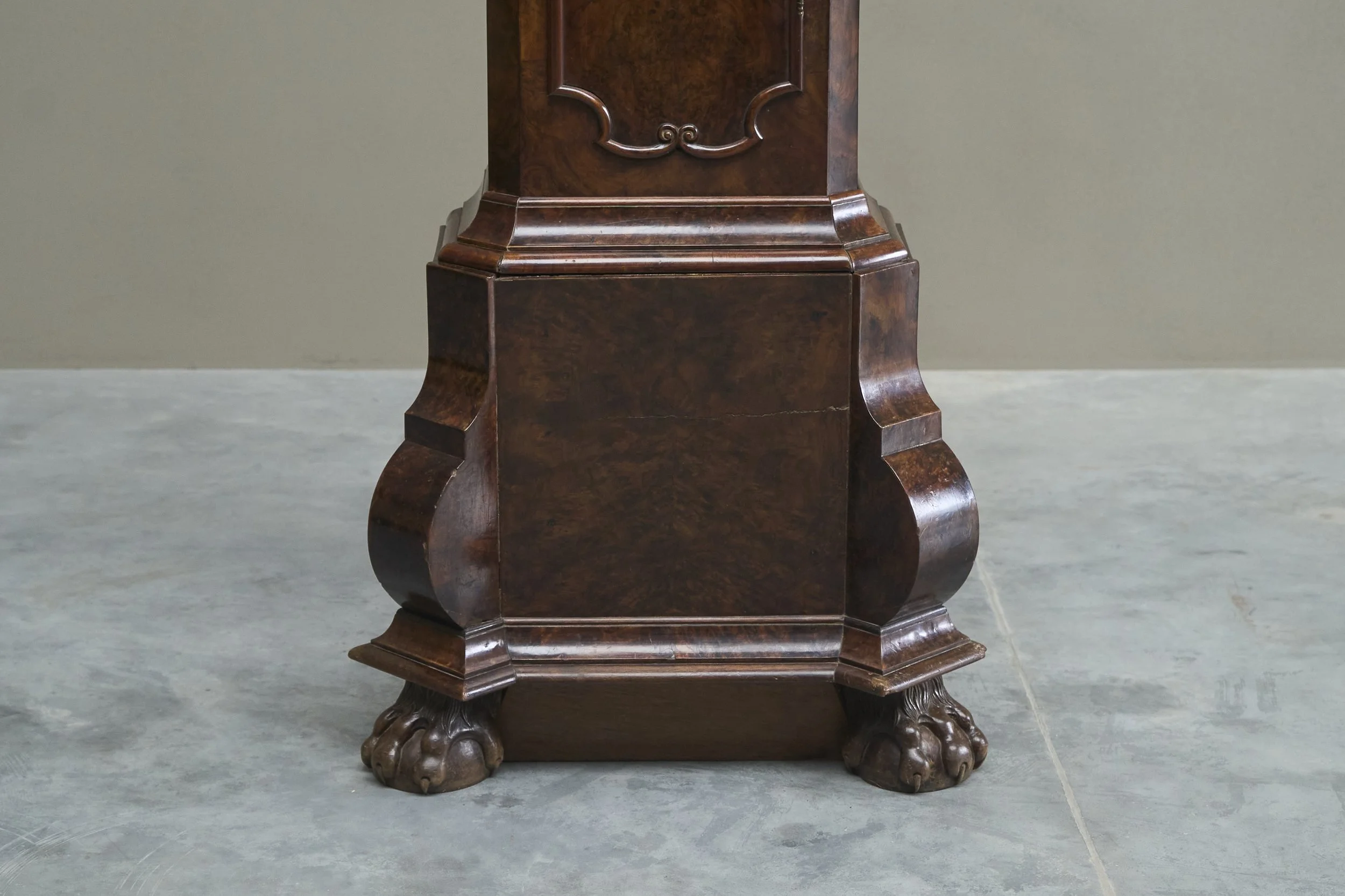 Image 14 of 24
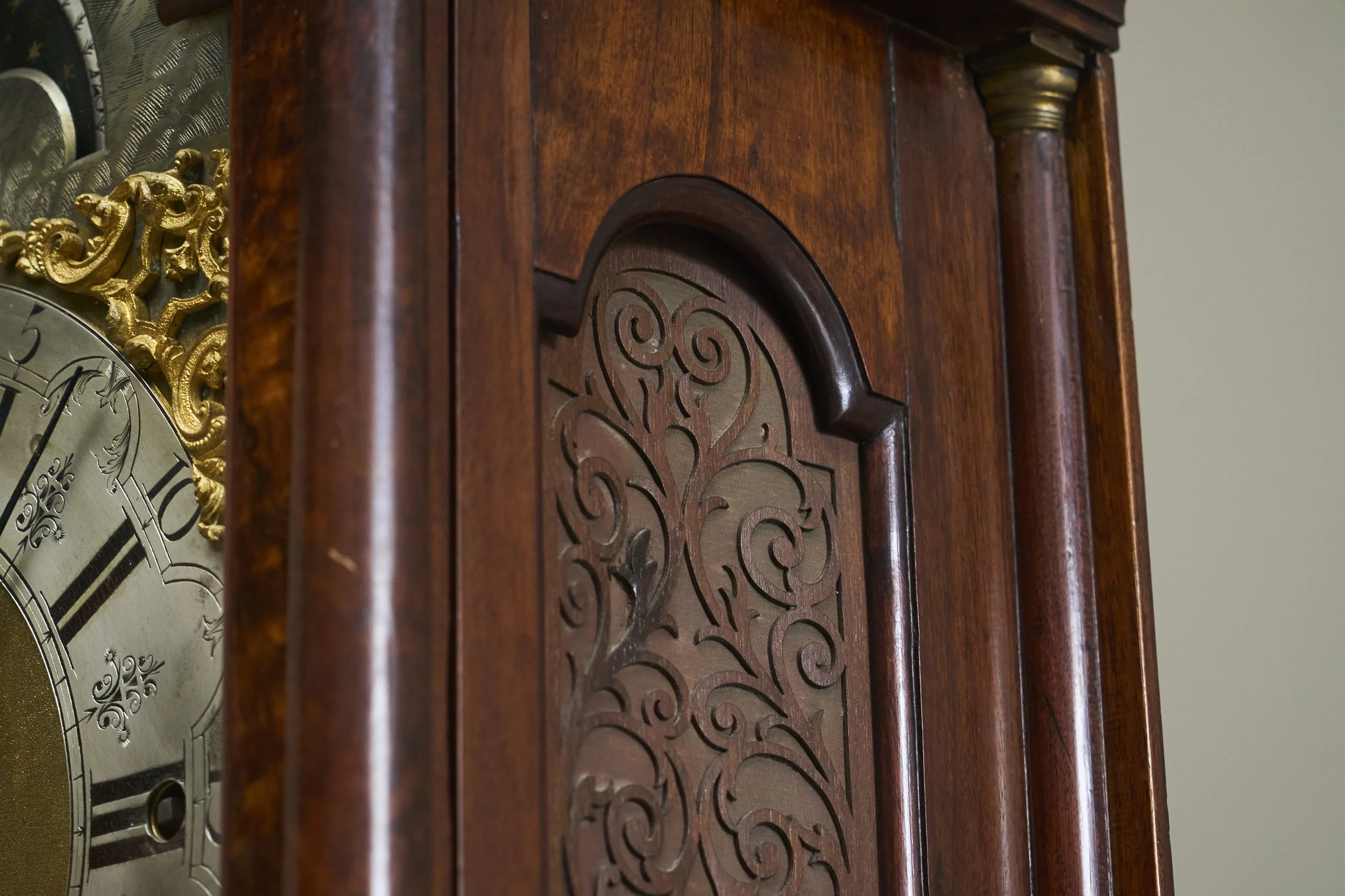 Image 15 of 24
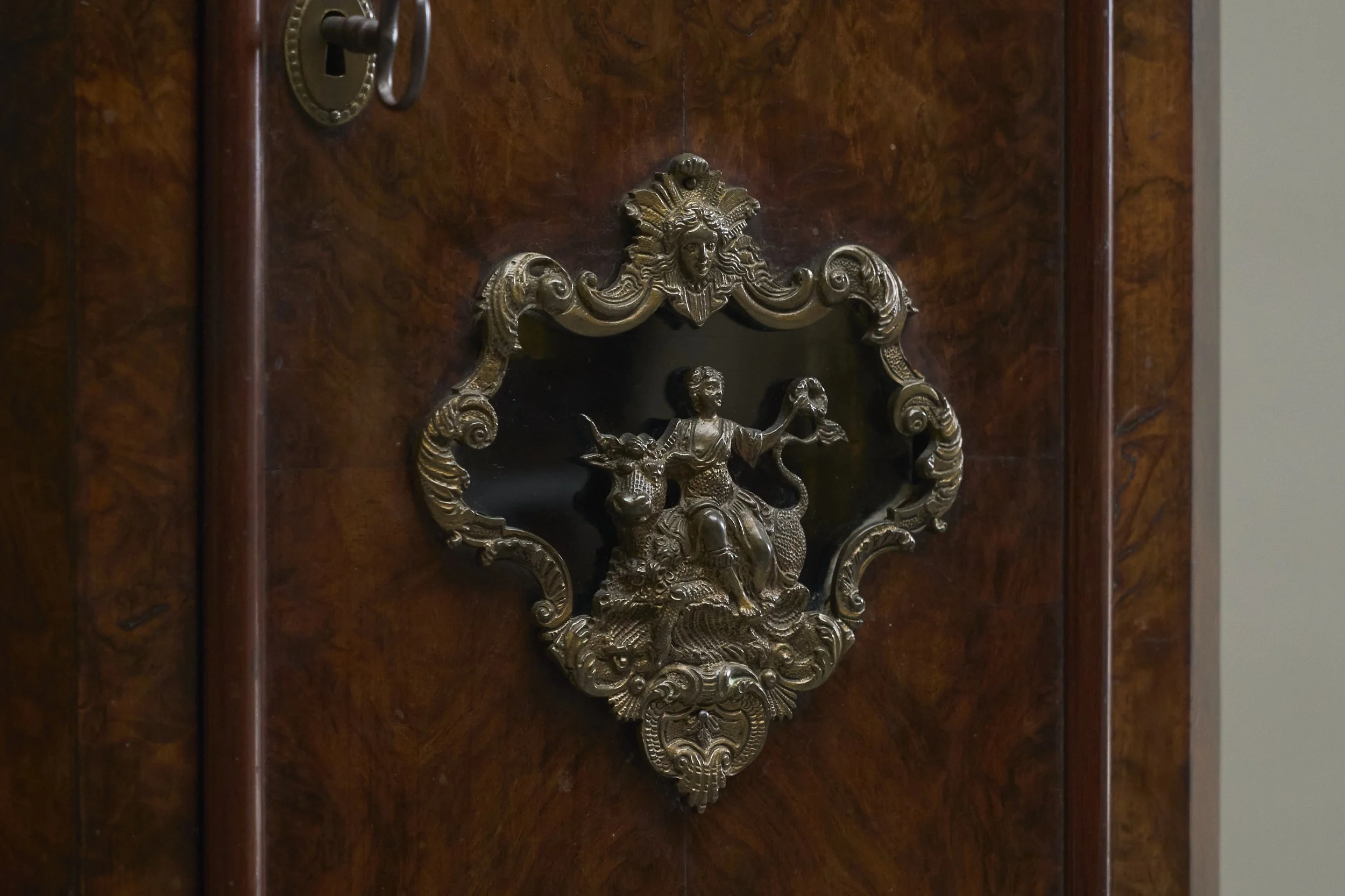 Image 16 of 24
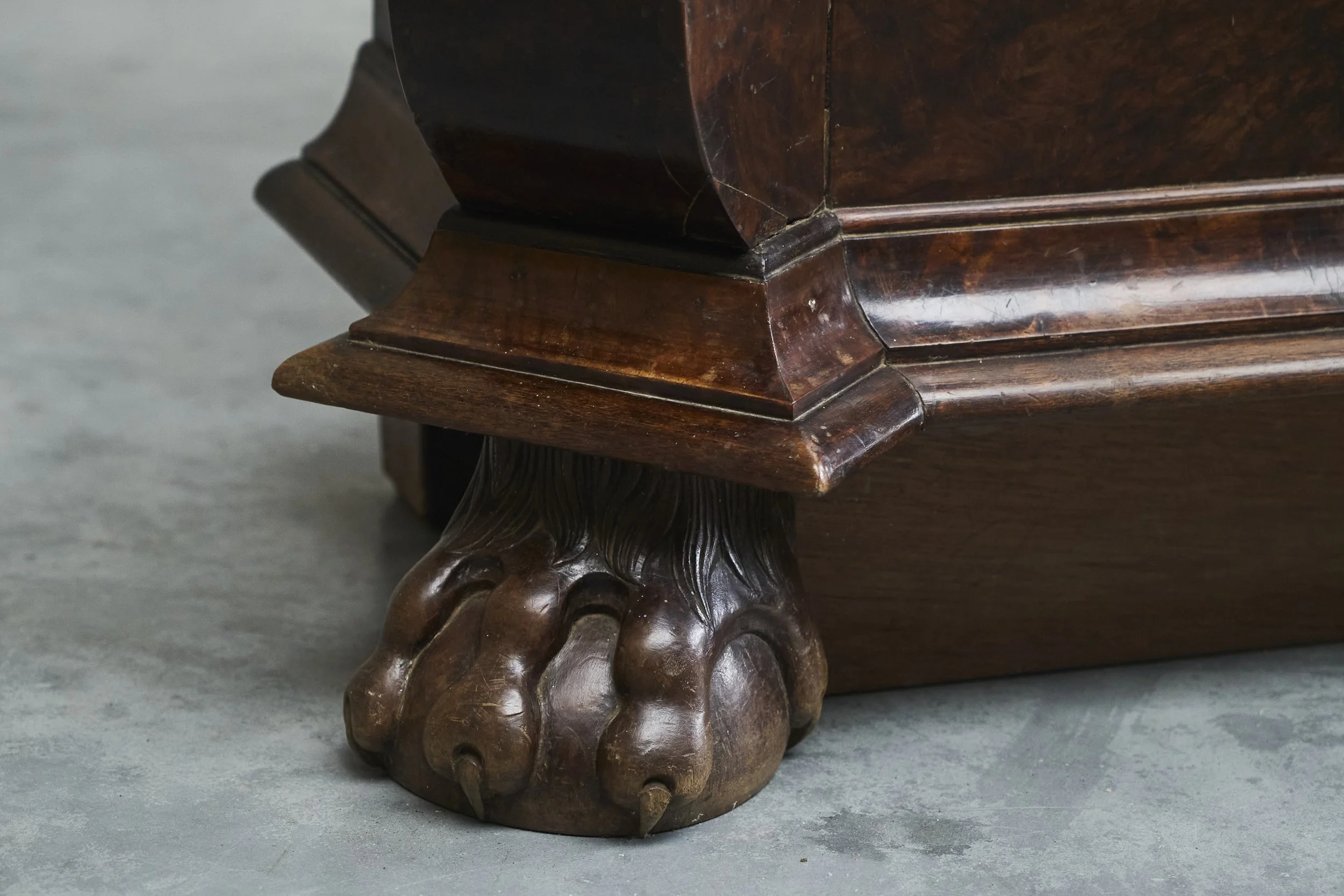 Image 17 of 24
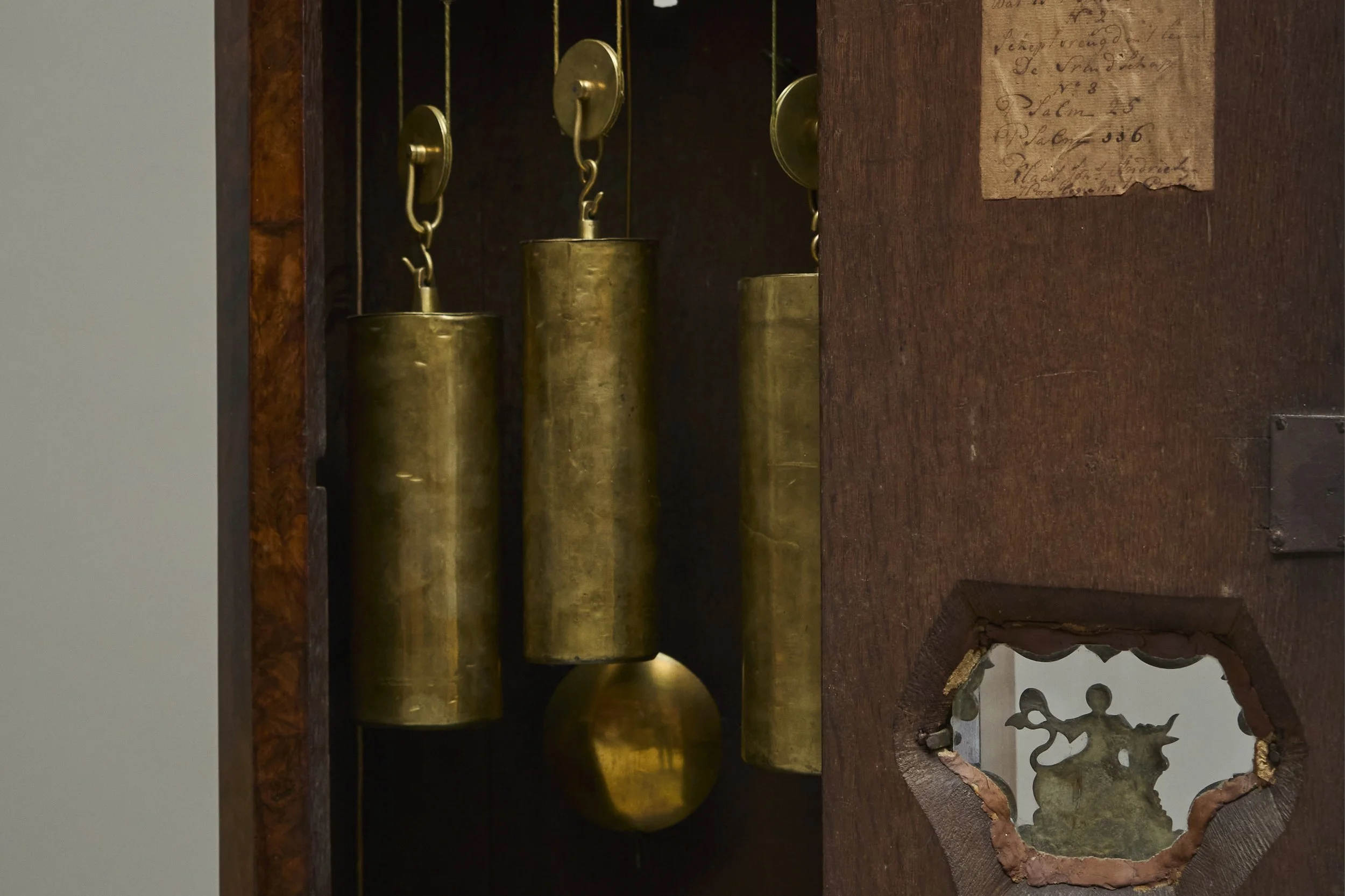 Image 18 of 24
 Image 19 of 24
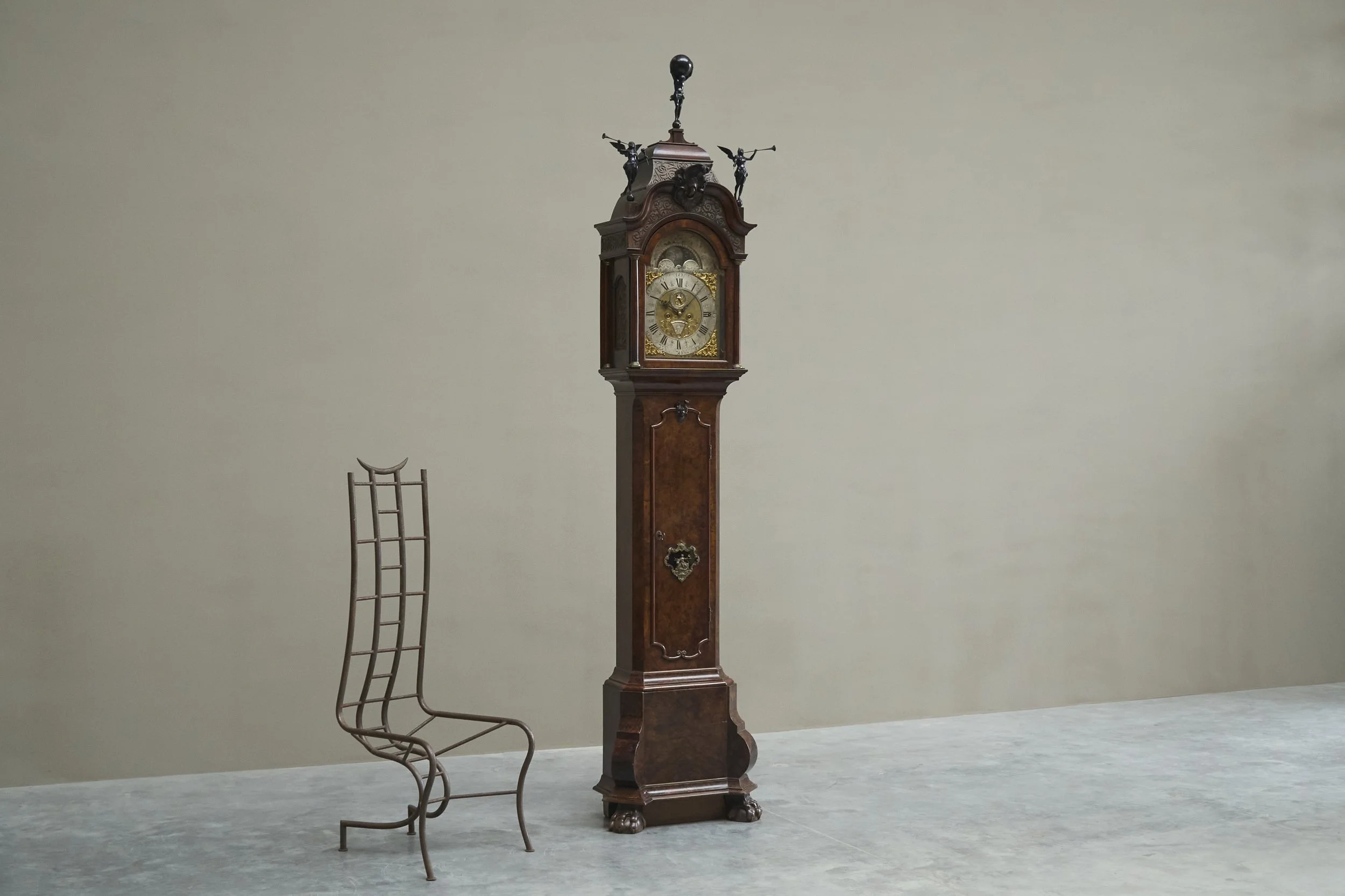 Image 20 of 24
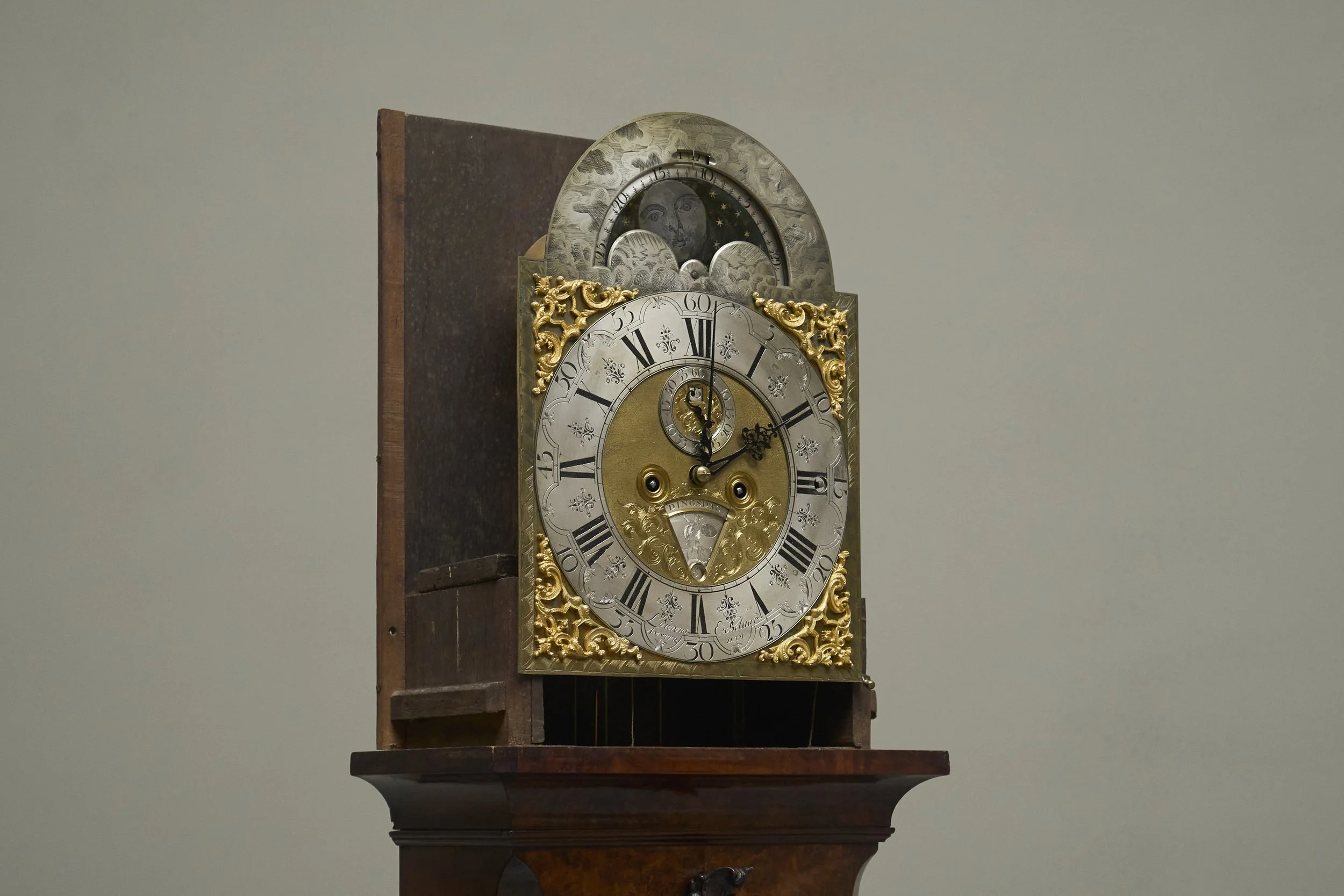 Image 21 of 24
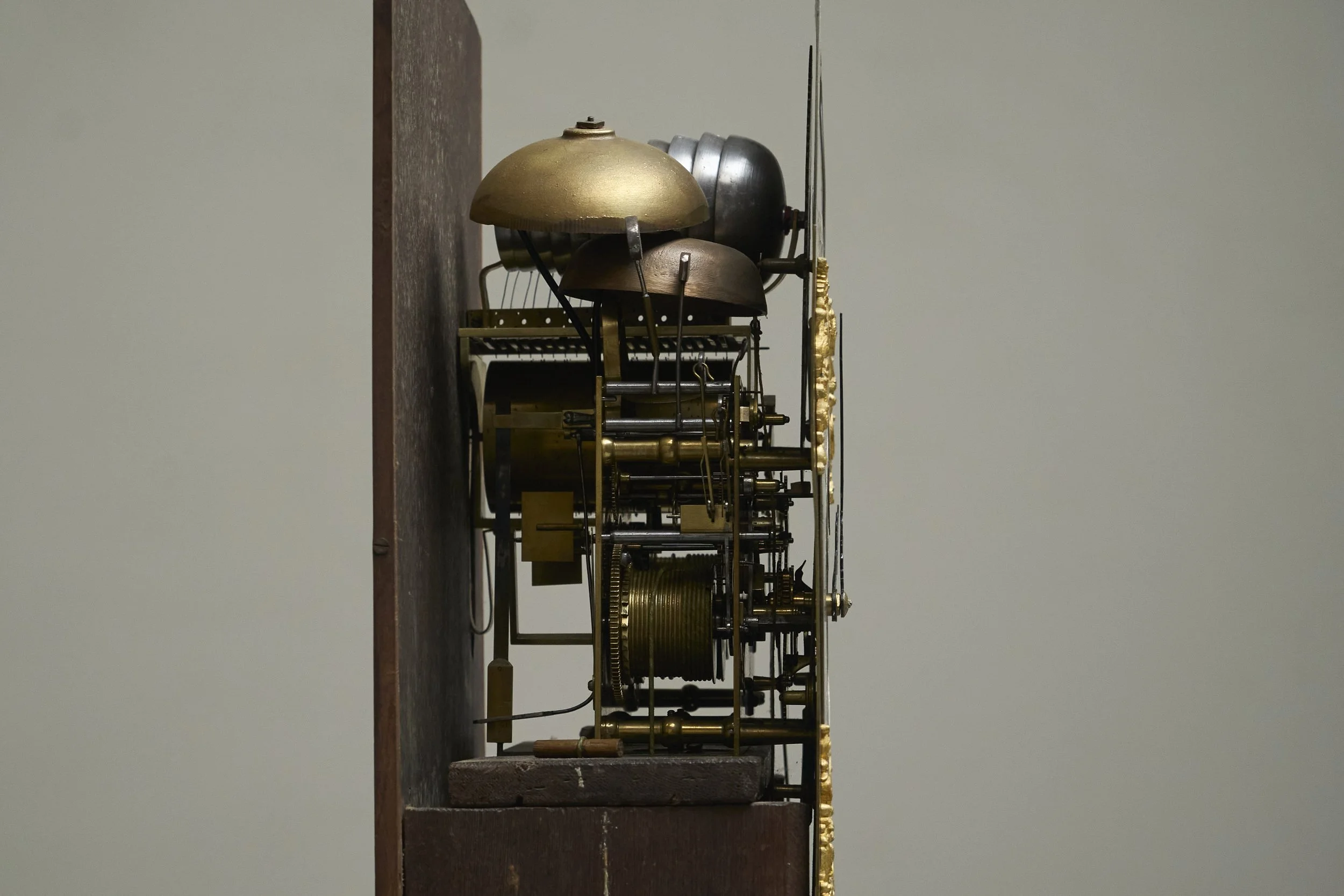 Image 22 of 24
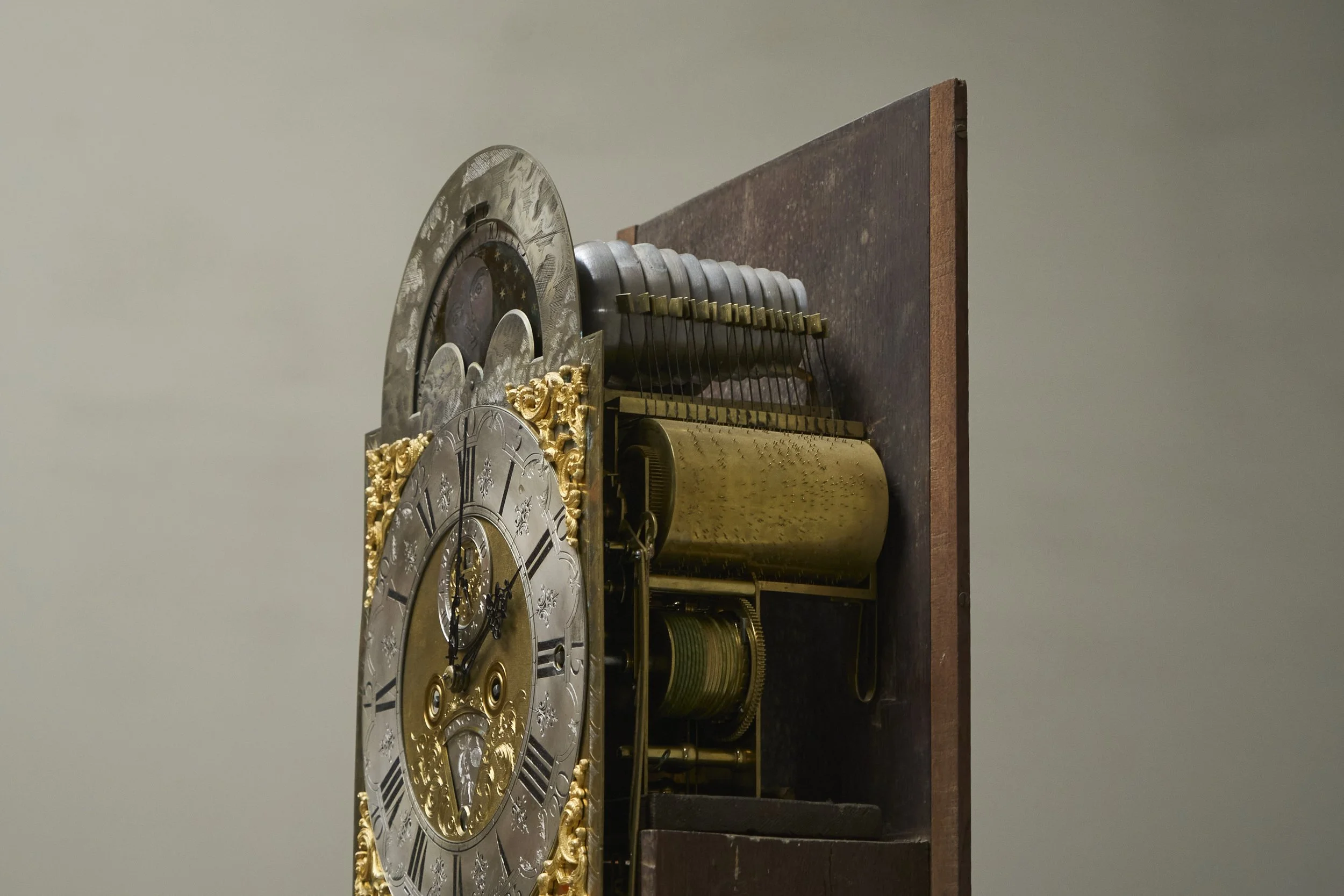 Image 23 of 24
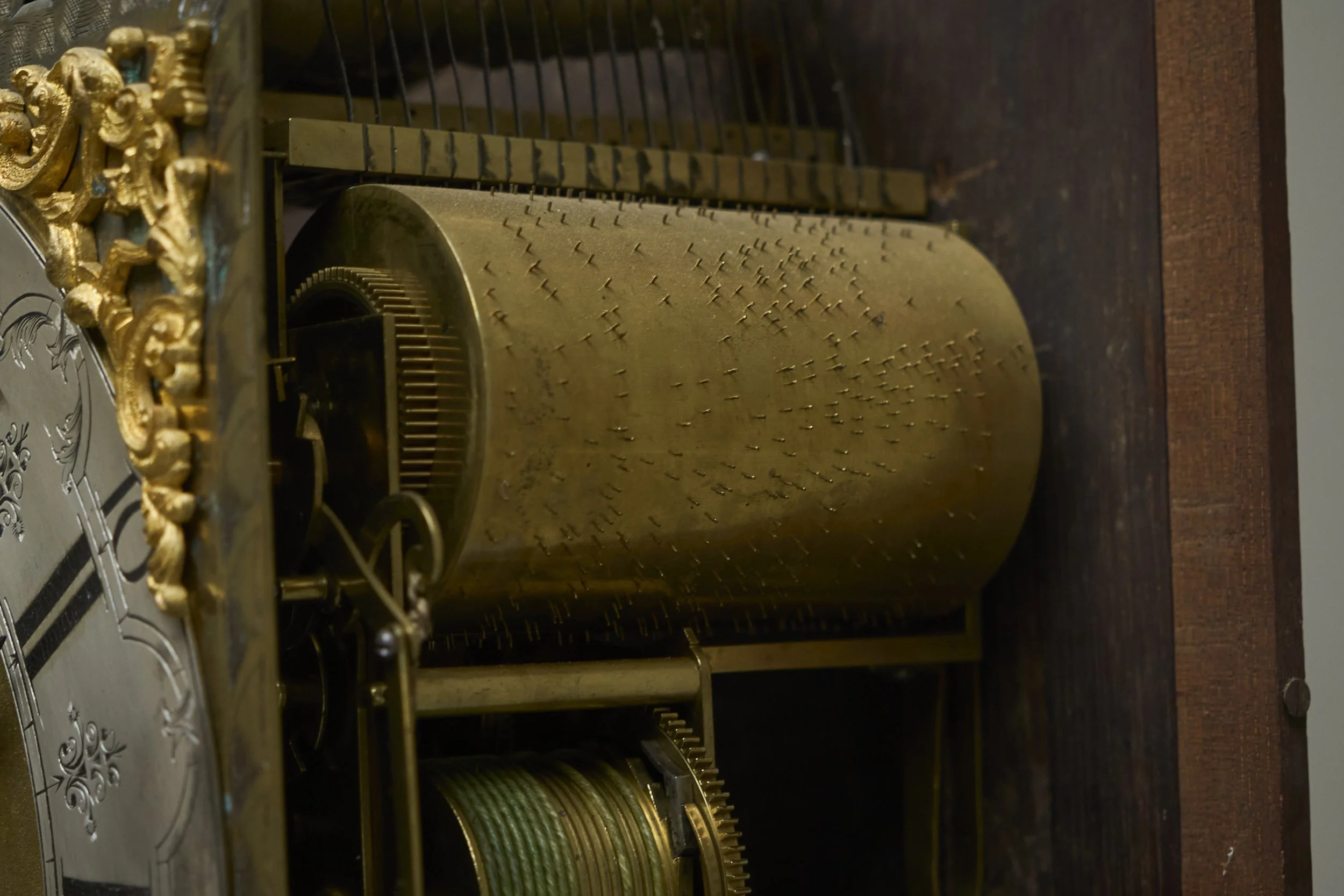 Image 24 of 24